Trump’s Iran Plan: No Uranium Enrichment, ‘Nuclear Dust’ Removal for Sanctions Relief
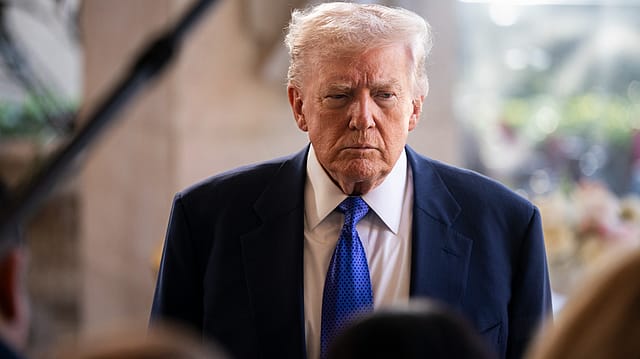
A fragile diplomatic window has opened between Washington and Tehran after US President Donald Trump unveiled an ambitious roadmap aimed at reshaping Iran’s nuclear future while easing sanctions. A dramatic shift in US foreign policy is underway as President Trump moves from military brinkmanship to high-stakes diplomacy with Iran, outlining a sweeping plan that could redefine the region’s future.
At the heart of this strategy is an uncompromising demand: a complete halt to Iran’s uranium enrichment programme, paired with what Trump described as the removal of nuclear remnants. In return, Washington is signalling a willingness to ease sanctions and reduce tariffs, opening the door to economic relief for Tehran.

The Modi Years
02 Oct 2026 - Vol 05 | Issue 40
A Nation Rebuilt
The President framed the recent ceasefire not merely as a pause in hostilities, but as the beginning of a broader transformation. Calling it a "very productive regime change", Trump suggested that the groundwork for a lasting settlement may already be in place.
What is Trump demanding from Iran’s nuclear programme?
Trump made his position unequivocally clear. “There will be no enrichment of uranium, and the United States will, working with Iran, dig up and remove all of the deeply buried nuclear 'dust',” he asserted.
The statement signals a maximalist approach, going beyond traditional arms control to include the dismantling of even residual nuclear infrastructure.
How will the US ensure compliance?
The administration is relying on intensive monitoring mechanisms. Trump emphasised that Iranian facilities are under “exacting satellite surveillance", adding that "nothing has been touched from the date of attack.”
This suggests a strategy built on verification and constant oversight, aimed at preventing any covert revival of nuclear activity.
What triggered the ceasefire?
The diplomatic opening follows a tense standoff that nearly escalated into catastrophic conflict. Just hours before the agreement, Trump issued a stark warning that "a whole civilisation will die tonight, never to be brought back again" if his conditions were not met.
The eventual breakthrough came in the form of a two-week halt in hostilities. Under the arrangement, the US and Israel agreed to suspend the "bombing Iran for a period of two weeks", contingent on Tehran ensuring the "reopening of the Strait of Hormuz" and guaranteeing "safe passage" for global shipping.
Is this the beginning of a long-term peace deal?
Trump believes so. Declaring a "double sided CEASEFIRE!", he said the US had "already met and exceeded all Military objectives" and is now "very far along with a definitive Agreement concerning Long-term PEACE with Iran, and PEACE in the Middle East."
He also described Iran’s 10-point proposal as a "workable basis on which to negotiate", noting that "almost all of the various points of past contention have been agreed to."
How has Iran responded to the proposal?
Tehran has signalled cautious cooperation. Iranian Foreign Minister Abbas Araghchi confirmed that Iran would facilitate "safe passage through the Strait of Hormuz" during the 14-day ceasefire, in close "coordination with Iran's armed forces."
The response indicates a willingness to engage, even as deeper negotiations remain uncertain.
What role does Israel play in this fragile truce?
While Israeli Prime Minister Benjamin Netanyahu has endorsed the pause in operations against Iran, he has made it clear that the ceasefire does not extend to all fronts. Military operations in Lebanon, for instance, will continue, underscoring the region’s ongoing volatility.
(With inputs from ANI)