TRUMP’S $2 GAS PROMISE | Americans Are Paying $4.15. Can Winning the Iran War Really Halve It?
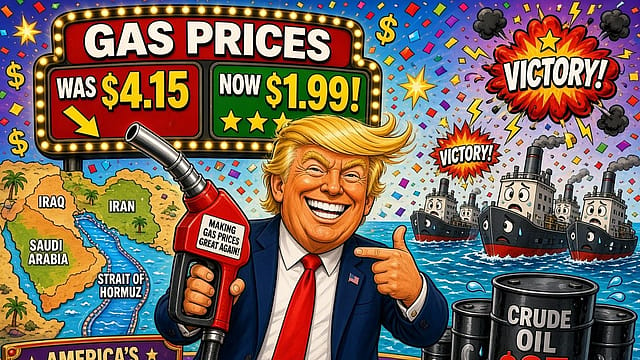
Donald Trump has offered Americans a deal. First, win the war with Iran. Then, buy petrol for less than $2 a gallon.
But there are three complications.
The White House refuses to formally describe the conflict as a war. It cannot say when the fighting will end. And every fresh American and Iranian attack is currently pushing oil prices higher.
“Oil prices will drop precipitously, like everything else is dropping—but more—when we WIN the war with Iran,” Trump wrote on Truth Social.
He predicted that petrol would first fall to $3 a gallon and eventually drop below $2. He also repeated his declaration that Iran would never be allowed to acquire a nuclear weapon.

Losing Memory
16 Oct 2026 - Vol 05 | Issue 42
The making of a medical and social emergency
For American motorists paying an average of approximately $4.15 a gallon, it is an irresistible promise.
It is also an extraordinary one. Trump is forecasting a reduction of more than 50 per cent from the current national average. The United States last experienced petrol below $2 during the Covid lockdown, when roads emptied, travel collapsed and crude prices plunged towards $20 a barrel.
Today, Brent crude is approaching $100. The Strait of Hormuz remains vulnerable. Tankers have become military targets. And the president promising cheaper petrol is escalating the conflict responsible for making it expensive.
What Exactly Has Trump Promised?
Trump has linked the cost of petrol directly to an American victory over Iran. His forecast contains two stages. Prices would fall to $3 a gallon after the conflict ends, then continue declining until the national average moved below $2.
He did not provide a timetable, define what “winning” would mean or explain which supply, refining and tax conditions would produce that price.
The first part of his argument is economically plausible.
An end to hostilities could reduce the risk premium attached to crude oil, reopen or stabilise shipping routes and restore disrupted Gulf exports. Oil prices could fall quickly if traders concluded that tankers and energy infrastructure were no longer in danger.
The second part—petrol below $2—is far harder. Ending a war can remove a geopolitical premium. It cannot eliminate refining costs, transport expenses, retail margins or federal and state taxes. Nor can the president directly dictate the price displayed at privately operated petrol stations.
Trump can influence some of the forces shaping energy prices. He cannot announce the final number into existence.
What Are Americans Paying Now?
AAA placed the US national average for regular petrol at approximately $4.15 a gallon on September 7.
That was the highest national average recorded over the Labor Day period. Petrol was nearly $1 a gallon more expensive than a year earlier, while diesel had climbed towards $5.90.
AAA attributed the increase largely to crude prices in the $90 range and continued disruption around the Strait of Hormuz.
Prices vary considerably across the country. Motorists in some states pay substantially less than the national average, while drivers in California, Hawaii and Washington face prices well above $5.
That distinction matters when political leaders cite individual stations selling unusually cheap petrol. A few outlets below $2 would not mean the American national average had crossed that threshold.
Trump’s promise refers to petrol becoming broadly and sustainably cheaper—not an isolated promotional price in one town.
How Far Must Prices Fall?
For the US average to move from $4.15 to $1.99, petrol must become approximately 52 per cent cheaper.
A family buying 50 gallons a month would save more than $100. Across millions of households and businesses, lower fuel prices would reduce transport costs, ease inflation and give Trump a potent economic message before the midterm elections.
But such a decline would require much more than a ceasefire.
Crude oil is the largest component of the retail petrol price, but it is not the only one. In 2025, crude accounted for approximately 51 per cent of the cost of an American gallon. Refining contributed about 14 per cent, taxes 17 per cent, and distribution and marketing the remaining 18 per cent.
Even if the crude component fell dramatically, the other costs would remain.
Federal petrol tax alone is 18.4 cents a gallon. State and local taxes vary, while refinery capacity, seasonal fuel requirements, transport constraints and retail competition affect the final price.
Oil also tends to transmit pain faster than relief.
Petrol prices often rise rapidly when crude becomes expensive because stations must account for the cost of replacing their inventory. When crude falls, pump prices may decline more slowly.
When Was US Petrol Last Below $2?
The national average dropped below $2 in March 2020 and reached approximately $1.77 on April 27 that year. Those were not normal market conditions.
Covid restrictions had shut businesses, grounded aircraft and removed millions of vehicles from roads. Global oil demand collapsed so violently that US oil futures briefly turned negative as traders struggled to find storage.
The US Energy Information Administration said reduced passenger travel and collapsing petrol demand drove the national average to its lowest annual level in years.
Crude oil traded close to $20-$22 a barrel when petrol fell below $2. Brent is now near $97 and West Texas Intermediate above $92.
Trump is effectively promising that victory over Iran can reproduce a consumer price previously created by the near-shutdown of the global economy.
What Is Happening to Oil Prices?
The market is moving against Trump’s forecast.
Brent crude rose to approximately $97 a barrel on Tuesday, while West Texas Intermediate traded above $92 as investors assessed the possibility of prolonged disruption across the Gulf.
Brent gained around 8 per cent during the previous week and WTI almost 10 per cent.
Reuters reported that analysts expect the conflict to constrain Persian Gulf supplies through the remainder of 2026. A full recovery may extend into 2027.
The US Energy Information Administration has forecast Brent averaging around $85 during the third quarter, based on reduced oil shipments through Hormuz and declining global inventories.
Even the administration’s own energy secretary has offered a considerably more modest expectation than Trump. Chris Wright pointed to futures markets indicating that petrol could decline by approximately 35 cents by November.
That would provide relief.
It would leave the national average far above $2.
Could Oil Reach $120 Instead?
Goldman Sachs has warned that crude could surge to $120 a barrel if attacks on ships and energy infrastructure intensify.
If regional exports return to normal, the bank reportedly sees prices falling towards $80. That range exposes the scale of Trump’s gamble.
Even the optimistic scenario offered by Goldman remains roughly four times the crude price associated with America’s last sub-$2 petrol episode.
Reuters reported that the upside risk was being driven by the possibility of further disruption to Middle Eastern shipping.
A negotiated reopening and stabilisation of the Strait of Hormuz could produce an immediate oil sell-off. But $97 falling to $80 is very different from the collapse required to push petrol below $2 nationally.
Trump’s $3 milestone appears conceivable if peace restores supply and refinery conditions improve.
His sub-$2 destination would require an entirely different economic landscape.
Why Does the Strait of Hormuz Matter?
The Strait of Hormuz is the narrow maritime passage connecting the Persian Gulf with the Arabian Sea.
It carries a substantial share of the world’s traded oil and liquefied natural gas. Saudi Arabia, Iraq, Kuwait, Qatar, the United Arab Emirates and Iran depend on it or associated routes to reach international markets.
Even when oil continues moving, threats around the strait increase insurance, security and freight costs. Shipowners may avoid the area. Cargoes can be delayed. Traders pay more because they cannot predict whether tomorrow’s supply will arrive.
The United States says it has destroyed or permanently disabled three Iranian crude tankers after Iranian forces allegedly targeted American naval vessels.
US Defence Secretary Pete Hegseth warned that Iran’s remaining tankers could also be attacked. “If Iran shoots at US ships, we will destroy—and sink—their oil tankers,” he said.
Iran responded by threatening American and allied energy interests across the Gulf. “Strike our assets, and you get struck,” Iranian Parliament Speaker Mohammad Bagher Ghalibaf warned.
That exchange does not resemble a market preparing for cheaper oil. It resembles traders adding another dollar to the risk premium.
Is America Winning the War?
That depends on what the administration considers victory.
Trump has repeatedly identified preventing Iran from obtaining a nuclear weapon as the central objective. His latest statement implies that the conflict will end quickly and decisively.
But Vice-President JD Vance declined last week to provide a timeline. He also argued that the confrontation should not be classified as a war despite renewed strikes, attacks on shipping and the deployment of tens of thousands of American personnel across the region.
Vance said major combat operations had ended and described the continuing violence as isolated flare-ups. Negotiations, however, remain stalled, and Iran continues to contest maritime access.
The contradiction is unavoidable. Trump promises cheaper petrol after America wins the war. His administration says America is not technically fighting one. A political slogan can survive that ambiguity. Oil markets demand a clearer answer.
Can a US President Control Petrol Prices?
No president possesses a petrol-price lever.
The administration can release oil from the Strategic Petroleum Reserve, alter sanctions, encourage domestic production, change certain environmental rules and influence international negotiations.
It can also shape expectations. A credible peace agreement can push futures prices lower before additional barrels reach the market.
But American oil production is controlled largely by private companies. Those companies respond to profitability, infrastructure, shareholder demands and expected future prices. They may resist accelerating production if a price collapse would make new drilling uneconomic.
The US is already the world’s largest oil producer. Producing even more does not automatically neutralise a disruption affecting one of the most important global shipping routes.
Oil is priced internationally. A crisis in the Gulf reaches an American petrol station even when the crude beneath American soil remains abundant.
Would Defeating Iran Make Energy Cheaper?
A durable end to the conflict almost certainly would.
Restored shipping through Hormuz, reduced attacks on tankers, lower insurance costs and the return of disrupted exports could remove a substantial war premium.
Petrol could fall from its current record seasonal level. Refineries moving out of summer fuel specifications may contribute additional relief, while weaker autumn demand could help prices decline.
But victory itself is not a commodity. Markets would need evidence that ships could travel safely, supply would remain available and another round of attacks was unlikely.
If Iran’s energy system were heavily damaged during an American victory, the immediate result could be less oil in the market. If Tehran retaliated against Gulf facilities, pipelines or ports, prices could rise further even as Washington declared military success. The manner in which a war ends can matter as much as the fact that it ends.
Why Make the $2 Promise Now?
Petrol prices are among the most visible economic indicators in American politics. A motorist encounters the number in enormous illuminated digits while driving to work. Unlike official inflation data, it requires no interpretation.
The Iran conflict has given Trump an awkward political sequence.
He initiated or expanded military action while promising strength abroad and prosperity at home. The resulting disruption has contributed to higher fuel prices, allowing opponents to connect foreign policy directly to household costs.
By promising petrol below $2 after victory, Trump converts present pain into advance payment for a future reward.
High prices become evidence that the war must be won. Falling prices, whenever they arrive, can be presented as evidence that it was.
Is Trump’s Claim Possible?
Possible is a wide word. A global recession, enormous supply increase, collapse in oil demand, sharp decline in crude prices and favourable refinery conditions could theoretically push US petrol below $2 again.
Trump has not predicted those events. He has attributed the decline almost entirely to defeating Iran.
Based on present prices and market forecasts, an end to the conflict could pull petrol lower. A fall towards $3 is economically plausible under sufficiently favourable conditions.
A national average below $2 would require a decline comparable to one last seen during the exceptional demand destruction of Covid.
No mainstream forecast cited in the present market points to that outcome. Trump has offered a precise price without the economic bridge required to reach it.
The War at the Pump
For American motorists, Trump’s promise is wonderfully simple. Win abroad. Pay less at home.
Oil refuses to obey such clean political sequencing.
A US strike can damage Iran’s military capacity while simultaneously increasing the price of crude. A destroyed tanker can be presented as battlefield success and interpreted by traders as a warning of tighter supply. A ceasefire can reduce prices without resolving the nuclear dispute Trump says defines victory.
America is currently paying $4.15 a gallon. Trump says the journey ends below $2.
Between those two numbers stand the Strait of Hormuz, threatened energy installations, anxious shipowners, constrained refineries, taxes, distribution costs and a conflict whose ending remains undefined.
Trump may win his war. The oil market gets its own vote.
With inputs from ANI & agencies