Trump Seeks ‘Uranium on Tarmac’ Image in Iran Standoff: Robinder Sachdev Explains
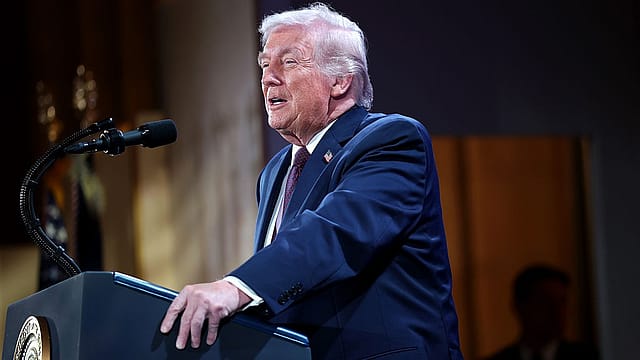
Foreign affairs expert Robinder Sachdev argues that optics are playing a defining role in the standoff between the US and Iran. According to him, Donald Trump is seeking a moment that can be projected globally as a decisive victory.
In his words to news agency ANI, “The prize that President Trump now wants is a photograph of drums of Iranian enriched uranium on the tarmac of the Tehran airport and an American military plane sitting there, these drums being loaded and taken away. That is the prize that Donald Trump wants now. He can then claim, 'I have taken out the uranium from Iran." He added that such imagery would create "a very visual representation of the surrender of a country," something Iran, according to him, is unlikely to accept, leaving negotiations at an impasse.
How could US oil policy impact India?
Sachdev pointed out that recent US decisions could have immediate economic implications for India. Referring to waivers on sanctioned Russian oil, he said these could ease supply pressures.
“This waiver on sanctions on Russian oil will definitely help India in the sense that there is quite some Russian oil at sea, short distance away, and hopefully, the market dynamics are such that we can get it at good rates. Especially given the current crisis, even if production ramps up, you know, in the Gulf, it will take months and months for the supplies to be resumed. So, therefore, Russian oil being available almost instant in that sense, will be extremely helpful to the Indian economy in terms of crude oil,” he said, pointing out that restoring Gulf production could take “months and months”.
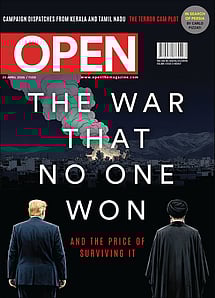
War on Iran: The War That No One Won
10 Apr 2026 - Vol 04 | Issue 66
And the price of surviving it
What are the chances of a US-Iran deal?
On the possibility of renewed negotiations, Sachdev struck a cautiously optimistic tone. He emphasised that the presence and level of participation would be key.
“If the participants do turn up physically, whosoever be the participants, especially the American participants, the higher the better. If they turn up then definitely yes, the probability increases. I still remain at my probability which I had earlier speculated at 51 per cent. There is definitely a chance of a deal,” he said, while cautioning that any agreement may not be a “grand bargain” and could leave the region facing continued instability.
Why is the Strait of Hormuz so critical?
The reopening of the Strait of Hormuz remains central to easing tensions and stabilising global energy markets.
“The Strait of Hormuz has to be open. Now, the question is whether Iran would be okay with it. Yeah, sure, but Iran will ask a price,” he said, indicating that negotiations could revolve around sanctions relief, frozen funds and financial compensation.
He added, “The only question would be that would there be any tolls? I think maybe tolls may not be tolls, but at the same time then financial compensation for Iran, money sitting in Qatar, money in in the United States, lifting of sanctions. So, I think there'll be a there'll be a triangle of these economic issues: sanctions, money sitting outside, and tolls. So, within this triangle, Iran will negotiate to you know, obtain financial compensations for the war.”
What is behind US tensions with NATO and Europe?
Sachdev also linked the broader geopolitical tensions to US relations with Europe and NATO.
“The US is unhappy with NATO for many reasons, several of them very clear and valid which Trump and his administration have articulated. But a more fundamental reason that President Trump and his team are unhappy with NATO is because they're unhappy with Europe. They're unhappy with the with the policies of Europe. Not only defense policies, they're unhappy with the policies on environment with Europe. They're unhappy with the extra regulations, ” he said.
He added that ideological differences are also at play, noting that sections within the US leadership view Europe as overly focused on “human rights and kindness,” alongside concerns that European countries have not contributed equally to defence spending.
(With inputs from ANI)