Trump May Delay Iran Strike if Deal Emerges Before Deadline: Report
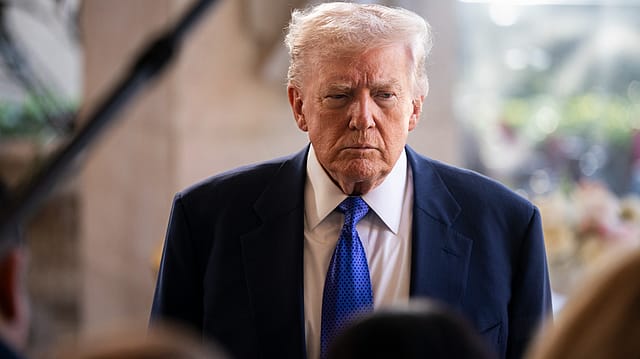
With the clock ticking for Iran as Trump's final deal looms, Axios reported on Monday (US time), citing a senior administration official, that the US President might hold off on Iran if he sees a deal coming through.
"If the president sees a deal is coming together, he'll probably hold off. But only he and he alone makes that decision," a senior administration official told Axios.
It further reported that a defence official said they were "sceptical" there would be any extension this time around.
The report comes shortly after US President Donald Trump gave an ultimatum to Iran to make a deal before Tuesday, 8:00 P.M ET, warning that there'll be "no bridges, no power plants" after that.
Questions are also being raised over the United States' claims of success in its recent military campaign against Iran, with former Pentagon official and senior fellow at the American Enterprise Institute arguing that key objectives remain unfulfilled.
Has ‘Operation Epic Fury’ Really Achieved Its Goals in Iran?
Rubin expressed skepticism over whether the operation has achieved its intended goals.
Speaking on the issue with ANI, Rubin underscored that ongoing disruptions in a critical global maritime route undermine any declaration of victory.

Open Minds 2026
26 Jun 2026 - Vol 05 | Issue 26
The power of ideas and arguments in 50 portraits
"It's hard to say that the United States has won when Iran continues to hamper freedom of navigation through the Strait of Hormuz," he said, pointing to the strategic importance of the waterway for global energy supplies and trade.
His remarks come in response to claims made by US President Donald Trump during a press conference, where he asserted that "Operation Epic Fury" had met its objectives.
However, Rubin dismissed this assertion, arguing that the administration has yet to present convincing evidence to substantiate such claims.
What Must the US Achieve in Iran to Claim Victory in ‘Operation Epic Fury’?
"President Trump isn't going to be able to convince the American public that he won until he can prove that he's achieved his various war aims,” Rubin said.
“The last issue has to do with the future of Iran's government, because different people can point to different statements the President has made in order to adjudicate whether or not he has succeeded,” said the former Pentagon official.
“At a very minimum, it's hard to say that the United States has won when Iran still continues to hamper freedom of navigation through the Strait of Hormuz," Rubin stated.
Rubin's comments highlight three critical benchmarks he believes are necessary for the US to credibly claim success: neutralising Iran's nuclear-enriched uranium stockpiles, dismantling its missile capabilities, and achieving clarity on the political future of the Iranian government.
According to him, ambiguity and inconsistency in Washington's stated goals have made it difficult to measure the operation's outcomes.
The Strait of Hormuz, through which a significant portion of the world's oil supply passes, remains a focal point of concern.
Continued disruptions in the region not only challenge US strategic claims but also raise alarms within the international community over economic and security implications.
As debates continue within policy and strategic circles, Rubin's assessment reflects broader concerns that military operations, without clearly defined and consistently pursued objectives, risk falling short of their intended outcomes.
(With inputs from ANI)