Strait of Hormuz Tensions: US Ambassador Sergio Gor Says India Key to Stabilising Global Oil Prices
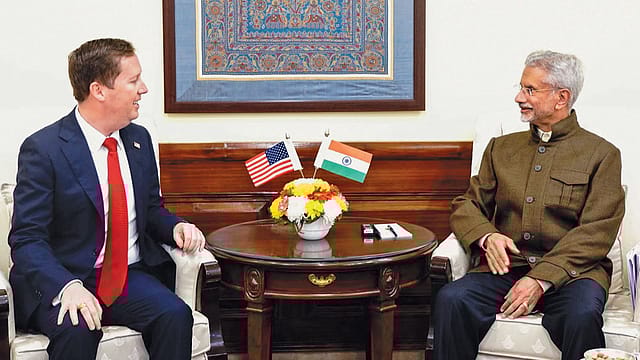
US Ambassador to India Sergio Gor has underscored New Delhi’s importance in maintaining stability in global energy markets as tensions intensify around the Strait of Hormuz.
Addressing a session at the India Today Conclave, the envoy warned that the situation in the region has entered a dangerous phase.
“Today we're in a situation where, unfortunately, Iran is trying to blockade the Strait of Hormuz. The Iranians are recklessly targeting commercial vessels, including Indians who have unfortunately lost their lives through Iranian missiles and drones in the last few days, as recently as yesterday. And so it's we're frankly in a different environment. And so today India understands this. India's a vital partner to us to ensure that these prices remain stable around the world.”
He added that Washington values India’s cooperation in keeping global energy markets steady during the crisis.
“And so frankly we appreciate India working with the United States and the global community in in ensuring that the price of oil remains stable around the world.”
What Concerns Does Washington Have About Iran’s Actions?
The ambassador also reiterated the stance of US President Donald Trump, stressing that Washington cannot allow Iran to acquire nuclear weapons while accusing Tehran of escalating attacks across the region.
“The President's been very clear that we cannot have a nuclear Iran. And what you've seen now is on day one after the United States got involved in this conflict, the first thing Iran did is strike every one of their neighbours, left, right, up and down. And so there was not one person in the Gulf who has avoided this reckless and very dangerous and deadly behaviour, but they've expanded beyond that. They're hitting Azerbaijan, they're hitting Turkey. That's not somebody who's stable,” he said.

The Abandoned Kejriwal
01 May 2026 - Vol 04 | Issue 69
Brain drain from AAP leaves Arvind Kejriwal politically isolated
“Now imagine if that individual had a nuclear bomb. And so I think what the President is doing is bringing stability not just there, but to the whole region and frankly to the whole world,” the US envoy added.
How Has Iran Responded To Threats Against Its Energy Infrastructure?
Iran has issued sharp warnings against any potential strikes targeting its energy infrastructure. A spokesperson for Iran’s military headquarters, Khatam al-Anbiya Central Headquarters, warned that Tehran would respond forcefully.
“The slightest attack on #Iran's energy infrastructure and ports will result in our crushing and devastating response. In the event of such an attack, all the oil and gas infrastructure in the region, in which the United States and its Western allies have interests, will be set on fire and destroyed.”
Is Closing The Strait Of Hormuz Being Used As Strategic Leverage?
Iran’s new Supreme Leader Mojtaba Khamenei has suggested that the possibility of blocking the critical shipping route could remain part of Tehran’s pressure tactics.
“Dear fighter brothers! The desire of the masses of the people is the continuation of effective and regret-inducing defence. Furthermore, the leverage of blocking the Strait of Hormuz must certainly continue to be used,” he said in remarks broadcast on Iranian state television.
In recent days, Iran has tightened restrictions on vessels passing through the Strait of Hormuz amid ongoing US-Israeli strikes. Tehran has said ships not serving the interests of the United States and Israel can still transit safely through the narrow waterway.
(With inputs from ANI)