“Stop Holding the World Hostage”: Germany’s Merz Slams Iran Over UAE Strikes
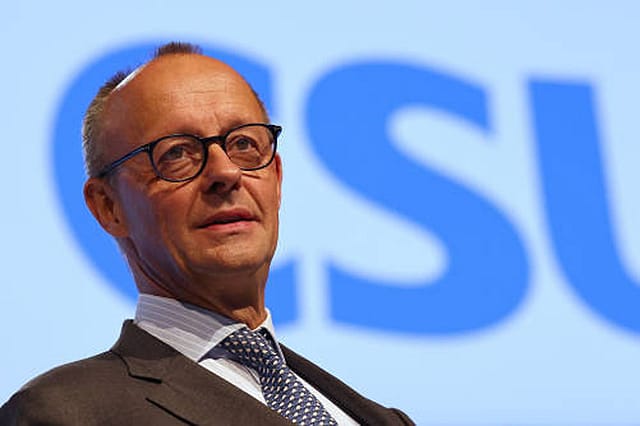
Berlin didn’t mince words. Friedrich Merz called out Iran’s latest strikes on the UAE and issued a blunt demand: return to diplomacy—and stop “holding the region and the world hostage.”
The trigger was a fresh wave of missile and drone attacks targeting the United Arab Emirates—the first direct Iranian military action against the Gulf state since a ceasefire took hold nearly four weeks ago. According to the UAE’s defence ministry, its air defence systems intercepted 12 ballistic missiles, three cruise missiles, and four drones, preventing large-scale damage.
But the message from Europe wasn’t about interception counts. It was about escalation.
Posting on X, Merz warned that the situation had crossed into dangerous territory. “Tehran must return to the negotiating table and stop holding the region and the world hostage. The blockade of the Strait of Hormuz must end,” he said—linking the strikes not just to regional instability, but to global economic risk.
That last line matters. The Strait of Hormuz isn’t just another maritime route. It’s one of the world’s most critical oil chokepoints. Any disruption there sends ripples across global energy markets—quickly.
Merz didn’t stop at condemnation. He framed the attack as part of a broader pattern of threat. “We strongly condemn these attacks. Our solidarity is with the people of the United Arab Emirates and our partners in the region,” he said, signalling Berlin’s alignment with Gulf allies at a moment of rising tension.

Open Minds 2026
26 Jun 2026 - Vol 05 | Issue 26
The power of ideas and arguments in 50 portraits
He also returned to a familiar red line. “Tehran must not acquire a nuclear weapon,” Merz said, adding that there must be no further threats or attacks against partner nations. It was a reminder that, for Europe, the current crisis isn’t isolated—it sits on top of deeper, unresolved concerns around Iran’s nuclear ambitions.
Berlin wasn’t alone. In London, Keir Starmer echoed the urgency, condemning the strikes and calling for immediate de-escalation. “The escalation must cease,” he said, urging Iran to engage meaningfully in negotiations to preserve the fragile ceasefire and move toward a long-term diplomatic solution.
Paris followed with similar clarity. Emmanuel Macron described the targeting of civilian sites as “unjustified and unacceptable,” reinforcing a growing European consensus that the latest escalation risks unravelling weeks of uneasy calm. That calm is already under strain. The current ceasefire—agreed on April 8—was never deeply anchored. It held, but barely. Now, with fresh strikes and rising rhetoric, it looks increasingly fragile.
Complicating matters further are stalled diplomatic efforts. Talks between the United States and Iran have failed to produce meaningful breakthroughs, leaving a vacuum where negotiation should be. And in that vacuum, every strike carries more weight.
That's why the language is sharpening. Words such as 'hostage,' 'unacceptable, and 'must cease' aren’t routine diplomatic phrases. They signal urgency—and a growing fear that the next move may not be contained.
For now, interceptions have prevented the worst. But the bigger question remains open. How long before one doesn’t?
(With inputs from ANI)