Scientists Drill 500 Metres Into Spain's Only Meteorite Crater to Unlock Mars Secrets
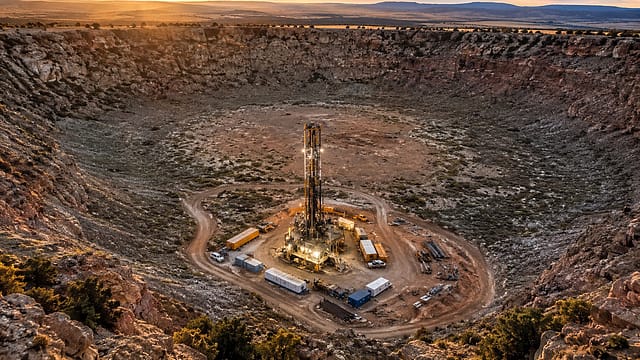
Scientists in Almería, southern Spain, have begun an ambitious underground drilling project at the country's only internationally recognised meteorite crater. The site, formed by a massive impact roughly 8 million years ago, is now the focus of a research effort that could connect events on Earth to the geology of Mars and the Moon, where similar impact craters exist.
What Makes Spain's Only Meteorite Crater So Significant?
The Almería crater is the sole internationally recognised meteorite impact site in Spain, making it a rare natural laboratory. The crater formed when a powerful meteorite struck the region millions of years ago, reshaping the surrounding landscape in ways still visible underground today.
Why Are Researchers Drilling 500 Metres Beneath the Surface?
Scientists are extracting core samples from 500 metres below ground to study how the original impact altered the rock layers and how the crater gradually filled over time. These samples offer a rare window into geological processes that unfolded over millions of years.

The Health and Wellness Issue
25 Sep 2026 - Vol 05 | Issue 39
What Is 'Shocked Quartz'?
Researchers are specifically searching for shocked quartz, a mineral deformation caused by the extreme energy and temperature generated during a meteorite impact. Based on the findings, this intense pressure can make crystalline quartz turn amorphous, leaving a permanent geological signature of the collision.
How Could Findings From This Meteorite Crater Help Scientists Understand Mars?
The research team says comparing shocked quartz from the Almería meteorite crater with similar deformations could help interpret surface features observed on Mars, as per Euronews. Since impact events are far more common on the Martian surface due to its thin atmosphere, Earth-based data offers a valuable reference point.
What Can Crater Evolution Reveal About Ancient Martian Lakebeds?
By studying how the crater slowly filled and evolved, geologists hope to understand similar infill processes on Mars, including how ancient lakebeds within Martian craters may have formed and weathered over time.
Why Are Scientists Comparing This Site to Orbital and Rover Data?
Directly comparing Spain's underground geological record with Martian orbital and rover data helps validate existing theories about planetary formation and impact history across the solar system.
The drilling project at Spain's only meteorite crater is expected to continue yielding insights long after the core samples are extracted, offering scientists a rare terrestrial benchmark for understanding distant planetary surfaces.
(With inputs from yMedia)