Riyadh Airport Attack: Who Are the Houthis—and Could the US Join Saudi Strikes?
Donald Trump has left the door open.
Asked whether the United States would join Saudi Arabia’s strikes against Yemen’s Houthis after Saturday’s deadly attack on Riyadh’s King Khalid International Airport, the US president said: “We may. We’re going to look at it.”
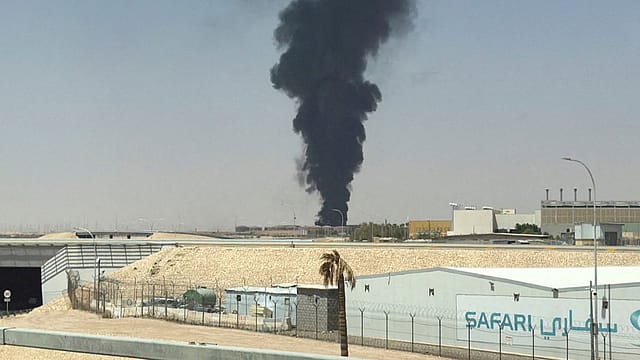
Saudi aviation authorities said 12 people were killed and 309 injured in the October 10 attack. Airport operations were temporarily suspended, airlines cancelled flights and foreign governments issued warnings to travellers.
The immediate question is whether Washington will join the latest Saudi campaign. Behind it lies a longer conflict: a struggle for power in Yemen, Saudi fears about its southern neighbour, and an armed movement capable of striking far beyond the territory it controls.
WHAT HAPPENED AT RIYADH AIRPORT?
An attack struck King Khalid International Airport in the Saudi capital on Saturday, October 10. Saudi Arabia’s General Authority of Civil Aviation said the dead included four Saudi citizens, two Bangladeshis and one person each from the United States, Egypt, Jordan, Syria, Palestine and Sudan.

Zeroing In on ECI
09 Oct 2026 - Vol 05 | Issue 41
Constitutional legitimacy versus political opportunism
Some of the 309 injured were in critical condition. Authorities said property damage was being assessed and airport operations had been temporarily suspended for inspections.
The attack followed earlier strikes on Saudi airports during the week. Saudi and US authorities have blamed the Houthis for Saturday’s attack; responsibility should be distinguished from a confirmed claim by the group.
WHO ARE THE HOUTHIS?
The Houthis, formally known as Ansar Allah, are an armed political movement from northern Yemen. Their roots lie in a religious revival movement associated with the Zaydi branch of Shia Islam. Their popular name comes from the family that founded and leads the movement.
Led by Abdul-Malik al-Houthi, they grew from a northern insurgency into a force controlling Yemen’s capital, Sanaa, and large parts of the country’s northwest. They are aligned with Iran and have developed a military arsenal that includes missiles and drones.
WHY ARE THEY FIGHTING SAUDI ARABIA?
The conflict grew out of Yemen’s struggle over who would govern the country.
Houthi forces and their allies seized Sanaa in September 2014 and subsequently expanded their control. In March 2015, Saudi Arabia led a military intervention at the request of Yemen’s then president, Abd Rabbuh Mansour Hadi, to support his government.
For Riyadh, the conflict also carried a security concern: an Iran-aligned armed movement consolidating power across its southern border. Saudi-led military operations and Houthi cross-border attacks turned Yemen’s internal struggle into a prolonged regional confrontation.
WASN’T THERE A TRUCE?
Yes. A UN-brokered truce began in April 2022.
The agreement covered offensive military operations within Yemen and across its borders. It also provided for fuel shipments through Hudaydah’s ports and commercial flights from Sanaa airport, alongside talks about reopening roads.
It created an opening for negotiations, but a lasting political settlement remained elusive.
The immediate backdrop to the latest escalation is a renewed military offensive. On October 4, Yemen’s Saudi-backed government announced operations to retake Houthi-held territory. Reuters reported that the campaign envisaged Saudi-led aerial combat and Yemeni forces fighting on the ground.
WHY DOES THE FIGHTING MATTER BEYOND YEMEN?
Geography gives the conflict international consequences.
Yemen borders Saudi Arabia and sits beside the Bab el-Mandeb Strait, the passage connecting the Red Sea with the Gulf of Aden. Fighting near this route can threaten commercial shipping as well as neighbouring countries.
The Houthis have attacked vessels in the Red Sea and surrounding waters. The United States and Britain previously struck Houthi military targets in response to attacks on shipping.
The Riyadh attack brings another consequence into view: civilian aviation. Strikes on airports can endanger passengers and workers, shut facilities and disrupt journeys well beyond the country where the attack occurs.
HAS TRUMP DECIDED TO JOIN THE SAUDI STRIKES?
His reported remarks indicate that he is considering participation. They do not announce a decision.
“We may” leaves open the possibility of action. It does not establish when an operation would begin, which forces would participate or what they would target.
That distinction matters because Washington has already conducted military operations against the Houthis. US and allied strikes targeted the group in 2024, and the Pentagon announced another US campaign in March 2025.
The question now is whether America will join this Saudi offensive—and on what terms.
WHAT COULD US PARTICIPATION CHANGE?
It would bring American military power directly into the current Saudi campaign.
Earlier US operations targeted facilities associated with Houthi weapons storage, missile systems, drones and other military capabilities. But Trump’s remarks do not specify the scope of any new operation.
The risk of further escalation would depend on the targets chosen, the duration of the campaign and the Houthi response. An announcement of US participation would therefore require readers to ask a second question: what, precisely, has Washington committed to doing?
WHAT SHOULD INDIAN TRAVELLERS KNOW?
The supplied ANI report says Akasa Air has extended the suspension of flights to and from Riyadh until October 13. Other airlines have also announced cancellations or suspensions.
Passengers should confirm their flight status directly with their airline before leaving for the airport and check official notices about rebooking and refunds. Airport operations and airline schedules can change as safety assessments continue.
No Indian national appears in the fatality breakdown released by Saudi aviation authorities in the supplied report. That does not establish whether Indians were among the injured.
With inputs from ANI