Quad FM Meet: Jaishankar Calls for Stronger Economic Resilience and Secure Supply Chains
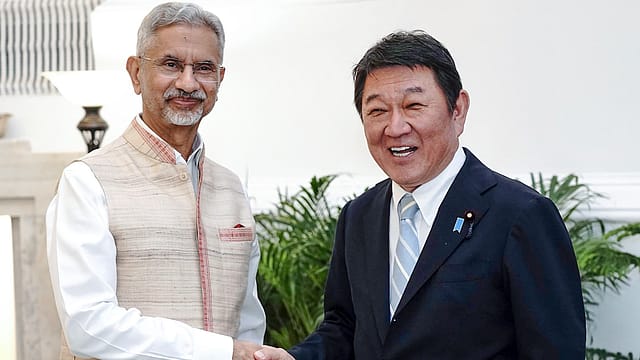
As the Indo-Pacific becomes increasingly central to global geopolitics and trade, the Quad nations are sharpening their focus on economic resilience, secure supply chains, maritime cooperation and counter-terrorism coordination. External Affairs Minister S. Jaishankar said the latest Quad Foreign Ministers’ Meeting in New Delhi reflected growing urgency among the four democracies to prepare for emerging economic and security challenges in the region.
The meeting brought together Australian Foreign Minister Penny Wong, Japanese Foreign Minister Toshimitsu Motegi and US Secretary of State Marco Rubio alongside Jaishankar for wide-ranging discussions on the Indo-Pacific, maritime security, technology, energy and terrorism.
Why the Quad Is Increasingly Focused on the Indo-Pacific
The Quad grouping — comprising India, the United States, Japan and Australia — has steadily evolved from a strategic dialogue into a broader platform dealing with economic, technological and security cooperation.

Zeroing In on ECI
09 Oct 2026 - Vol 05 | Issue 41
Constitutional legitimacy versus political opportunism
Speaking after the meeting, Jaishankar stressed that the Indo-Pacific’s growing importance requires deeper coordination among the member nations.
“We've just concluded a very substantive and productive meeting of the Quad foreign ministers. Much of the discussions and indeed the bilateral exchanges were devoted to the current state of the world. Being QUAD, we naturally focused on issues of particular relevance to the Indo-Pacific. Because we are four maritime democracies located at different ends of the Indo-Pacific, the exchange of perspectives was an exercise of considerable value,” he said.
The remarks underscore how the Quad increasingly views the Indo-Pacific not only as a strategic theatre but also as the centre of future global trade, energy movement and technology cooperation.
Supply Chains and Economic Security Take Centre Stage
One of the major themes of the meeting was economic resilience, especially amid continuing global disruptions linked to geopolitical tensions, trade uncertainty and supply chain vulnerabilities.
Jaishankar highlighted that the Quad nations, as market economies, are working towards making supply chains more reliable and secure while boosting production capabilities.
“The maritime domain has seen a steady expansion of collaboration, including surveillance and domain awareness, logistics network, undersea cables, training, capacity building and HADR activities. We will be continuing to deepen these areas in the times ahead. We spent some time on the question of safe and unimpeded maritime commerce and reaffirmed the significance of scrupulously observing international law. Our four nations are also market economies. We believe strongly that economic resilience should be promoted, the supply chains should be strengthened, trusted and secure technologies diffused, and production capacities enhanced. Our deliberations touched on the current energy and fertiliser availability,” he said.
The emphasis on supply chains comes at a time when countries are attempting to reduce overdependence on single manufacturing hubs and ensure uninterrupted access to critical goods, semiconductors, energy resources and fertilisers.
Maritime Security Remains a Core Quad Priority
The ministers also reviewed ongoing maritime cooperation across the Indo-Pacific. Discussions included surveillance systems, maritime domain awareness, logistics support networks, undersea cable protection, humanitarian assistance and disaster relief operations.
The Quad has consistently projected itself as a supporter of a “free and open Indo-Pacific”, with a particular focus on freedom of navigation and adherence to international law in maritime zones.
The latest meeting reaffirmed that maritime commerce and regional connectivity remain essential pillars of Quad cooperation, especially as global trade routes through the Indo-Pacific continue to grow in significance.
Quad Reiterates Zero Tolerance for Terrorism
Counter-terrorism emerged as another major issue during the discussions, with Jaishankar reiterating the bloc’s commitment to combating terrorism in all forms.
“The Quad nations are open societies that foster innovation and creativity in our quest for growth and prosperity. These forces are strengthened when we undertake more exchanges as we intend to do. So, whether it is in business forums, healthcare initiatives, or digital activities, each facet of a joint effort makes the region that much better. As democratic nations, we also devoted attention to countering the common threat of terrorism. There must be zero tolerance for terrorism, and nations subject to terrorist attacks have the right to defend themselves,” he said.
The remarks come amid heightened global concern over cross-border terrorism and evolving regional security threats.
Why This Meeting Matters
The New Delhi meeting builds on the framework established during the previous Quad Foreign Ministers’ gathering in Washington, DC, on July 1, 2025. Officials used the latest round of discussions to assess progress on critical technology cooperation, climate resilience initiatives and infrastructure projects.
Jaishankar also indicated that the Quad’s role is expected to expand as the Indo-Pacific’s economic and strategic weight increases.
“A free and open Indo-Pacific has many dimensions and facets. Our meeting today took stock of the progress in many of them while encouraging exploration in others. In the coming days, whether it is economic activity, energy trade or maritime commerce, the Indo-Pacific will become even more important to the world. The responsibilities of the Quad will grow commensurately, and we must prepare for that,” he added.
(With inputs from ANI)