PM Modi, Trump Reset Ties at G7, Push India-US Trade Deal Forward
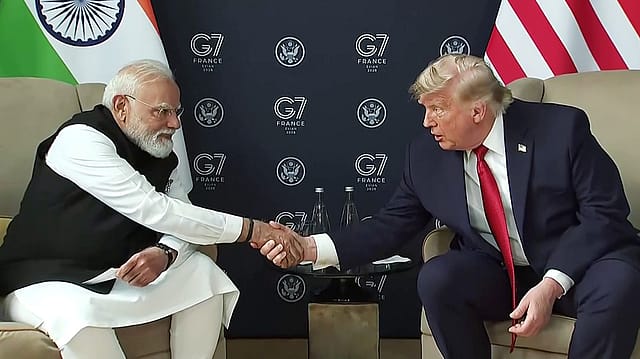
Prime Minister Narendra Modi and US President Donald Trump are back at the table. The two leaders met at the G7 Summit in France, their first in-person talks in 16+ months, a move past trade and geopolitical tensions and steadying the relationship between the two democracies.
It started with a handshake at Tuesday's G7 outreach. By Wednesday, PM Modi and Donald Trump were in serious talks. And Trump even called the Prime Minister "calm and cool."
The White House had earlier confirmed that the meeting would focus heavily on advancing the proposed India-US trade agreement.

The Health and Wellness Issue
25 Sep 2026 - Vol 05 | Issue 39
Earlier sources also said that PM Modi and Trump were likely to discuss the situation in West Asia, the strategic Strait of Hormuz, energy imports from the United States and the proposed bilateral trade agreement during their meeting on the sidelines of the G7 Summit in France.
The sources also said both countries are keen on building a long-term energy partnership, with discussions expected to focus on strengthening cooperation in the energy sector amid concerns over disruptions to global supply chains caused by tensions in West Asia.
Is the India-US Trade Deal Nearing Completion After Final-Stage Talks?
The proposed India-US trade deal is in its final stages, with negotiations progressing steadily and work on the agreement expected to be completed in the coming weeks.
The two nations reached an interim trade agreement earlier in February after a year of talks.
The meeting assumes significance as instability in the Strait of Hormuz continues to impact global energy markets and maritime trade.
The narrow waterway remains one of the world's most critical shipping routes, handling a substantial portion of global oil and gas supplies.
Earlier on Tuesday, PM Modi raised concerns over the impact of disruptions in maritime trade through the Strait of Hormuz while addressing the Outreach Session on "Forging New Partnerships and Rebuilding International Solidarity" at the 52nd G7 Summit.
Addressing G7 leaders, including President Trump, PM Modi welcomed progress in peace efforts in West Asia but highlighted the humanitarian and economic consequences of the recent conflict.
He stressed that lasting solutions to global conflicts can only be achieved through dialogue, diplomacy and international cooperation.
The Prime Minister also underscored the need to ensure the safety of seafarers involved in global maritime trade.
"Ensuring the safety of seafarers, who connect nations through global maritime trade, is our collective responsibility. We must ensure that sea routes remain secure and that seafarers can carry out their duties without fear," he said.
(With inputs from ANI)