Pentagon Readies Ground Options as Trump Faces Mounting Iran Crisis
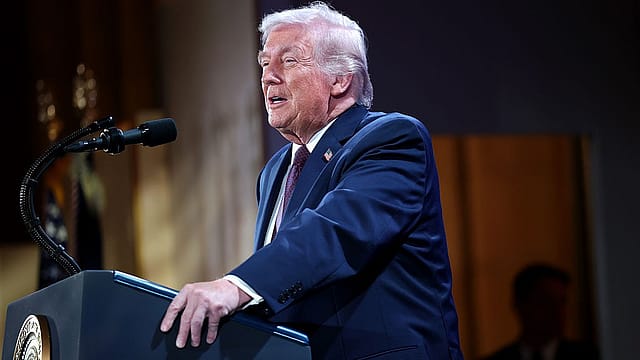
The Pentagon has formulated comprehensive strategies for the potential deployment of United States ground troops into Iran, according to sources speaking to CBS News.
High-level military commanders have reportedly put forward specific requests to ensure readiness as US President Donald Trump considers further actions within the ongoing conflict involving the United States and Israel.
While Trump has been examining the possibility of stationing ground forces in the Middle East, CBS News reported that he has yet to define the exact conditions under which he would approve their use.
The deliberations have been held under anonymity, as those involved were not permitted to discuss the sensitive planning publicly.
When questioned about the possibility of a ground presence in the Oval Office on Thursday, Trump told reporters, "No, I'm not putting troops anywhere," but added, "If I were, I certainly wouldn't tell you."
What Are the Pentagon’s Plans for US Ground Troops in Iran?
White House Press Secretary Karoline Leavitt said the Pentagon's role is to ensure the Commander-in-Chief has "maximum optionality" in any crisis.
She added that such preparations do not indicate a final decision, noting that "as the President said in the Oval Office yesterday, he is not planning to send ground troops anywhere at this time."

Youth Issue 2026
24 Apr 2026 - Vol 04 | Issue 68
50 Portraits of Icons and Achievers
CBS News reported that the military has convened sessions to address the logistics of capturing and detaining Iranian personnel and paramilitary members in the event of an invasion.
These discussions include specific locations where detainees would be processed and held.
The United States is currently readying components of the 82nd Airborne Division for possible deployment to the region.
Which US Military Units Are Being Deployed Amid the Iran Conflict?
This includes the Marine Corps' Marine Expeditionary Unit and the Army's Global Response Force.
According to CBS News, thousands of Marines are already in transit toward the Middle East. Three naval vessels carrying approximately 2,200 Marines recently departed California, marking the second such unit dispatched since the onset of the conflict.
A previous unit, redirected from the Pacific, is still en route to the region. These movements indicate the Pentagon's effort to expand military options available to the President, with assets being repositioned to maintain a high state of readiness amid the ongoing conflict.
President Donald Trump ends the third week of the Iran war confronting a crisis that seems to be slipping out of his hands.
Global energy prices are surging, the United States stands isolated from allies, and more troops are preparing to deploy despite his promise the war would be only a "short excursion."
How Is Trump Responding to NATO’s Role in the Iran Conflict?
A defensive Trump called other NATO countries "cowards" for refusing to help secure the Strait of Hormuz and insisted the campaign was unfolding according to plan.
But his declaration on Friday that the battle "was Militarily WON" clashed with the reality of a defiant Iran that is choking off Gulf oil and gas supplies while launching missile strikes across the region.
Trump, who took office promising to keep the US out of "stupid" military interventions, now appears to control neither the outcome nor the messaging of a conflict he helped to initiate.
The lack of a clear exit strategy carries risks both for his presidential legacy and his party's political prospects as Republicans scramble to defend narrow majorities in Congress in the November midterm elections.
Differences with Israel have begun surfacing, with Trump insisting that he knew nothing in advance about the Israeli attack on Iran's South Pars gas field, while Israeli officials said the strike had indeed been coordinated with the US.
What Are Trump’s Strategic Options in the Iran Conflict?
Trump now finds himself at a crossroads in Operation Epic Fury with no clear sign of which path he might take, analysts say.
He could go all-in and intensify the US offensive, possibly even seizing Iran's oil hub on Kharg Island or deploying troops along Iran's coast to hunt for missile launchers. But that would risk a long-term military commitment that the American public would mostly oppose.
With both sides rejecting negotiations for now, Trump could declare victory and try to walk away, which could alienate Gulf allies who would be left with a wounded, hostile Iran, one that could still pursue a crude nuclear weapon and still exert control over shipping in the Gulf. Iran has denied it is seeking a nuclear weapon.
Reuters reported on Friday that the US military is deploying thousands of additional Marines and sailors to the Middle East, although no decision had been made to send troops into Iran itself.
The war has also shown Trump's once-iron grip over his MAGA movement is weakening, with prominent influencers speaking out against the conflict.
While his base has mostly stood with him so far, analysts say that Trump's control could weaken in the coming weeks if gas prices keep rising and US troops are deployed.
(With inputs from ANI)