Operation Epic Fury: The Weapons Powering America’s Strike Campaign on Iran
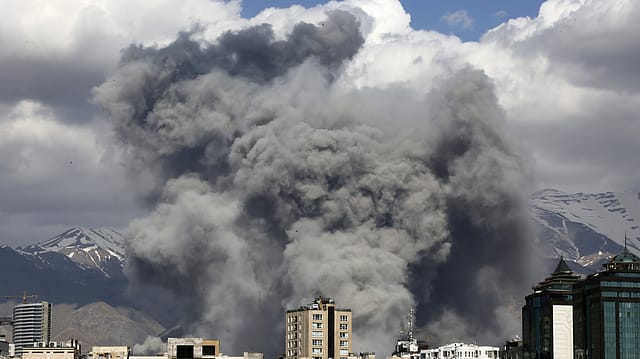
The US military has launched one of its most technologically layered strike campaigns in decades, folding Kamikaze‑style drones, long‑range bombers, and sea‑launched missiles into a single, rapidly evolving operation against Iran.
Here’s a deeper insight into the drones and bombers that were employed.
What is Operation Epic Fury?
Operation Epic Fury is the name the US military has given to its joint campaign of air and missile strikes against Iran, launched alongside Israel on February 28, 2026. According to Pentagon officials, the operation is designed to degrade Iran’s ballistic‑missile infrastructure, Revolutionary Guard sites, and naval and air‑defense capabilities without a full‑scale ground invasion.
What role do US drones play in the strikes?
US forces are relying heavily on long‑range, one‑way attack drones, including the LUCAS (Low‑Cost Unmanned Combat Attack System) family, which are being used in combat for the first time.
These drones, modeled on Iran’s Shahed‑136 design and reportedly built by Arizona‑based SpektreWorks, are autonomously flown to target missile factories, air‑defense batteries, and IRGC facilities at a fraction of the cost of traditional missiles.

Look Who's Talking Regime Change
23 Oct 2026 - Vol 05 | Issue 43
Why is LUCAS such a big deal?
LUCAS drones represent a shift toward “affordable mass”: hundreds of relatively cheap, expendable loitering munitions instead of a handful of expensive missiles. Each unit reportedly costs roughly between 10,000 and 55,000 dollars, giving commanders more options for saturation attacks against dense Iranian defenses.
How do US bombers fit into Operation Epic Fury?
B‑1 Lancer bombers, flying from far‑off bases, have joined the campaign and are dropping 2,000‑pound precision‑guided munitions deep inside Iran. These stand‑off strikes allow the US to hit hardened missile sites and command centers without putting strike aircraft directly over the most heavily defended areas.
What other weapons are the US using against Iran?
Alongside drone and bomber attacks, the US has reportedly deployed Tomahawk cruise missiles, fighter jets such as F‑15s and F‑35s, and short‑range attack drones like Switchblades against Iranian targets.
Ground‑based systems such as HIMARS launchers and Patriot and THAAD batteries are also being used to both strike and defend as Iran retaliates with drones and missiles of its own.
How “smart” are these drones and missiles?
US drones and missiles in Operation Epic Fury are designed with advanced autonomy, anti‑jamming features, and the ability to swarm or loiter over targets before striking. Some platforms can receive last‑minute targeting updates mid‑flight, allowing them to adapt to shifting Iranian defenses or new intelligence.
Why was the use of Anthropic’s Claude AI during the strikes considered a major political and military contradiction?
The military used Claude for targeting and simulations on March 1; just hours after the Trump administration banned the company and labeled it a security risk for refusing to remove ethical AI safeguards.
What are the Pentagon’s stated goals in this campaign?
Senior officials say Operation Epic Fury aims to “destroy Iranian offensive missiles, destroy Iranian missile production, destroy their Navy and other security infrastructure,” and erode capabilities that could support nuclear ambitions.
In public remarks, Defense Secretary Pete Hegseth has stressed that objectives are “laser‑focused” on military assets rather than civilian infrastructure, at least in official doctrine.
How is Iran responding to US drones and bombers?
Iran has reportedly launched thousands of drones and missiles in retaliation, including Shahed‑style and ballistic projectiles aimed at US and allied bases and regional partners. That barrage is testing Patriot, THAAD, and other air‑ and missile‑defense systems stationed across the Middle East, with some analysts warning that interceptor stocks could become strained.
How did Iran’s “bomber” philosophy differ from the US during the conflict?
Iran replaced traditional crewed bombers with “suicide” drones like the Shahed-136, using mass swarms to overwhelm defenses, whereas the US utilized B-2 stealth bombers for high-precision, deep-penetration strikes.
What does this mean for the future of US‑Iran warfare?
Operation Epic Fury signals a turn toward drone‑heavy, stand‑off warfare where cheap, expendable platforms do much of the initial “shock and awe,” while bombers and missiles follow up on hardened targets.
For Iran, it underscores that even asymmetric drone tactics can be mirrored and weaponized by adversaries, reshaping how both sides will fight in any future US‑Iran conflict.
(With inputs from yMedia)