Nepal flood horror deepens: 1,000 dead, nearly 4,000 missing as rescuers race into flooded tunnels
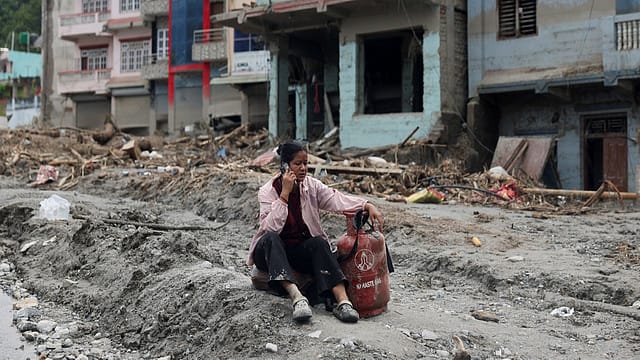
The water has begun to recede in parts of Nepal. The search, however, is nowhere near over.
More than a week after a devastating flash flood swept through Nepal's Himalayan valleys, the death toll has crossed 1,000 and thousands of people remain unaccounted for. Rescuers are now pushing deeper into mud-filled hydropower tunnels, while teams work to identify unidentified bodies and reopen roads and bridges destroyed by the disaster.
Reuters reported on Tuesday that more than 1,000 people have died and roughly 4,000 remain missing, with rescue teams concentrating on remote areas and hydropower facilities.
So what happens next? Here is what we know.
What is the latest death toll in Nepal?
Nepal's National Disaster Risk Reduction and Management Authority (NDRRMA) reported 987 deaths in Nepal, while 16 deaths were reported on the Chinese side of the border, taking the combined toll beyond 1,000. The figures have continued to change as authorities reconcile lists of missing people and recover more bodies.

Zeroing In on ECI
09 Oct 2026 - Vol 05 | Issue 41
Constitutional legitimacy versus political opportunism
The disaster began on August 26 after an ice-rock avalanche in the Himalayas triggered a devastating torrent of water, mud and debris through river valleys.
Why are nearly 4,000 people still missing?
This is where the rescue operation becomes particularly difficult.
Nepal's latest figures put the number of missing at around 3,916, including hundreds of hydropower workers and foreign nationals. Hindustan Times reported that more than 600 workers connected to hydropower projects remain missing or are feared trapped in tunnels and other infrastructure in Rasuwa and Nuwakot.
The problem is not simply finding people. Roads and bridges have been swept away, entire stretches of terrain have changed and several tunnels are packed with mud and water.
Why are rescuers searching hydropower tunnels?
Because some of the biggest unanswered questions are underground.
Search teams from the Nepal Army, Armed Police Force and Nepal Electricity Authority are working at multiple hydropower sites. International experts have also joined the operation.
At several facilities, rescuers have had to navigate metres of thick mud inside tunnels, using equipment, ropes, drones and other specialised techniques. Hindustan Times described the operation as a race to reach hundreds of workers amid increasingly difficult conditions.
Reuters reported that rescue efforts are particularly focused on hydropower plants, where hundreds of workers remain unaccounted for.
How many people have been rescued so far?
Despite the scale of the destruction, thousands have been brought to safety.
Nepal's authorities have reported more than 11,000 rescues, with the Nepal Army conducting hundreds of helicopter sorties to evacuate people from areas cut off by the floods.
Reuters reported that more than 11,000 people had been rescued, while Nepal has deployed thousands of security personnel for evacuation, relief and search operations.
The operation is particularly challenging in mountain districts where destroyed roads have made helicopters the only practical route in and out.
What is happening to the unidentified bodies?
Another race is taking place outside the flood zone: identifying the dead.
Bodies have been recovered across multiple districts, with unidentified remains being transferred to hospitals and identification centres.
India has also sent a 19-member DNA team to Nepal to help identify victims. Indian forensic experts are collecting and analysing biological samples from bodies and relatives as authorities work to reunite victims with their families.
The Indian Embassy in Kathmandu has separately outlined a process involving photographs, records and DNA matching before foreign victims' remains can be repatriated.
Has Nepal's infrastructure also been devastated?
Yes. And that is making the rescue itself harder.
Floodwaters and landslides destroyed roads, bridges and power infrastructure, cutting off communities and forcing authorities to create alternative routes.
The damage is particularly serious for Nepal's hydropower sector. Reuters reported that the disaster affected around 431 MW of electricity capacity, while damage to hydropower projects has raised fresh questions about the country's plans to rapidly expand the sector.
Some electricity and communication services have already begun returning, but restoring transport links will take considerably longer.
What is happening at the hydropower sites?
Search teams are effectively working inside a maze of mud.
At Chilime, Rasuwagadhi, Langtang and other projects, teams are entering tunnels where visibility is poor and the ground remains unstable. At some sites, excavators and other heavy equipment have had to be moved into difficult terrain by helicopter.
The Times of India reported that rescuers were using searchlights, drones and specialist equipment as they pushed deeper into mud- and water-filled tunnels.
The challenge is compounded by the fact that every metre of progress can require clearing enormous quantities of debris.
What is happening to roads and bridges?
Authorities are simultaneously trying to reopen the arteries needed to keep the rescue operation moving.
Crews are clearing debris, surveying damaged bridges and establishing alternative routes for vehicles. In some places, sections of roads have disappeared completely, leaving rivers flowing through what were once roadbeds.
Until those links are restored, helicopters and temporary routes remain critical for getting food, medicine, fuel and rescue equipment into isolated communities.
Why is this disaster so difficult to recover from?
Because Nepal is fighting several emergencies at once.
There is the immediate search for survivors and missing people. Then there is the identification of bodies. Then come the enormous tasks of restoring roads, bridges, electricity and communications — all while some mountain areas remain extremely difficult to reach.
The disaster has also exposed the vulnerability of Nepal's rapidly expanding hydropower infrastructure to extreme Himalayan events. Reuters reported that the floods destroyed a significant portion of the country's electricity-generating capacity and forced Nepal to import power from India.
What happens now?
For families, the most urgent question remains brutally simple: where are their missing loved ones?
For rescuers, the answer means going deeper — into collapsed tunnels, through unstable terrain and across roads that no longer exist.
The headline number may now be more than 1,000 dead. But with nearly 4,000 people still missing, Nepal's disaster story is far from its final chapter.
(With inputs from ANI)