Nepal Flood Disaster: How a Tattoo Helped Identify One Man Amid a National Struggle to Name the Dead
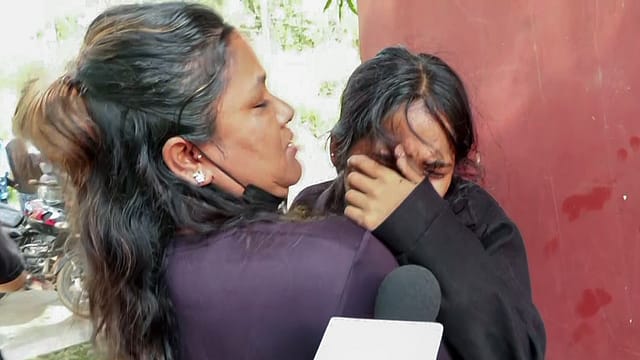
Suman Gole’s face could no longer tell his family who he was.
The 25-year-old excavator operator had finished a night shift at a hydropower project beside the Trishuli River and returned to his quarters. Moments later, the flood came for him.
His uncle searched riverbanks, hospitals and temporary morgues across Chitwan and Nawalparasi. Photographs of Suman travelled online as the family moved from district to district, trapped between two unbearable possibilities: he might still be alive somewhere, or his body might be lying unidentified far from home.
Then residents spotted something in a police bulletin. A name tattooed across the chest of one of the recovered victims.
It was the name of Suman’s wife. The face had been destroyed by water and debris. The tattoo brought him home.
Suman’s story, reported by The Kathmandu Post, captures the second catastrophe unfolding after Nepal’s Bhote Koshi flash flood. The first swept away people, villages, roads and hydropower projects. The second is making the country fight to return a name to every body the river carries downstream.

Zeroing In on ECI
09 Oct 2026 - Vol 05 | Issue 41
Constitutional legitimacy versus political opportunism
Hundreds of Kilometres From Home
The flood struck the Himalayan border district of Rasuwa, but many of its dead are being found far away.
Bodies swept into the Bhote Koshi and Trishuli have travelled through Nuwakot and Dhading towards the Narayani River, surfacing in Chitwan, Tanahun and the Nawalparasi districts. Some have been carried hundreds of kilometres from the place where they disappeared. Seven suspected flood victims have reportedly been recovered from rivers in Uttar Pradesh.
This distance has turned identification into a geographical puzzle. A family searching in Rasuwa may not know that a body has surfaced days later in Chitwan. Roads and bridges are broken. Mobile networks remain unreliable. Districts are maintaining separate records while new remains continue to emerge from mud, debris and riverbanks.
By Friday evening, Nepal had recorded 579 deaths and 1,924 missing people. The country’s mortuaries were never built for casualties on this scale.
Forensic experts cited by Nepalese media estimate that hospitals across the country possess deep-freezer capacity for only 300 to 350 bodies. The disaster has already produced almost twice that number of confirmed deaths.
A Hospital Built for 24 Receives 233
The numbers are at their most brutal in Bharatpur.
Bharatpur Hospital’s mortuary can hold 24 bodies. It had received 233 by Friday, Nepal News reported. Only four had been identified at the time.
Bodies were being kept in tents outside the mortuary as doctors, police officers and volunteers worked through the growing backlog. Chitwan authorities converted an unused government building into a temporary storage and identification centre, installing air conditioners and attempting to source dry ice.
The temporary facility is expected to accommodate around 250 bodies. If that fills, authorities have reportedly considered using the electric crematorium at Devghat after completing the required identification procedures and collecting forensic samples.
The problem is not merely finding floor space. A room must remain cold enough to slow decomposition. Refrigeration must survive power interruptions. Each body must be photographed, tagged, examined and linked to the precise place and time of recovery. Personal possessions must remain with the correct remains.
One error can leave two families with the wrong answer.
Pokhara Runs Out of Room
Pokhara has become another destination for bodies that smaller districts cannot hold or examine. Nepal News reported that 102 bodies recovered in Nawalparasi East, Dhading, Tanahun and Gorkha had been transferred to the city. Kaski’s hospitals have a combined mortuary capacity of 88.
The city was therefore over capacity before all the bodies arrived.
Officials have stored remains at temperatures between 2°C and 6°C, but hospital authorities told The Kathmandu Post that such conditions may preserve them for only ten days to two weeks. Keeping them longer would require large-scale sub-zero facilities that Pokhara does not possess.
Digital screens displaying photographs of recovered victims have been installed for families arriving in search of relatives.
For some, the screen may end weeks of uncertainty. For others, it may begin a different kind of grief.
A Scar, A Ring, A Piece of Cloth
Police teams retrieving bodies from rivers first photograph them at the recovery site. Mud is carefully removed. The remains are placed in a body bag, assigned a tag and transported to a hospital or temporary holding centre.
Investigators then look for whatever the flood has left behind: a tattoo, scar, ring, piece of jewellery, item of clothing, fingerprint or recognisable dental feature.
Some remains have been so severely damaged or decomposed that even determining age or sex has become difficult. Of 154 bodies recovered in Nawalparasi East, the sex of 49 could not be established, according to The Kathmandu Post.
Where visual identification remains possible, photographs are shown to searching relatives or released through official channels. The circulation of images of the dead is distressing, but in a disaster spread across several districts and countries, a single physical detail may be the only path connecting a body to its family.
Suman Gole’s tattoo proved exactly that.
DNA Before Burial
When faces, fingerprints and possessions fail, investigators turn to DNA.
Under Nepal’s Unidentified and Unclaimed Bodies Management Guidelines, police must photograph the remains, record fingerprints where possible, conduct a post-mortem and preserve biological samples. DNA profiles can later be compared with samples provided by relatives.
Bharatpur has assembled four forensic teams to process the bodies. Specialists can extract and preserve samples locally, but genetic sequencing must be performed at laboratories in Kathmandu.
Nepal does not have enough forensic pathologists for an emergency of this magnitude. Nawalparasi East reportedly has six medical workers capable of conducting basic autopsies but no certified forensic pathologist.
Foreign Minister Shisir Khanal told Reuters that Nepal was seeking international technical assistance for DNA testing, body identification and the longer-term preservation of remains. Kathmandu has said that its forces can conduct the general rescue operation, but the forensic task requires expertise and facilities the country does not possess in sufficient quantity.
The Cruellest Deadline
Unidentified bodies cannot remain in improvised cold rooms indefinitely.
If a family cannot be located and DNA results are unavailable, authorities may have to bury remains at designated sites after assigning each one a tag and recording the location. The samples, photographs and forensic record would be preserved so that identification could take place later.
That procedure may be administratively necessary. For families, it means living with an unfinished death.
Nearly 2,000 people remain missing. Some may be alive but cut off by damaged roads and failed networks. Others may be among the unidentified bodies distributed across hospital morgues, community halls, police compounds and temporary storage buildings.
Every hour now matters. Summer temperatures accelerate decomposition. Physical features disappear. Fingerprints deteriorate. Families travel farther from home, carrying photographs and descriptions of the smallest details: a mole near the eye, an old fracture, a wedding ring, a shirt worn to work.
The flood has already taken their homes and relatives. Nepal is fighting to stop it from taking their names.
With inputs from ANI