Middle East Aviation Update: UAE Resumes Flights, Oman Air Cancels Key Routes
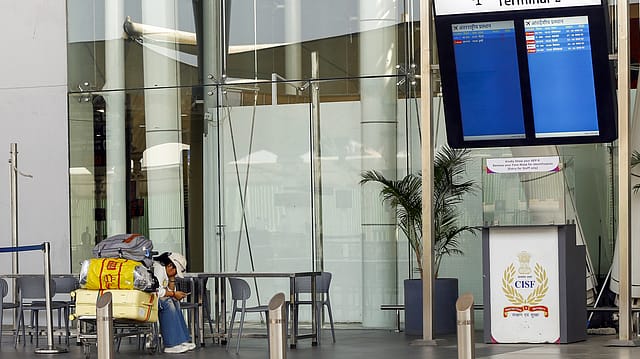
Air navigation across the United Arab Emirates has, for now, returned to normal following a temporary shutdown triggered by escalating regional tensions. Authorities confirmed that operations resumed after a “comprehensive assessment of operational and security conditions,” signalling cautious stability in the region’s aviation landscape.
The General Civil Aviation Authority (GCAA), as reported by WAM, said the decision followed close coordination with relevant agencies to ensure flight safety. Even as services resume, the authority stressed that “continuous real-time monitoring” remains in place to safeguard air navigation amid an evolving security environment.
The reopening comes after the UAE enforced a complete airspace closure earlier this week, an “exceptional precautionary measure”, as its air defence systems intercepted incoming missile and drone threats originating from Iran.
In Dubai, loud explosions reported by residents were later clarified as “successful interceptions” by the country’s defence network. While the immediate threat was neutralised, the fallout extended to energy infrastructure, with a drone strike igniting a fire at the Shah gas field in Abu Dhabi. Officials confirmed the blaze had been “contained and brought under control,” though operations remain suspended pending a full damage assessment.

Zeroing In on ECI
09 Oct 2026 - Vol 05 | Issue 41
Constitutional legitimacy versus political opportunism
These developments unfold against the backdrop of a widening conflict involving the United States, Israel, and Iran, now in its 18th day. The crisis began on February 28 following US and Israeli strikes that killed Iran’s former Supreme Leader, Ayatollah Ali Khamenei, triggering sustained retaliatory actions across the region.
Acknowledging recent disruptions, the GCAA thanked passengers and airlines for their cooperation and reaffirmed the “full readiness” of its operational teams. It also urged the public to rely on “official sources” for accurate updates on flight schedules and airspace status.
Why Has Oman Air Suspended Flights?
While the UAE moves toward normalcy, aviation disruptions persist elsewhere. Oman Air, the national carrier of Oman, has temporarily suspended flights to nine destinations, citing safety concerns linked to restricted airspace and rising geopolitical tensions.
The airline stated that the decision was necessary to maintain passenger safety and operational efficiency, as shifting conflict dynamics continue to impact key aviation corridors across the Middle East.
Airlines depend heavily on fixed international air routes, and when these become unsafe due to military activity or airspace closures, operations must either be rerouted or halted altogether. Oman Air confirmed that several cancellations were unavoidable under current conditions, reflecting a broader regional trend of disrupted schedules and cautious operational planning.
Which Destinations Are Affected by the Suspension?
The suspension impacts several major regional and international routes, including Amman, Dubai, Manama, Doha, Dammam, Kuwait City, Copenhagen, Baghdad, and Khasab.
These cancellations highlight the interconnected nature of global aviation, where disruptions in one part of the network can ripple across continents. Despite this, Oman Air continues to operate many of its other routes, ensuring that core connectivity from Muscat remains intact.
What Does This Mean for Regional Aviation Stability?
The contrasting developments, UAE reopening its airspace and Oman Air susping routes, underscore the fragile balance currently defining Middle East aviation.
While some corridors are stabilising, others remain vulnerable to rapid changes in the security landscape. Authorities across the region continue to monitor conditions closely, with airlines adjusting operations in real time to prioritise safety.
For travellers and industry stakeholders alike, the message is clear: normalcy is returning, but uncertainty still lingers.
(With inputs from ANI)