Man Sprays Mystery Substance In A Crowded Tokyo Mall. Here’s What We Know
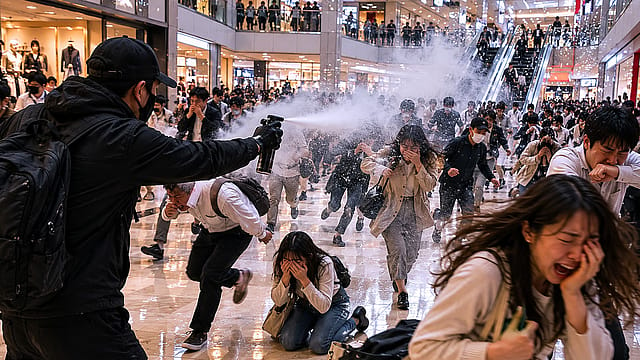
A routine Sunday at one of Tokyo's most glamorous shopping destinations turned alarming on 25 May when a man allegedly sprayed an unknown substance near an ATM inside the Ginza Six shopping complex. Within minutes, dozens of people reported throat pain, hazmat-suited responders flooded the scene, and surrounding roads were shut down. What began as confusion quickly became a full-scale public safety incident in the heart of Japan's most upscale district.
What Happened at the Tokyo Mall?
According to the Tokyo Fire Department, 26 people reported suddenly developing throat pain near the Ginza Six shopping complex. A man allegedly sprayed the mystery substance near a bank ATM on the first floor, close to a luxury department store. All but one of those affected were taken to hospital, with officials describing symptoms as mostly mild.
What Is the Mystery Substance That Was Sprayed?
Authorities have not made a definitive statement, but the spray likely contained capsaicin, the active irritant found in chilli peppers. Police detected traces of pepper spray on the wall inside the mall.
How Did Eyewitnesses Describe the Experience?
A 70-year-old woman near the ATM said that her throat began stinging almost immediately. "Once I went into the ATM corner, my throat felt scratchy, almost numb," she reportedly said, as per MSN news. Yuzo Tsuda, 78, told The Associated Press he began coughing after approaching the area, though the discomfort subsided roughly an hour later, cited the LADbible.

Open Minds 2026
26 Jun 2026 - Vol 05 | Issue 26
The power of ideas and arguments in 50 portraits
How Large Was the Emergency Response?
Dozens of fire engines and ambulances lined the street outside Ginza Six. Emergency workers in hazmat suits were filmed wiping a stain from the wall while others escorted shoppers to specialised trucks for examination. Surrounding roads were temporarily closed, though shoppers continued entering through side entrances.
Is the Suspect Still at Large?
Police are still searching for the suspect. NHK confirmed an investigation is underway with no arrest announced.
Does Japan Have a History of Such Attacks?
Violent crime in Japan is relatively rare. However, the 1995 Tokyo subway sarin attack killed 14 and left more than 5,800 ill, according to historical records. Sunday's incident has renewed public discussion about security vulnerabilities in high-footfall commercial spaces across the country.
The Ginza Six incident is a reminder that public safety threats do not always arrive with warning signs. As the investigation continues, attention will likely turn to how security protocols at busy venues across Japan need urgent reassessment.
(With inputs from yMedia)