Major Setback for Donald Trump as Supreme Court Upholds Birthright Citizenship
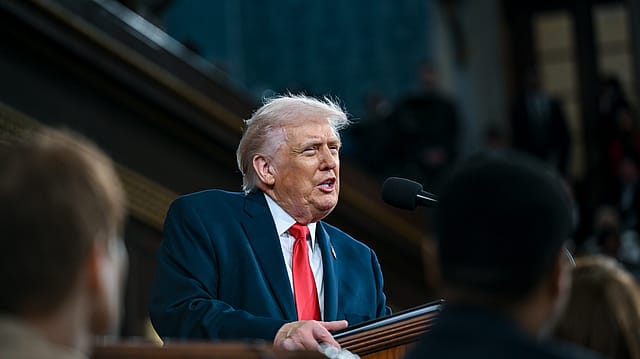
In a significant setback for President Donald Trump, the US Supreme Court on Tuesday struck down his executive order aimed at ending birthright citizenship and reaffirmed that children born in the United States are entitled to automatic citizenship under the Constitution, regardless of their parents' immigration status.
Court reaffirms constitutional guarantee of citizenship
According to court documents shared by CNN, the Supreme Court ruled that children born in the United States to parents who are either unlawfully present or temporarily residing in the country are entitled to automatic US citizenship under the Citizenship Clause of the Fourteenth Amendment.
The Court also relied on its landmark ruling in United States v. Wong Kim Ark, which established that children born on US soil to foreign parents are entitled to birthright citizenship.
The ruling effectively nullifies Trump's executive order, which sought to restrict citizenship rights for certain children born in the United States.
Greening the Future
23 Jul 2026 - Vol 05 | Issue 30
Securing a sustainable India
During the proceedings, CNN reported that attorneys representing the Trump administration argued that the Fourteenth Amendment required individuals to be domiciled in the United States, or have the intention of remaining permanently in the country, before their children could qualify for birthright citizenship.
Majority rejects Trump administration's position
Writing for the majority, Chief Justice John Roberts underscored the constitutional significance of citizenship protections.
"Citizenship, then and now, was the right to have rights -- to freely participate in our political community," Roberts wrote for the court. "The Framers of the Fourteenth Amendment extended that promise to 'every free-born person in this land.' We keep that promise today."
According to The New York Times, three conservative justices — Clarence Thomas, Neil M. Gorsuch and Samuel A. Alito Jr. — dissented from the ruling.
Justice Brett M. Kavanaugh joined the majority in striking down the executive order, although he reportedly based his decision on federal law rather than a constitutional interpretation.
Civil rights groups welcome decision
The decision was welcomed by civil rights organisations and immigration advocacy groups, which had strongly opposed the executive order.
Deborah Fleischaker, a former Homeland Security official now associated with UnidosUS, described the ruling as "a huge relief."
The judgment comes after Trump had publicly warned against an adverse ruling. In May, according to The New York Times, he wrote that a "negative ruling on Birthright Citizenship, on top of the recent Supreme Court Tariff catastrophe, is not Economically sustainable for the United States of America!"
Birthright citizenship had been a central issue in Trump's political agenda, particularly during his successful campaign for a second term, where he pledged to curb what he described as "birth tourism" and tighten both legal and illegal immigration policies.
(With inputs from ANI)