Lebanon War Continues: Why Israel Is Still Striking Beirut After Iran-US ‘Truce’
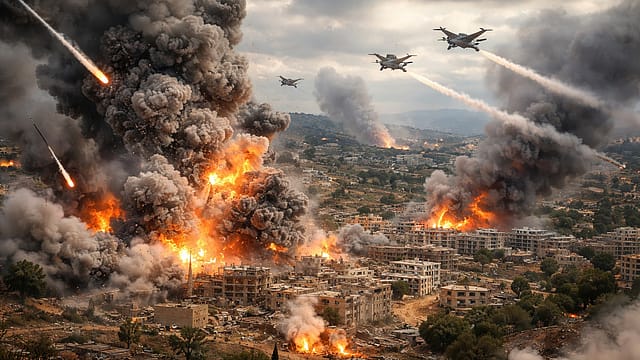
On April 8, Israel hit central Beirut and other parts of Lebanon in its largest coordinated assault of the Lebanon war. The strikes killed at least 254 people and wounded over 1,100, as per Lebanon's Civil Defence. This came hours after Pakistan announced an Iran-US ceasefire between Washington and Tehran.
What Happened in Lebanon on April 8?
Israel struck over 100 targets across Beirut, the Bekaa Valley, Sidon, and Tyre within ten minutes, calling the assault "Operation Eternal Darkness." According to Al Jazeera, hospitals were overwhelmed within hours and issued urgent appeals for blood.
How Did the Lebanon War Restart?
The Lebanon war reignited on March 2, 2026, after Hezbollah resumed rocket fire in response to the US-Israel assassination of Iranian Supreme Leader Ali Khamenei on February 28. The conflict has since killed over 1,500 people and displaced 1.2 million Lebanese, reported Al Jazeera.
What Did the Iran US Ceasefire Actually Cover?
Pakistan, the mediator, stated the temporary truce covered Lebanon. Iran agreed. But Israeli Prime Minister Netanyahu rejected this immediately. Trump told reporters Lebanon was "separate" and not part of the Iran US ceasefire.
Why Does Israel Say the Temporary Truce Does Not Apply?
Israel frames the Lebanon war as a separate conflict against Hezbollah. Defence Minister Israel Katz said in a video statement that the strikes were the "largest concentrated blow Hezbollah has suffered since Operation Beepers," referring to the 2024 pager bomb campaign. Israeli military chief Lt. Gen. Eyal Zamir told The Times of Israel that the army would continue to "utilize every operational opportunity" to strike Hezbollah, truce or no truce.

Exclusive: To the Heavens and Back
19 Jun 2026 - Vol 04 | Issue 76
Shubhanshu Shukla relives the space odyssey that put India into orbit
How Did the World React to the Strikes?
As per NBC News, French President Macron urged both Trump and Iranian President Pezeshkian to include Lebanon in the Iran US ceasefire. The UN Special Coordinator for Lebanon, Jeanine Hennis, said the attacks "cannot go on." Spain called on the European Union to suspend its trade agreement with Israel.
What Is Hezbollah Doing Now?
Hezbollah largely held fire on April 8 after the temporary truce took effect. One senior official told reporters the group would not return to the pre-March 2 situation. The Middle East crisis deepened as Iran threatened to retaliate if Israeli attacks on Lebanon continued.
What Happens Next in the Lebanon War?
Lebanon's government told the Associated Press it is ready for direct negotiations with Israel. Israel has not responded. Iran re-closed the Strait of Hormuz on April 8, directly linking its decision to the Israeli strikes on Lebanon, according to NBC News.
The Lebanon war now sits at the centre of the wider Middle East crisis. Whether the temporary truce survives depends on whether Washington presses Israel to stop.
(With inputs from yMedia)