Israel Planned Khamenei Assassination Months in Advance, says Defence Minister Katz
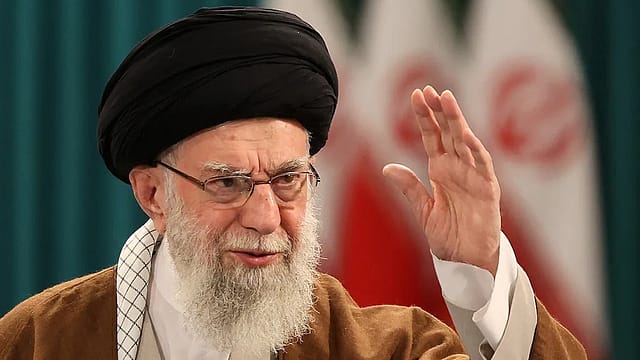
Israel had decided to eliminate Iran's former Supreme Leader Ali Khamenei as early as November, with the initial plan to carry out the operation around six months later, according to a report by The Jerusalem Post citing Defence Minister Israel Katz.
Speaking on Thursday, Katz revealed that the strategic objective was set during a high-level security meeting late last year.
"Already in November we were convened with the prime minister in a very tight forum and the prime minister [Benjamin Netanyahu] set the goal of eliminating Khamenei," Katz told N12 News.
He further noted that the operation was originally scheduled for the middle of 2026.
According to The Jerusalem Post, the timeline was later accelerated after a period of domestic unrest inside Iran.
Why did Israel move forward with the plan to eliminate Ali Khamenei earlier than scheduled?
Israel reportedly shared the strategy with Washington and brought the mission forward around January.
Katz said the decision to move ahead earlier was driven by concerns that the pressured clerical leadership in Tehran might launch hostilities against Israeli and United States assets across the Middle East.
The killing was carried out during the opening hours of Operations Roaring Lion and Epic Fury, which began on Saturday.

The Abandoned Kejriwal
01 May 2026 - Vol 04 | Issue 69
Brain drain from AAP leaves Arvind Kejriwal politically isolated
The strike marked the first instance of a sovereign nation's top leader being eliminated through an airstrike.
Israel has maintained that its primary objectives are to dismantle what it calls an "existential threat" posed by Iran's ballistic missile project and nuclear programme while also facilitating "regime change."
Which Iranian military and security targets did Israel strike in Tehran and Alborz province?
Following the strike, the Israel Defence Forces continued to intensify their air campaign. On Thursday, the IDF said it had completed its 12th wave of strikes in Tehran targeting key Iranian security and military infrastructure.
Among the targets was the headquarters of a special unit in Alborz province responsible for internal security forces.
In a series of posts on X, the IDF said the Alborz headquarters commands all special units in the region and directs the regime's armed forces. Additional facilities belonging to the Islamic Revolutionary Guard Corps and the Basij paramilitary force were also struck.
The Israeli Air Force also targeted a central command centre for Iran's armed internal security forces. Dozens of additional sites used for storing and producing weapons were hit as part of the ongoing campaign against what Israel described as the "Iranian terror regime."
"The IDF continues to deepen the impact on all the mechanisms of the Iranian terror regime in Tehran," the Israeli Air Force said, describing the offensive as part of sustained military action against Iranian infrastructure.
The escalation follows a broader outbreak of conflict earlier this week. In retaliation for the death of Ayatollah Ali Khamenei, Iran launched waves of drone and missile attacks across multiple Arab countries targeting American military bases and Israeli assets.
What did Sri Lankan President Anura Disanayake say about the conflict following Ali Khamenei’s death?
Amid the widening conflict, Sri Lankan President Anura Disanayake said Sri Lanka would remain non-aligned during the ongoing West Asia crisis and called on all sides to prioritise peace.
"No civilian should die in wars. Our approach is that every life is as precious as our own. We jealously guard our non-aligned policy while ensuring that humanitarian values and the saving of lives remain our top priority,” Disanayake wrote, in a post on X.
“What the world urgently needs today is peace. There is a real risk of a severe global economic crisis, and entire societies are facing serious and complex challenges. We call upon all parties to demonstrate a firm commitment to peace,” the Sri Lankan president added.
“As a state, Sri Lanka stands ready to support every step toward ending hostilities. All our actions are aimed at saving lives and ensuring that humanity prevails,” he said.
Why did the Iranian ship IRIS Bushehr send a distress call near Sri Lanka?
Sri Lanka on Thursday extended humanitarian assistance to a second Iranian vessel that issued a distress signal near its territorial waters.
The crew of the IRIS Bushehr was disembarked for humanitarian assistance and the ship was moved to Trincomalee Harbour.
The Sri Lanka Navy arranged for the safe transport of the 208 personnel on board to Colombo.
At a news conference, the president reiterated that Sri Lanka would maintain a neutral stance in the tensions between the United States and Iran.
He said Sri Lanka would not allow its land, territorial waters and airspace to be used in an inimical manner against any country, according to the Daily Mirror Sri Lanka.
The distress call from IRINS Bushehr followed the sinking of IRIS Dena, which was struck by a torpedo fired by a United States submarine on March 4, 2026.
More than 100 sailors were reported killed in the attack, while Sri Lanka Navy and Air Force personnel managed to rescue about 32 to 35 survivors.
(With inputs from ANI)