Israel Kills Hezbollah Chief’s Nephew in Beirut Strike: What Happened
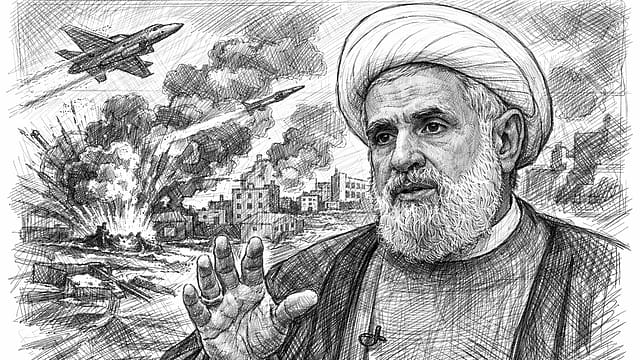
The Israel Defense Forces said it killed Ali Yusuf Harshi, identified as the nephew and personal secretary of Hezbollah Secretary-General Naim Qassem, during an overnight strike in Beirut.
According to the IDF, Harshi was not just a relative but a key figure within the organisation’s leadership structure.
"Yesterday (Wednesday), the IDF struck in the Beirut area and eliminated Ali Yusuf Harshi, the personal secretary and nephew of Hezbollah Secretary-General Naim Qassem. Harshi was a close associate and personal advisor to Hezbollah Secretary-General Naim Qassem and played a central role in managing and securing his office," the statement read.
Why is this killing significant?
The strike is being seen as a targeted hit on the inner circle of Hezbollah leadership.
By eliminating someone responsible for both advisory and operational security roles, Israel appears to be attempting to disrupt command, communication, and internal coordination at the top level.
What other military actions did Israel carry out?
The IDF said the Beirut strike was part of a broader campaign targeting Hezbollah infrastructure across Lebanon.
It claimed to have hit two strategic crossings used for movement between the northern and southern parts of the Litani River, allegedly disrupting the transfer of weapons such as rockets and launchers.

Open Minds 2026
26 Jun 2026 - Vol 05 | Issue 26
The power of ideas and arguments in 50 portraits
In southern Lebanon, around 10 sites were targeted, including weapons storage facilities, launchers, and command centres.
What is happening on the ground in southern Lebanon?
The IDF said its 162nd Division is continuing ground operations in the region.
Troops from the 401st Brigade reportedly uncovered an underground tunnel shaft used by militants. During the operation, a fighter emerging from the tunnel was killed in close combat, and a cache of weapons—including explosives, rockets, RPG launchers, and grenades—was seized.
The military also claimed that forces from its 215th Fire Brigade killed more than 70 militants across multiple operations, including a group allegedly preparing mortar attacks.
How extensive are the strikes on Hezbollah positions?
Israeli forces say they have been systematically targeting Hezbollah-linked infrastructure.
Troops from the Nahal Brigade reportedly located and dismantled multiple militant positions, including anti-tank launch sites and observation posts, while also seizing large quantities of weapons.
How does this affect the US-Iran ceasefire?
The developments come at a sensitive moment for the region.
A ceasefire between the United States and Iran is already under strain, with Tehran asserting that the truce should include a halt to Israeli operations in Lebanon.
However, both Washington and Israel maintain that the ceasefire does not apply to Hezbollah targets—creating a major point of contention.
Could the ceasefire collapse?
This disagreement has significantly complicated diplomatic efforts.
With Israel continuing strikes and Iran interpreting the ceasefire more broadly, the risk of escalation remains high—raising concerns that the fragile truce could unravel entirely.
(With inputs from ANI)