Israel Has 2,289 Food-Aid NGOs. So Why Are Millions Still Food Insecure?
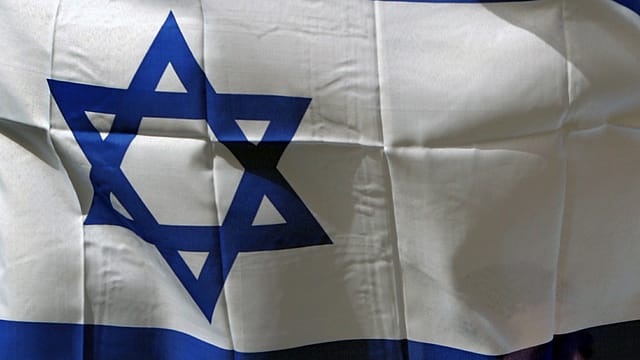
Israel has a food-aid network. A very big one.
But until now, nobody really knew how big, how widespread or how well it was working. A new peer-reviewed study has mapped the system for the first time. Researchers identified 2,289 active nonprofit organisations involved in food aid across Israel, with reported annual turnover of 6.18 billion shekels and more than 28,000 employees and 170,000 volunteers among organisations that provided financial data.
What they found is less a neatly organised safety net and more a sprawling patchwork of charities, food banks and local organisations. And that raises a much bigger question: Can charity alone provide something as fundamental as food security?
How serious is food insecurity in Israel?
Rise of the Pivotal Power
18 Sep 2026 - Vol 05 | Issue 38
The BRICS declaration is a strategic victory for Modi
Much more serious than the image of a wealthy, high-income country might suggest. Israel’s National Insurance Institute found that 27.1% of households experienced food insecurity in 2024, equivalent to about 968,000 families and 2.8 million people, including more than one million children. The figure was down from 30.8% in 2023, but remained exceptionally high. The problem has also persisted through the upheaval following Hamas’s October 7, 2023 attack and the war that followed. So there is a large population that needs help. The new study asks whether the system delivering that help is reaching everyone who needs it.
What did the researchers actually find?
They mapped 2,289 active food-aid nonprofits, making this the first national-level analysis of Israel’s philanthropic food-aid network. Most operate locally. Most distribute actual food rather than vouchers. And many do not have standardised systems for recording what they distribute or assessing its nutritional value. That means Israel has a substantial food-aid ecosystem, but not necessarily a single, coordinated food-security system. Think of it as thousands of small pieces trying to solve one enormous problem.
Where is the biggest problem?
Access is uneven. The study found a particularly striking gap involving Israel’s Arab communities. Arab households experience higher rates of food insecurity than the general population, yet only 4% of the food-aid nonprofits identified in the study operate in Arab communities. The geographic imbalance is just as stark. Around 29% of food-aid organisations operate in the Jerusalem district, compared with only 9% in the Northern District, even though the researchers identify substantial food-security needs in both areas. The study also points to major gaps among low-resource communities, including Bedouin populations in the south. In other words, where the charities are is not necessarily where the need is greatest.
How much money is actually flowing through this system?
A lot. Among the organisations that reported financial figures, combined annual turnover was 6.18 billion shekels, or roughly $1.77 billion. The network also relies heavily on people rather than just money, with more than **170,000 volunteers** reported across the organisations included in the financial analysis. That is an enormous civil-society effort. But the researchers argue that scale alone does not tell you whether the system is effective. You also need to know who is receiving the food, what they are receiving and whether the assistance is nutritionally adequate.
So, is the food-aid system actually failing?
The researchers don't make such a simple claim. In fact, their findings underline the extraordinary contribution of civil society. The problem is that the system is fragmented. Many organisations operate independently. Food aid is often a secondary activity rather than their main mission. There is limited standardised reporting. Nutritional quality is not consistently monitored. That makes it difficult to answer basic questions about the system as a whole.
How much food is being distributed?
Where? To whom? What kind? How nutritious is it? And who is being left out? The study says there is currently too little data to properly assess the network's effectiveness, efficiency and equity.
Why does nutrition matter if people are simply getting food?
Because food security isn't just about calories. The researchers argue that the quality of food matters to long-term health, particularly when food aid becomes a regular part of a household's diet. Dr Orly Tamir of Sheba Medical Centre describes food insecurity as a health-system issue as well as a social one. If access to adequate nutrition depends on a patchwork of charitable organisations, the consequences can eventually show up in public health, inequality and healthcare costs. The question is therefore not merely whether someone received a food parcel. It is what was inside it.
What does the study say about the role of government?
This is perhaps its biggest question. The researchers argue that philanthropy can play a crucial role, but a modern welfare state cannot rely on charity alone to guarantee access to healthy food. That does not mean replacing nonprofits. It means coordinating them better. The study calls for greater government involvement in regulation, transparency and the strategic integration of food-aid organisations into broader food and social policy. In other words, charities can fill gaps. They should not become the entire system.
Why is this study important now?
Because Israel now has something it did not have before: a map. For the first time, policymakers can see the size of the food-aid network, where organisations operate, how resources are distributed and where major gaps exist. That changes the conversation. Instead of simply asking whether charities are helping, policymakers can begin asking a harder question: Are they helping the right people, in the right places, with the right food? The researchers describe their findings as exposing both the strength and the limits of philanthropy. And that may be the biggest takeaway. Israel has thousands of organisations, billions of shekels and hundreds of thousands of people involved in fighting food insecurity. But charity, however generous, is not the same thing as a food-security policy. The first map has now been drawn. The uncomfortable part is seeing the empty spaces.
(With inputs from ANI)