Iranian Assets Could Be Released Under Strict Anti-Terror Safeguards, Says JD Vance
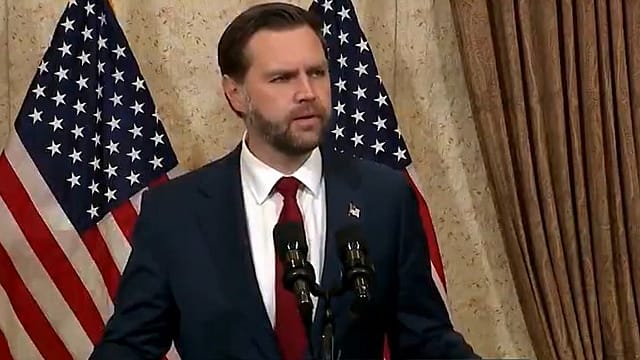
United States Vice President JD Vance announced on Monday that any potential release of Iranian assets, as part of a wider diplomatic settlement, would include strict safeguards to ensure the capital cannot be diverted towards financing terrorism.
Following a series of high-level negotiations in Switzerland, Vance told reporters, "If we ever unfreeze Iranian assets, we can ensure that Iranian money goes to help the people of Iran and not to fund terrorism."
He detailed that discussions centred on establishing mechanisms to channel these funds exclusively towards the procurement of American agricultural goods, a strategy aimed at simultaneously aiding Iranian civilians and supporting US farmers.
Flood and Fury
04 Sep 2026 - Vol 05 | Issue 36
Devighat, Nepal, August 29, 2026
Vance characterised the recent diplomatic engagement as a vital phase in reaching a comprehensive agreement between Washington and Tehran.
"The final deal is the house. We set the foundation. We haven't built the house, but we've laid a successful foundation to get to a good place for the American people," he stated.
What Was Agreed in the US–Iran Talks in Burgenstock?
The Vice President, alongside Iranian Parliament Speaker Mohammad Bagher Ghalibaf, concluded an intensive round of talks in the Swiss resort of Burgenstock, building upon a memorandum of understanding signed last week.
These proceedings were facilitated by representatives from Qatar and Pakistan.
Under a proposal developed by senior US negotiator Jared Kushner in coordination with Qatari officials, sanctions relief would be tied to the purchase of American agricultural commodities such as wheat, corn, and soybeans.
Vance emphasised the transparency of this proposed framework, stating, "If Iranian assets are ever unfrozen, they're going to go to make American farmers richer and to feed the Iranian people."
While joint statements issued by mediators reported "encouraging progress" on several fronts, the proceedings faced momentary turbulence due to public remarks by President Donald Trump.
Iranian state media noted that discussions were briefly suspended following an "insulting message" from the US President, who warned Tehran against continued support for Hezbollah operations in Lebanon and threatened further military intervention.
Despite this diplomatic friction, the senior US diplomat confirmed that the Iranian delegation remained on-site before eventually departing for Tehran.
Iranian Foreign Minister Abbas Araghchi acknowledged that while headway had been made regarding the conflict in Lebanon, the ultimate success of the process hinges on the practical application of new security mechanisms.
(With inputs from ANI)