Iran Warns UN of Alleged Assassination Plot Against Parliament Speaker Ghalibaf, FM Abbas Araghchi
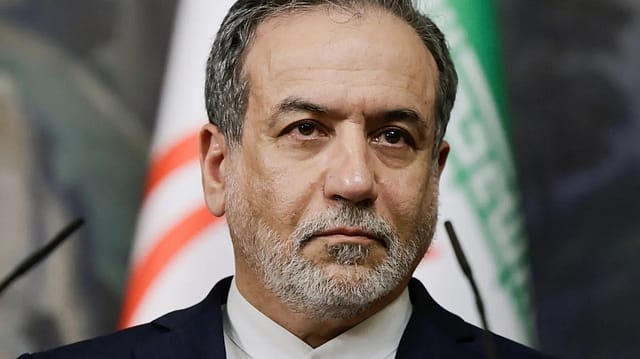
Iran has formally informed the United Nations about media reports alleging United States and Israeli plans to assassinate senior Iranian leadership, even as Israel’s military leadership has raised concerns about operational strain and manpower shortages amid the ongoing West Asia conflict.
According to a report by Press TV, Iran’s Ambassador and Permanent Representative to the UN, Amir Saeed Iravani, expressed deep concern over the reported assassination plots in an official letter on Thursday addressed to UN Secretary-General Antonio Guterres and the President of the Security Council.
"I draw the immediate attention of Your Excellency and the members of the Security Council to the reports published in the media,” he said.
“The reports describe any suspension of such plans as merely temporary", he said.
How does Iran describe the threat of targeting its top officials as ongoing?
Press TV reported that Iravani emphasised that the reports point to an operational framework aimed at assassinating Iran’s highest political officials.

Youth Issue 2026
24 Apr 2026 - Vol 04 | Issue 68
50 Portraits of Icons and Achievers
"Such a policy clearly indicates a serious violation of the peremptory rules of international law. The conditional nature of the alleged 'suspension' also confirms that the threat remains real, deliberate, and ongoing," Iravani said.
He called the assassination of high-ranking officials of a sovereign UN member state a flagrant violation of the UN Charter and a breach of international human rights law, adding that any such attack would undermine the foundations of peaceful international relations.
Iran, he said, firmly condemns any attempt to normalize the assassination of senior government officials, describing it as a destructive and biased policy that represents state terrorism, sets a dangerous precedent, and poses a serious threat to international peace and security.
In separate letters, Iravani also issued strong protests to the United Nations against Saudi Arabia, Qatar, Kuwait and the United Arab Emirates for allegedly allowing their territory and airspace to be used by the United States and Israel to carry out attacks on Iranian soil.
Why has Iran warned Gulf states over alleged use of their territory against it?
"Considering the international responsibility of states arising from making their territory available for committing acts of aggression and carrying out armed attacks against the territory of a third state, the Islamic Republic of Iran has expressed its strong and firm protest against the above-mentioned illegal actions," Iravani said.
He urged these countries to prevent further use of their territory against Iran and stated that while Tehran respects their sovereignty, it reserves the right to take all necessary and appropriate measures, including self-defence, to safeguard its sovereignty, territorial integrity and political independence.
Meanwhile, the Islamic Revolution Guards Corps announced the launch of the 83rd wave of Operation True Promise 4 early Friday, targeting key American and Israeli military installations across the region with advanced missiles and drones.
On the Israeli side, Chief of Staff of the Israel Defense Forces, Lieutenant General Eyal Zamir, warned of mounting strain within the military due to operational pressures and a worsening manpower shortage, according to the Times of Israel citing Channel 13 News.
"I am raising 10 red flags before you," Zamir reportedly told ministers during a security cabinet meeting.
Why is Eyal Zamir urging new conscription and reserve duty laws for the IDF?
He stressed the urgent need for legislative measures, including a conscription law, a reserve duty law and an extension of mandatory military service.
"The IDF now needs a conscription law, a reserve duty law, and a law to extend mandatory service," Zamir was quoted as saying, warning that without such steps, the military may struggle to carry out routine operations and sustain its reserve system.
The manpower crunch has intensified since the Gaza war that followed the October 7 attacks in 2023. The military has informed lawmakers that it is short of around 12,000 troops amid ongoing operational demands.
The issue has been further complicated by political debates over military service exemptions. Ultra-Orthodox parties have pushed to maintain exemptions for their communities, even after a 2024 ruling by Israel’s High Court found no legal basis for the longstanding exemption granted to Haredi yeshiva students.
Reports indicate that around 80,000 ultra-Orthodox men aged between 18 and 24 are currently eligible for service but have not enlisted.
(With inputs from ANI)