Iran Says Hormuz Will Stay Shut Until Conditions Are Met, Denies US Diplomat ‘Expulsion’ Claim
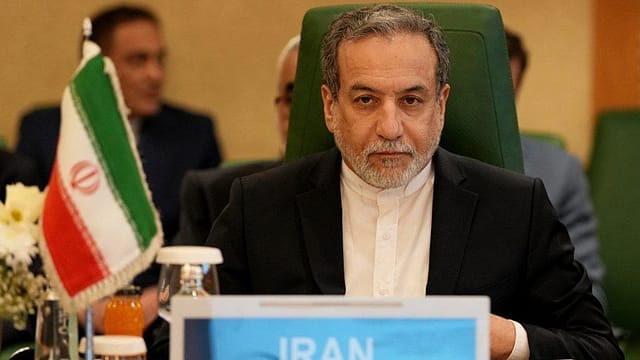
Iran has said the Strait of Hormuz will remain closed until Washington meets seven conditions tied to a June memorandum of understanding, as a separate dispute over Iranian diplomats’ departure from the United States adds to tensions between the two countries.
Parliament Speaker Mohammad Bagher Ghalibaf said the US had recently conveyed proposals through a mediator but warned that Tehran would no longer entertain unilateral demands.
Foreign Minister Seyed Abbas Araghchi, meanwhile, rejected a report that two Iranian delegates to the United Nations General Assembly had been expelled from the US, saying the delegation’s departures had followed its schedule.
‘THE ERA OF WASTING TIME IS OVER’
Addressing Iran’s Parliament, Ghalibaf linked the reopening of Hormuz directly to conditions drawn from the 14-point agreement reached in June.

The Health and Wellness Issue
25 Sep 2026 - Vol 05 | Issue 39
“The era of wasting time and dictating unilateral demands is over and the position of the Islamic Republic of Iran is completely clear and definite, and the Strait of Hormuz will not be opened until our seven conditions based on the Islamabad Memorandum are met,” he said.
He also claimed Washington’s private diplomatic outreach differed from its public statements, saying proposals had arrived through an intermediary.
The supplied account of his speech did not identify the mediator or detail the seven conditions.
THE AGREEMENT THAT COLLAPSED
The June memorandum was intended to end hostilities and create a route towards further negotiations, particularly over Iran’s nuclear programme.
Its framework envisaged a final agreement within 60 days and a High-Level Committee to oversee the mediation process.
Chief negotiators were to report regularly to the committee while working groups addressed nuclear issues, sanctions, and arrangements for monitoring implementation and resolving disputes.
The memorandum collapsed in July. According to the ANI report, renewed hostilities included US strikes on Iranian military and civilian assets and Iranian retaliatory attacks on American bases across the Gulf.
Ghalibaf’s remarks place the June framework back at the centre of Tehran’s stated conditions for reopening the strait, even as efforts to end the conflict remain under strain.
CONFLICTING ACCOUNTS OF DIPLOMATS’ DEPARTURE
The diplomatic dispute centres on whether two members of Iran’s UN General Assembly delegation left as planned or were compelled to depart after ignoring a US instruction.
Axios, citing a US official, reported that the State Department had directed the Iranian mission on Monday to ensure the entire visiting delegation left the country immediately.
Two delegates remained in New York, according to the official. The Iranian mission was informed on Friday that US authorities knew they were still there and again demanded their immediate departure.
One diplomat left on Friday and the other on Saturday, the official said.
“Secretary Rubio means business. Two more members of the Iranian delegation were found still in New York long after the UN General Assembly had passed. They have now been kicked out of the country,” the official told Axios.
ARAGHCHI CALLS EXPULSION ACCOUNT ‘FAKE’
Araghchi disputed that characterisation in a post on X, sharing a screenshot of the report.
“All Iranian diplomats who attended UNGA, except one who departed earlier, left as scheduled,” he wrote.
He described the claimed expulsion as “fake” and criticised the suggestion that it represented a diplomatic achievement.
“It oozes of desperation and defeat and is inconsistent with UN host nation obligations,” he said.
The two accounts agree that the diplomats departed but differ over the circumstances. Washington’s account says they left after renewed demands; Tehran maintains that their travel followed the delegation’s schedule.
The disagreement adds another point of friction as the countries remain at odds over the terms for ending hostilities and reopening Hormuz.
With inputs from ANI