Iran Halts Quadrilateral Talks in Switzerland After Donald Trump's Warning Over Lebanon
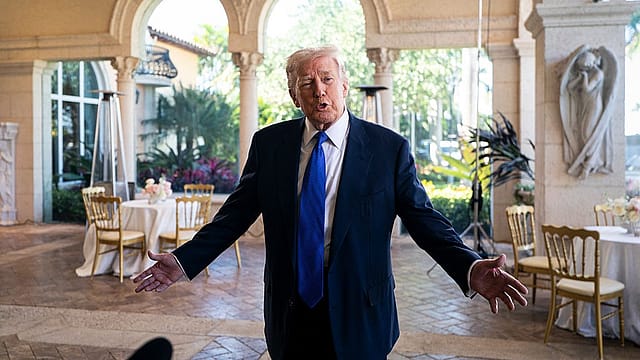
Iran has suspended its participation in a quadrilateral meeting involving the United States, Qatar and Pakistan during ongoing negotiations in Switzerland after US President Donald Trump issued fresh threats against Tehran, according to Iranian Foreign Ministry spokesperson Esmail Baghaei. However, technical discussions under the 14-point memorandum of understanding (MoU) continued, focusing on oil sales, frozen Iranian assets and maritime security in the Strait of Hormuz.
Iran Walks Out of Four-Party Format After Trump's Remarks
Speaking to Iranian state broadcaster IRIB on Sunday, Baghaei said Tehran decided not to continue the quadrilateral meeting after Trump warned Iran against supporting armed groups in Lebanon.
"The war on all fronts, including Lebanon, must end," Baghaei said, adding that discussions also focused on remaining clauses required to begin final negotiations.

Greening the Future
23 Jul 2026 - Vol 05 | Issue 30
Securing a sustainable India
According to Baghaei, technical-level talks progressed throughout the day, but tensions escalated after Trump's comments were made public during the four-party session.
"During the quadrilateral meeting, the US's threatening statement was published, which caused Iran to announce that it was not willing to continue the quadrilateral meeting under such circumstances," Baghaei said.
Trump had earlier warned Tehran in a post on Truth Social, stating: "Iran must immediately stop their highly paid PROXIES in Lebanon from causing trouble. If they don't, we'll hit Iran very hard again, just like we did last week, only harder!!!"
Baghaei said Qatar and Pakistan attempted to preserve the four-party framework, but Iran rejected the proposal.
"Qatar and Pakistan tried to continue the talks, and we said that it would not be in a quadrilateral format," he said.
Progress Reported on Oil Sales and Frozen Assets
Despite the diplomatic friction, Baghaei said discussions yielded progress on several economic issues viewed as crucial for advancing toward a final agreement.
"The issuance of the necessary licenses for the sale of oil and the release of Iranian assets were discussed, and good progress was made," he said.
He added that negotiations also addressed the conditions necessary to move toward final talks under the MoU, including mechanisms for implementing commitments and ensuring accountability from all parties.
Baghaei stressed that oil exports and access to frozen assets remain key preconditions for any comprehensive agreement.
Strait of Hormuz Security and Next Steps
A significant portion of the talks focused on maritime security and maintaining freedom of navigation through the Strait of Hormuz.
"A mechanism was to be established regarding the safe passage of ships through the Strait of Hormuz, which is important," Baghaei said.
The spokesperson also noted that Iran remains concerned about compliance with commitments and alleged ceasefire violations by Israel, issues that were discussed as part of the broader framework for a final settlement.
"At this stage, the work of the negotiating team has ended, but the technical teams will continue their work tomorrow," he said.
According to Baghaei, mediators Qatar and Pakistan are expected to issue a document summarising the agreements reached during the 18-hour negotiating session.
Meanwhile, Iranian Parliament Speaker and chief negotiator MB Ghalibaf dismissed Trump's remarks as a sign of American "desperation," asserting that Iran would not be intimidated and that its armed forces remain prepared to respond if required.
(With inputs from ANI)