‘Get Your Story Straight’: Iran’s Araghchi Takes Aim at Macron as Tehran Tightens Dollar Sales
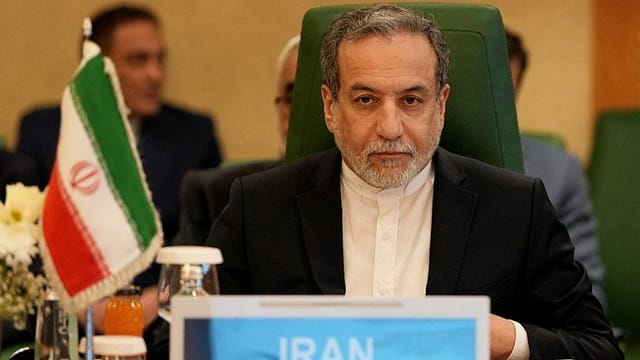
Iranian Foreign Minister Abbas Araghchi has accused French President Emmanuel Macron of contradicting his earlier position on the Iran nuclear agreement, invoking the French leader’s 2018 defence of the pact as Tehran faces renewed economic pressure from Washington.
“Get your story straight, Mr. President,” Araghchi wrote on X, contrasting Macron’s address to the US Congress eight years ago with his reported recent remarks about Iran’s nuclear activities.
The diplomatic exchange came as Iranian authorities introduced restrictions on purchases of US dollar banknotes through banks and exchange offices.
ARAGHCHI INVOKES MACRON’S 2018 SPEECH
In his post, Araghchi recalled Macron’s support for the Joint Comprehensive Plan of Action, or JCPOA, shortly before US President Donald Trump withdrew Washington from the agreement in 2018.

Losing Memory
16 Oct 2026 - Vol 05 | Issue 42
The making of a medical and social emergency
“Just before POTUS exited the Iran Nuclear Deal in 2018, Mr. Macron insisted before the U.S. Congress that ‘France won’t leave the JCPOA, because we signed it.’ Today, he claims he always opposed ‘any form of nuclear activity’ in Iran,” Araghchi wrote.
He attached an image carrying an excerpt from Macron’s April 2018 congressional address.
According to the supplied ANI report, Al Jazeera reported earlier this week that Macron said Paris had always opposed any form of nuclear activity in Iran. The report did not provide the French president’s full remarks or their context.
The distinction is significant. The JCPOA sought to constrain and monitor Iran’s nuclear programme to ensure its exclusively peaceful nature; it did not require the elimination of all Iranian nuclear activity.
Concluded on July 14, 2015, the agreement involved Iran, China, France, Germany, Russia, the United Kingdom, the United States and the European Union.
IRAN LIMITS DOLLAR PURCHASES
Separately, Iran has introduced guidelines limiting purchases of US dollar banknotes through authorised banking and exchange channels, according to Fars news agency.
Buyers may purchase up to $10,000 in total, subject to a daily ceiling of $1,000. For purchases between $100 and $1,000, customers can submit requests using a bank card and national identification.
Selected bank branches and exchange offices continue to sell dollar banknotes at the official rate through designated application systems.
The reported limits concern purchases through those channels. The supplied account does not establish a broader restriction on dollar holdings.
WASHINGTON TARGETS FINANCIAL NETWORKS
The measures follow US sanctions announced last week against 16 individuals and 10 entities allegedly linked to Iran’s international financial networks, shadow banking operations and funding channels for its military and regional allies.
The US Treasury Department said the action, taken under Operation Economic Outcast, targeted alleged Iranian access to the international financial system through an Iraqi bank that Washington also accused of supporting Iran-backed militia groups.
Treasury alleged that offshore banks, shell companies and foreign-exchange intermediaries across the Middle East and Asia had helped move hundreds of millions of dollars.
Treasury Secretary Scott Bessent pledged to maintain the pressure.
“The noose is tightening around Iran’s economy, and not even Iran’s so-called allies can save it,” he wrote on X.
Washington presents the sanctions as an effort to cut funding for Iran’s military and allied groups. Tehran’s currency restrictions, meanwhile, add another constraint on access to foreign cash as the diplomatic and economic confrontation continues.
With inputs from ANI