EXPLAINED | Who Is Chris Pappas, the First Openly Gay Man Elected to the US Senate?
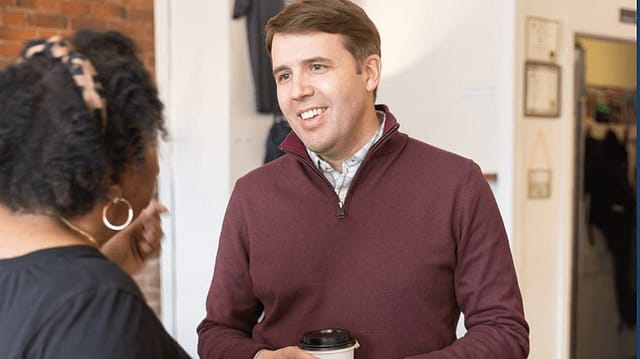
Chris Pappas campaigned on the price of everyday life and healthcare. His victory also answered a question that had remained open through more than two centuries of the US Senate’s history: when would an openly gay man win a seat?
The New Hampshire Democrat defeated Republican John E. Sununu on November 3, keeping the seat being vacated by Democrat Jeanne Shaheen. He is due to enter the Senate in January as its first openly gay male member.
Who is Chris Pappas?
Pappas, 46, is a Manchester native whose family’s Puritan Backroom restaurant opened in 1917. His career has moved through state and local government to Washington. He served in New Hampshire’s legislature, as Hillsborough County treasurer and on the state’s Executive Council before winning election to the US House in 2018.

The Era of Forever Wars
30 Oct 2026 - Vol 05 | Issue 44
Coping with an explosive Middle East
That election made him New Hampshire’s first openly gay member of Congress. His Senate victory takes him from representing one congressional district to representing the whole state.
In an October interview with the Washington Blade, he said New Hampshire believes “everyone should be able to be themselves”. His account of the state’s openness gives the milestone a local meaning as well as a national one.
What exactly is the first?
Pappas is the first openly gay man elected to the US Senate. Tammy Baldwin, a lesbian, became the first openly gay person elected to the chamber in 2012 and began serving in 2013. Wisconsin voters returned her in 2018 and 2024.
The distinction preserves Baldwin’s place in that history while identifying the barrier Pappas has crossed.
“Openly” means voters knew about a candidate’s identity. Historical speculation about politicians’ private lives cannot establish an equivalent electoral milestone. Public disclosure makes the relationship with the electorate different: voters choose the candidate with that knowledge.
A Senate seat, a state legislature and a local council each have their own electorate and political hurdles. Progress in one office can come years before a similar breakthrough elsewhere.
Who reached national leadership before him?
Iceland’s Jóhanna Sigurðardóttir became the world’s first openly gay prime minister in 2009. She had already spent decades in politics, entering parliament in 1978 and serving as a social affairs minister. She led the country until 2013.
Her career offers one way to read a historic first. By the time she reached the top office, voters and colleagues had a long public record on which to judge her. The milestone arrived through an established political career.
Ireland’s Leo Varadkar became his country’s first openly gay prime minister in June 2017. The son of a Mumbai-born doctor, he provides a direct Indian connection to this history. He had publicly come out in 2015, the year Ireland voted to recognise same-sex marriage.
Varadkar reached office through Ireland’s parliamentary system. Voters elected lawmakers, and the formation of a government determined who became prime minister. Pappas won a statewide Senate election. Both are breakthroughs, reached through different routes to power.
Which other countries have crossed these barriers?
Gabriel Attal became France’s first openly gay prime minister in January 2024. At 34, he was also the youngest person to hold the office under the Fifth Republic. President Emmanuel Macron appointed him after he had served as education minister.
His example adds another distinction. Appointment to a national executive office and victory in a direct election involve different decisions by different people. A global account of LGBTQ leadership needs to preserve those differences.
New Zealand’s Georgina Beyer crossed a different barrier. Elected for Labour from Wairarapa in 1999, she became the world’s first openly transgender MP. She had previously been mayor of Carterton, and won her parliamentary seat in a conservative rural electorate.
Her election brought a transgender woman into a national legislature years before some countries had openly gay heads of government. The sequence varies across countries, offices and communities.
Where does India fit?
Shabnam Mausi became India’s first transgender MLA after winning a by-election in Madhya Pradesh’s Sohagpur constituency in 2000. Election Commission records list her as an Independent who received 39,937 votes, or 44.08% of the vote.
That gives Indian readers a domestic electoral milestone alongside the international examples. Her victory came just months after Beyer’s election in New Zealand, although they entered legislatures with different powers and political settings.
The terminology matters here. Being gay concerns sexual orientation. Being transgender concerns gender identity. LGBTQ is an umbrella covering people whose experiences and political barriers can differ substantially.
Beyer and Mausi belong in this wider history on their own terms. Their achievements help explain transgender representation, alongside the gay and lesbian representation associated with Pappas, Baldwin and the former prime ministers.
Why does representation matter beyond the headline?
Holding office gives a politician access to legislative decisions, committee work and public debate. Pappas’s official record includes co-chairing the Congressional Equality Caucus and supporting the Equality Act and Respect for Marriage Act.
The priorities of an LGBTQ politician can also extend across healthcare, employment, taxation and public services. Constituents elect a representative to make decisions across that full range.
A historic first establishes that someone has reached an office while publicly identifying as LGBTQ. Assessing what follows requires examining their votes, policies and treatment of the people they represent.
What is the India connection?
Varadkar’s family connection and Mausi’s election give the story an immediate Indian dimension. The wider comparison also shows how political opportunity can develop unevenly. A country may elect a transgender legislator before an openly gay national leader emerges elsewhere.
Pappas now joins that history through a statewide election. When he takes his Senate seat, he will bring both a new milestone and a record accumulated through years in public office. Voters will have the same grounds on which to judge his next chapter: the decisions he makes and the work he does.