Explained: US Section 301 Investigations That Could Reshape Global Supply Chains
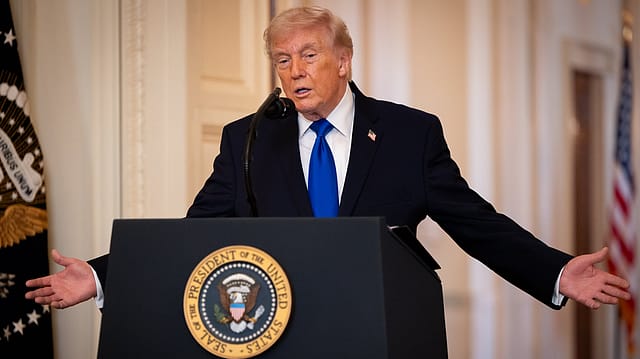
A quiet but seismic shift is underway in global trade.
On March 11, 2026, the United States Trade Representative (USTR) launched two sweeping sets of Section 301 investigations -- one targeting countries accused of enabling structural excess manufacturing capacity, and another targeting nations allegedly failing to crack down on forced labour.
India, China, the EU, Japan, South Korea, Vietnam, and Mexico are among those in the crosshairs.
Here’s everything you need to know.
What is Section 301?
Section 301 refers to a key provision of the US Trade Act of 1974. It gives the USTR the legal authority to investigate foreign countries engaged in trade practices deemed unfair, unreasonable, or discriminatory - and to impose sanctions, including tariffs and import quotas, if those practices are found to harm US commercial interests.

Losing Memory
16 Oct 2026 - Vol 05 | Issue 42
The making of a medical and social emergency
Who has the power to use it?
The USTR - the chief US trade negotiating body - can initiate a Section 301 probe on its own, or following a formal petition from a US industry or business group that believes a foreign country's trade practices are hurting their competitiveness.
What triggered the March 2026 investigations?
According to the USTR, two separate probes were officially kicked off on March 11, 2026. The first targets countries alleged to be maintaining structural excess capacity in key manufacturing sectors, including steel, electronics, and automobiles.
The second investigation focuses on nations that have reportedly failed to take meaningful action against the use of forced labour in their supply chains.
Which countries are being targeted?
Reportedly, over 60 countries have been named under the forced labour probe. A separate investigation into structural excess capacity targets a smaller but significant group including India, China, Japan, South Korea, the European Union, Vietnam, and Mexico - a mix of developed and emerging economies.
Why is China being probed?
For China, this is a continuation of long-standing US trade pressure. Washington has previously taken action against Beijing over shipbuilding and semiconductors. The 2026 probe broadens that scrutiny to wider manufacturing sectors, where state subsidies are alleged to have created artificially high production volumes that flood global and US markets.
Why is India on the list?
The USTR has flagged India's solar module manufacturing capacity as nearly triple its domestic demand, with surpluses in steel and petrochemicals also in the crosshairs. Washington argues these are government-backed distortions that flood the US market and undermine American re-industrialization.
What penalties could targeted countries face?
If a country is found in violation following the investigation, the US can impose steep punitive tariffs or import restrictions on its goods. The action could mirror the sweeping tariffs previously placed on Chinese exports, potentially disrupting billions of dollars in bilateral trade flows and inviting retaliatory measures.
Why is the US using Section 301 and not broader tariffs?
A US Supreme Court ruling had cast doubt on the legality of wider tariffs previously imposed by the administration. With those tools constrained, the US turned to Section 301, a narrower but legally robust mechanism under the established Trade Act, to apply pressure on trade partners.
When are the hearings scheduled?
Formal hearings related to both the forced labour and the excess capacity investigations are set for May 5, 2026. This gives targeted countries a window to present their defence and engage in the process before any punitive actions are enforced.
What does this mean for global trade?
The simultaneous launch of multiple Section 301 investigations is one of the broadest uses of US trade law in recent memory. For India and others, it signals that Washington is increasingly willing to deploy legal trade mechanisms to reshape the global economic order - with or without multilateral consensus.
(With inputs from yMedia)