EXPLAINED | Jensen Huang Is Out at Nvidia. How do you fire a founder?
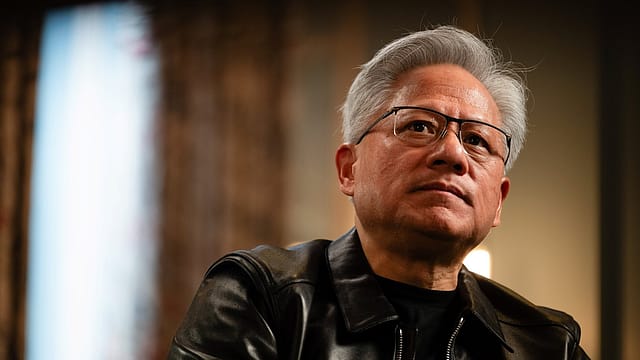
Jensen Huang resigned from Nvidia’s top job and its board with immediate effect on Thursday. The company named Colette Kress interim CEO and appointed Harvey C. Jones, a director and former chief executive of chip-design software company Synopsys, as its first board chair. Nvidia shares fell more than 10% in US premarket trading, Reuters reported.
Why did Huang step down?
Nvidia gave no reason for his resignation. Reuters reported that directors had met a day earlier to consider removing him. On November 8, Nvidia opened an independent inquiry into reports that Huang had been targeted by a foreign intelligence effort. Huang acknowledged in a staff email that he had been unfaithful. Reports linked Huang to a former executive at an Nvidia customer. US authorities suspected she worked for Chinese intelligence, Reuters reported. Beijing denied she was a spy. The New York Times separately reported that Huang had a relationship with an Nvidia executive who reported to him.

The Wealth Issue 2026
06 Nov 2026 - Vol 05 | Issue 45
Portraits of Dreamers and Doers under 35
Who is running Nvidia now?
Kress is interim CEO and keeps her job as chief financial officer. She has led Nvidia’s finances since 2013. Jones chairs the board, which says it will consider candidates from inside and outside Nvidia for the permanent job.

How often do boards push out CEOs?
An OPEN count of the October 2024 release of a database compiled by management researchers found 1,983 departures coded as dismissals across fiscal years 1992 to 2023. The researchers classified 1,757 as performance-related and 226 as linked to legal, conduct or policy concerns. The categories include some departures announced as resignations. They measure exits, including repeat exits by the same executive, and the latest fiscal years in this release are thinly covered. There is no comparable worldwide total in these sources, and the database does not identify founders separately.
A separate study by The Conference Board counted 49 forced CEO departures among Russell 3000 companies in 2024 and 55 in 2025, about one in seven successions in each year. It counted another 20 through August 2026. Its sample and definitions differ from the long-run archive.
What power does Huang keep as a shareholder?
Reuters put Huang’s stake at about 3.6%. Those shares still give him a vote as a shareholder. His resignation ends his authority as president and CEO and his vote as a director. Nvidia’s bylaws give a majority of directors the power to remove an officer and give the board the power to fill a vacancy.
Which founder exits look most like this?
Sam Altman, OpenAI, 2023: OpenAI’s nonprofit board removed its co-founder as CEO, saying he had been insufficiently candid with directors. Employees threatened to quit. Altman agreed to return within days, and OpenAI formally confirmed his return with a new board on 29 November. A later review commissioned by OpenAI attributed the rupture to a breakdown in trust and concluded his conduct did not mandate removal. The episode showed how quickly a board can exercise its authority and how quickly employees can change the outcome.
Andrew Mason, Groupon, 2013: The company’s filing said its founder was terminated immediately. He also resigned as a director. Dov Charney, American Apparel, 2014. The board suspended its founder, notified him it intended to terminate him for cause and subsequently fired him after an internal investigation.
Can a founder lose the job and keep a seat at the table?
Yes. In 2000, the board replaced Elon Musk with Peter Thiel at the business that became PayPal. The separation agreement recorded Musk’s resignation as CEO and continued board membership. In 2007, JetBlue’s board replaced founder David Neeleman with Dave Barger after a winter storm exposed problems in how the airline handled cancellations. Neeleman stayed on as non-executive chairman.
Twitter’s board pushed out co-founder Jack Dorsey in 2008 amid operating problems and a power struggle. He became chairman and returned as CEO in 2015. At WeWork in 2019, Adam Neumann stepped down after the company’s attempt to go public faltered. Reuters reported that directors voted to oust him and that he voted against himself. WeWork initially kept him as non-executive chairman.
Can investors force a CEO out without a board vote?
They can make it difficult to stay. Uber co-founder Travis Kalanick resigned in 2017 after major investors demanded his departure. One of them, Benchmark, had a representative on the board. Reuters reported that the push came from investors. Kalanick initially kept his board seat.
Who was shown the door in India?
In July 2015, the board of SoftBank-backed Housing.com fired co-founder and CEO Rahul Yadav after months of friction with investors. The board said his conduct was detrimental to the company.
Tata Sons offers a related case. Its board removed Cyrus Mistry as executive chairman in October 2016. A company-law tribunal later ordered his reinstatement, and the Supreme Court set that order aside in 2021. At Apple in 1985, Steve Jobs lost his operating responsibilities and resigned as chairman. John Sculley was CEO at the time. Both fights help explain how directors can take away operating authority. The titles matter when counting CEO exits.
What else makes boards lose confidence?
Strategy and performance account for most dismissals in the long-run US data. Apple’s Gil Amelio resigned after a confrontation with directors over performance in 1997. Hewlett-Packard asked Carly Fiorina to step down in 2005 after differences over how to execute its strategy. Danone’s board removed Emmanuel Faber in 2021 amid shareholder pressure and disagreements about the company’s direction.
Directors also act in a crisis. Boeing said it needed new leadership to restore confidence when Dennis Muilenburg resigned in 2019 during the 737 MAX crisis. Japan’s Olympus fired Michael Woodford in 2011 after he raised questions about acquisition payments. The company initially cited management differences and later acknowledged using acquisition-related payments to conceal investment losses.
How much does the word “resigned” tell us?
Sometimes the filing tells a sharper story. Disney’s 2022 announcement said Bob Chapek had stepped down and that Bob Iger was returning. Its later proxy statement said Disney had exercised its right to terminate Chapek’s employment without cause. In 2024, Intel announced Pat Gelsinger’s retirement. Reuters reported that directors had given him a choice between retiring and being removed after losing confidence in his turnaround plan.
What can Kress tell investors on 17 November?
Nvidia says its results and earnings call will go ahead as scheduled on 17 November in the US. Investors will hear management’s outlook for chip demand and can ask who will lead decisions on major customers and the next generation of chips. The board has started its search for a permanent CEO. It gave no date for naming one.