EXPLAINED | India's Hindu Majority To Shrink, Muslim Population To Rise? What Pew Study Projects
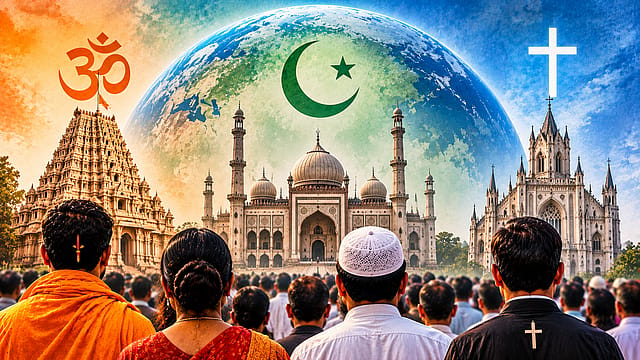
The global Muslim population is projected to grow by 80 per cent between 2020 and 2070, compared with 30 per cent for Christians. Muslims could overtake Christians as the world's largest religious group by 2035, according to demographic projections by the Pew Research Center.
India is expected to witness a significant shift in its religious composition over the same period. The country's Muslim population is projected to increase from approximately 213 million in 2020 to 334 million by 2070, making India home to the world's second-largest Muslim population after Pakistan.
The Hindu population in India, meanwhile, is also expected to increase in absolute numbers. However, its share of the country's total population is projected to decline from around 79 per cent in 2020 to approximately 76 per cent in 2070. Muslims are expected to account for nearly 20 per cent of India's population by then.

The Wealth Issue 2026
06 Nov 2026 - Vol 05 | Issue 45
Portraits of Dreamers and Doers under 35
Despite these changes, Hindus are projected to remain India's largest religious community, accounting for more than three-quarters of the population.
The projections are part of a larger study examining how religious populations could change across the world over the next five decades. Here is what the findings mean.
WHAT IS THE PEW RESEARCH CENTER?
The Pew Research Center is a Washington-based, nonpartisan research organisation that studies public opinion, social trends, demographics, religion and international affairs.
Its research draws on surveys, census information and demographic data to examine how societies are changing. It does not take political positions or advocate particular policies.
The study, titled The Future of World Religions: Population Growth Projections, 2020-2070, examines the projected growth of major religious communities across 201 countries and territories. It looks at Christians, Muslims, Hindus, Buddhists, Jews, followers of other religions and people who do not identify with any religion.
The projections are based on population estimates, fertility rates, mortality, migration and religious switching. They attempt to establish what the world's religious composition could look like if existing demographic trends continue.
WHAT ARE THE BIGGEST GLOBAL FINDINGS?
The study projects that Muslims could become the world's largest religious group by 2035.
In 2020, Christians accounted for approximately 28.8 per cent of the global population, while Muslims made up around 25.6 per cent. By 2070, the Muslim share is projected to reach approximately 35.8 per cent, compared with 29.1 per cent for Christians.
The global Muslim population is expected to grow by around 80 per cent between 2020 and 2070, reaching approximately 3.6 billion. The Christian population is also projected to increase, but at a slower rate of around 30 per cent.
The Hindu population worldwide is projected to increase by approximately 199 million during the same period, reaching nearly 1.4 billion. However, its share of the global population is expected to decline slightly from 15 per cent in 2020 to around 14 per cent in 2070 because the world's overall population is growing faster.
WHAT DOES THE STUDY PROJECT FOR INDIA?
India's Muslim population is projected to increase from approximately 213 million in 2020 to 334 million by 2070.
Pakistan is expected to have the world's largest Muslim population, reaching approximately 461 million by then.
Indonesia, which had the largest Muslim population in 2020, is projected to move to third place, with around 274 million Muslims by 2070.
India's projected position is significant because Muslims already constitute the country's largest religious minority.
WILL INDIA'S HINDU POPULATION DECLINE?
Not in absolute numbers. The study projects that the number of Hindus in India will increase by approximately 176 million between 2020 and 2070.
However, their share of the total population is expected to decline. This distinction is important when interpreting the findings.
In 2020, Hindus accounted for approximately 79.4 per cent of India's population. By 2070, this share is projected to fall to around 75.8 per cent.
The Muslim share, meanwhile, is expected to increase from approximately 15.2 per cent to 19.6 per cent.
In simple terms, the number of Hindus is projected to rise, but the Muslim population is expected to grow at a faster rate. Hindus will nevertheless continue to constitute more than three-quarters of India's population.
WHY IS THE MUSLIM POPULATION GROWING FASTER?
Fertility rates are among the most important factors behind the projected demographic changes.
Fertility rate refers to the average number of children a woman is expected to have during her lifetime. According to Pew's estimates for 2020-2025, Muslim women globally had an average fertility rate of 3.1 children per woman. The corresponding figure for Christian women was 2.5, while Hindu women had an estimated fertility rate of 1.9.
For women belonging to other religious groups combined, the figure was 1.6 children per woman.
The global replacement-level fertility rate is generally around 2.1 children per woman. This is the approximate number needed for a population to replace itself across generations, assuming no migration.
Higher fertility rates generally contribute to faster population growth. However, they are not the only factor determining how a religious community's population changes.
DOES THE AGE OF A POPULATION ALSO MATTER?
Yes. The study identifies the relatively younger age profile of Muslims as another major reason for their projected growth.
A younger population generally has a larger proportion of people entering their childbearing years. This can result in more births over time, even without a substantial increase in the average number of children per woman.
This combination of a younger population and higher fertility rates is expected to contribute significantly to the growth of the global Muslim population.
HOW DO BIRTHS, DEATHS AND RELIGIOUS CONVERSIONS AFFECT THE NUMBERS?
The study also considers natural population change, which refers to the difference between births and deaths, as well as migration and religious switching.
Natural population growth is projected to be the biggest contributor to the increase in the global Muslim population. Between 2020 and 2070, Muslims are expected to gain approximately 1.6 billion people through natural population growth. The corresponding figure for Christians is around 792 million.
Religious switching is expected to have a smaller impact.
ARE MORE PEOPLE EXPECTED TO CONVERT TO ISLAM THAN TO CHRISTIANITY?
Not according to the projections. Pew estimates that approximately 9.2 million Muslims could switch to Christianity between 2020 and 2070, while around nine million Christians could switch to Islam.
The study projects a net loss of approximately eight million people for Islam through religious switching. Christianity, meanwhile, is projected to lose around 105 million people through the same process.
This suggests that the faster growth of the Muslim population is primarily driven by demographic factors such as fertility and age rather than religious conversions.
WHAT DOES THE STUDY SAY ABOUT THE UNITED STATES?
The United States had approximately 217 million Christians in 2020, making it the country with the world's largest Christian population at the time.
Pew projects that this number could decline to around 174 million by 2070.
One of the major factors behind this change is religious switching, particularly people moving away from Christianity and identifying as religiously unaffiliated.
The projections suggest that Christianity's share of the American population could fall from approximately 64 per cent in 2020 to around 48 per cent by 2070.
This does not mean Christianity will disappear from the United States. Rather, its share of the population is expected to shrink as other religious identities and the unaffiliated population grow.
ARE THESE PROJECTIONS CERTAIN TO COME TRUE?
These are demographic projections, not predictions of an inevitable future.
Pew uses 2020 as its baseline and factors in existing fertility rates, mortality, migration and religious switching patterns to estimate how populations could change over the next five decades.
However, demographic trends can change. Economic conditions, public health developments, migration, conflicts, government policies and changing social behaviour can all influence population growth.
A fall in fertility rates, for instance, could alter the projected growth of a religious community. Similarly, changes in migration or religious identification could affect the final numbers.
The study therefore presents a possible picture of the world's religious composition if current demographic patterns continue. It does not establish that these figures will necessarily become reality.
For India, the central finding is that both Hindu and Muslim populations are projected to grow in absolute numbers, although at different rates. Hindus are expected to remain the country's overwhelming majority, while Muslims are projected to account for a larger share of the population by 2070.