EU Fingerprint Rule: What Indian Travellers Must Know Before Visiting Europe
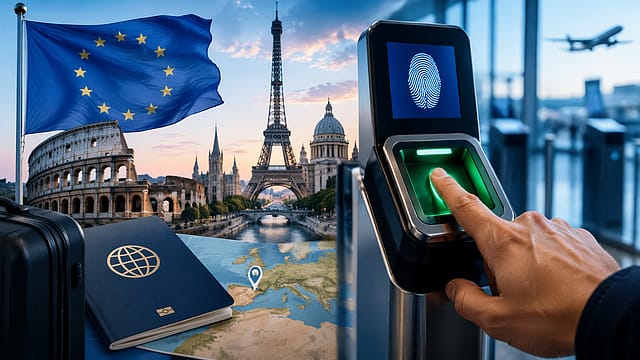
The European Union has made its Entry/Exit System (EES) fully operational across 29 countries from April 10, 2026.
The system replaces traditional passport stamping with digital biometric checks.
The EU's Directorate-General for Migration and Home Affairs confirmed the rollout on March 30, 2026.
What is the EU Entry/Exit System?
The Entry/Exit System is a digital border management system. It records non-EU travellers' entries, exits, and refusals at Schengen borders.
The system collects facial images, EU fingerprint scans, and passport data. It replaces the manual passport stamp that has been used for decades.
Who Does This Apply To?
The new EU travel rules apply to all non-EU nationals on short stays. This includes Indian passport holders, UK citizens, and Americans.
EU citizens, long-term residents, and holders of long-stay visas are exempt. Ireland and Cyprus do not participate in the EES.
What Biometric Data Will Be Collected?
Border officers will scan your passport, take a facial photo, and collect EU fingerprints.
Children under 12 must provide a photo but are exempt from fingerprinting. Refusing to provide biometric data will result in denial of entry.
Your data is stored in the system for three years.
What Happens After the First Registration?

Open Minds 2026
26 Jun 2026 - Vol 05 | Issue 26
The power of ideas and arguments in 50 portraits
Once registered, repeat travellers will only need an EU fingerprint or facial scan at the border.
This speeds up future crossings. EU-LISA manages all stored data under EU data protection rules.
How Many People Has the System Already Processed?
The EES began a phased rollout on October 12, 2025. As per the European Commission, over 45 million border crossings have been registered since then.
More than 24,000 people have been refused entry. The system also flagged over 600 individuals as security risks.
Should Travellers Expect Delays?
Yes, initially. Industry groups including ACI Europe have warned of queues stretching up to three hours during peak travel periods.
The Frontex-developed “Travel to Europe” app allows non-EU travellers to pre-register passport data and a facial image up to 72 hours before arrival.
Currently available in Sweden and recently launched at selected locations in Portugal, it does not replace the mandatory in-person border check on first entry.
What Comes After the EES?
The European Travel Information and Authorisation System (ETIAS) is expected to launch later in 2026.
It will require non-EU travellers from visa-exempt countries to obtain pre-travel authorisation online for a fee of 20 euros.
The Entry/Exit System and ETIAS will work together to strengthen EU border security.
(With inputs from yMedia)