Donald Trump vs Iran: A Look At Competing Narratives After ‘14-day Pause’ In West Asia Hostilities
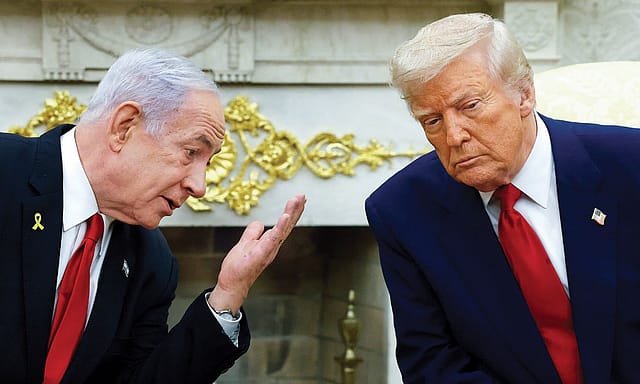
A fragile window for peace has opened in West Asia after US President Donald Trump announced a two-week halt to US military operations against Iran, matched by Tehran’s conditional pause. The breakthrough, shaped by diplomatic backchannels and competing narratives of victory, could determine whether a prolonged conflict ends, or merely pauses.
What triggered the sudden ceasefire between the US and Iran?
The immediate turning point came after the US agreed to pause its “bombing and attack” campaign for two weeks, contingent on Iran ensuring safe passage through the Strait of Hormuz and engaging in negotiations.
In a post on Truth Social, Trump said, "Based on conversations with Prime Minister Shehbaz Sharif and Field Marshal Asim Munir, of Pakistan, and wherein they requested that I hold off the destructive force being sent tonight to Iran, and subject to the Islamic Republic of Iran agreeing to the COMPLETE, IMMEDIATE, and SAFE OPENING of the Strait of Hormuz, I agree to suspend the bombing and attack of Iran for a period of two weeks. This will be a double-sided CEASEFIRE!"
He added, "The reason for doing so is that we have already met and exceeded all Military objectives, and are very far along with a definitive Agreement concerning Longterm PEACE with Iran, and PEACE in the Middle East. We received a 10-point proposal from Iran, and believe it is a workable basis on which to negotiate."
Spotlight on Iran’s response
Iran responded through Foreign Minister Seyed Abbas Araghchi, who confirmed a conditional halt in military operations: "On behalf of the Islamic Republic of Iran, I express gratitude and appreciation for my dear brothers HE Prime Minister of Pakistan Sharif and HE Field Marshal Munir for their tireless efforts to end the war in the region. In response to the brotherly request of PM Sharif in his tweet, and considering the request by the U.S. for negotiations based on its 15-point proposal as well as announcement by POTUS about acceptance of the general framework of Iran's 10-point proposal as a basis for negotiations, I hereby declare on behalf of Iran's Supreme National Security Council: If attacks against Iran are halted, our Powerful Armed Forces will cease their defensive operations. For a period of two weeks, safe passage through the Strait of Hormuz will be possible via coordination with Iran's Armed Forces and with due consideration of technical limitations."

Open Minds 2026
26 Jun 2026 - Vol 05 | Issue 26
The power of ideas and arguments in 50 portraits
What does each side claim it has achieved?
Despite the ceasefire, both Washington and Tehran are projecting the outcome as a strategic victory.
Trump maintained that US objectives had largely been met: "Almost all of the various points of past contention have been agreed to between the United States and Iran, but a two-week period will allow the Agreement to be finalised and consummated. On behalf of the United States of America, as President, and also representing the Countries of the Middle East, it is an Honor to have this long-term problem close to resolution."
On the other hand, Iran’s Supreme National Security Council declared a sweeping success, stating: "Iran achieved a historic victory by forcing the criminal US to accept its 10-point plan. The US has accepted Iran's control over the Strait of Hormuz, enrichment rights, and removal of all sanctions. The US has accepted to stop aggression, pay compensation for damages, withdraw it's forced from the region."
The Council further added: "It was decided from the very beginning that war would continue until objectives were achieved, including the enemy's regret and desperation, and removal of the long-term threat to the country. The war has thus continued until today, the fortieth day. Iran has repeatedly rejected the deadlines set by the US president and continues to emphasise that it attaches no importance to any kind of deadline from the enemy."
And concluded with a message to its citizens: "Now we give the great nation of Iran the good news that nearly all the objectives of the war have been achieved, and your brave children have brought the enemy to historic helplessness and lasting defeat. Iran's historic decision, backed by the unified support of the nation, is to continue the battle for as long as necessary, so its immense achievements are consolidated, & new security & political equations are created based on acceptance of Iran's power & sovereignty & that of Resistance,"
Can this pause lead to lasting peace in West Asia?
The two-week ceasefire is being viewed as a critical diplomatic window that could lead to a broader agreement, possibly culminating in a peace summit in Islamabad.
Trump indicated optimism about a long-term deal, while Iran has signalled willingness to negotiate, but only from a position it views as strength.
The backdrop to this pause underscores the stakes. Just hours before announcing the ceasefire, Trump had warned: "A whole civilisation will die tonight, never to be brought back again. I don't want that to happen, but it probably will."
Now, with both sides stepping back after a conflict that began on March 28, the region stands at a crossroads. Whether this pause evolves into a durable peace or collapses into renewed confrontation will depend on how negotiations unfold over the next two weeks.
(With inputs from ANI)