Donald Trump Dispatches JD Vance to Islamabad for Crucial US-Iran Ceasefire Talks
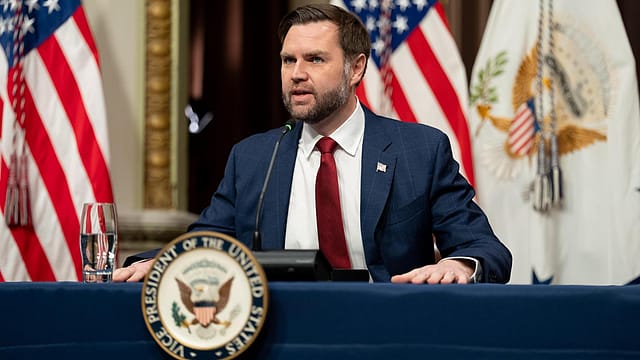
US President Donald Trump is dispatching a high-level negotiating team to Islamabad for talks with Iran this weekend, the White House confirmed, as diplomatic efforts intensify following a temporary ceasefire between the two countries.
White House Press Secretary Karoline Leavitt, addressing a press briefing on Wednesday, said the delegation will be led by Vice President JD Vance and will include Special Envoy Steve Witkoff and Senior Advisor Jared Kushner.
“Of course, he's the president's right-hand man. He is the vice president of the United States. He's been involved in all of these discussions. He'll be leading this new phase of negotiations in Islamabad later this week," she added.

The Age of Anger
31 Jul 2026 - Vol 05 | Issue 31
A raging generation makes the government relent. What's next?
"I can announce that the President is dispatching his negotiating team, led by the Vice President of the United States, JD Vance, Special Envoy Witkoff, and Mr Kushner, to Islamabad for talks this weekend,” she said.
When Will the US-Iran Talks in Islamabad Begin and Who Is Participating?
“The first round of those talks will take place on Saturday morning, local time, and we look forward to those in-person meetings," Leavitt added.
Iranian President Masoud Pezeshkian has confirmed Tehran's participation.
The talks are scheduled for Friday, April 10, and aim to end weeks of intense hostilities following the outbreak of war between the two countries.
The meeting follows an immediate two-week ceasefire agreement announced by Trump, who also suspended the "bombing and attack" campaign on Iran and described Tehran's 10-point proposal as workable.
According to Iranian state media, the delegation from Tehran will be led by Speaker of Parliament Mohammad Bagher Ghalibaf, who has taken on strategic responsibilities during the conflict.
Amid the fragile truce, Vance reiterated Washington's position on key conditions tied to the ceasefire, particularly the reopening of the Strait of Hormuz.
What Did JD Vance Say About the Strait of Hormuz in US-Iran Ceasefire Talks?
Speaking to reporters outside Air Force Two as he left Hungary, he said, "We are seeing signs that the Straits are starting to reopen…”
“The deal is a ceasefire, a negotiation -- that's what we give -- and what they give is that the Straits are going to be reopened. If we don't see that happening, the President is not going to abide by our terms if the Iranians are not abiding by their terms,” the US Vice-President added.
Vance also firmly rejected claims that Lebanon was included in the ceasefire arrangement.
Addressing reporters ahead of his departure from Hungary, he said, "We never made that promise.”
“We never indicated that was going to be the case. What we said is that the ceasefire would be focused on Iran and the ceasefire would be focused on America's allies, both Israel and the Gulf Arab states,” Vance added.
Why Is Pakistan’s Role in the US-Iran Ceasefire Talks Under Question?
The clarification has placed Pakistan Prime Minister Shehbaz Sharif in a difficult position after he had publicly claimed that Lebanon was part of the peace deal, a statement dismissed by both Trump and Israeli Prime Minister Benjamin Netanyahu.
Developments surrounding the ceasefire have also raised questions about Pakistan's role in the negotiations.
A Financial Times report, citing people familiar with the talks, said the United States leaned on Pakistan to convey its proposal to Iran, suggesting Islamabad acted as a channel rather than a neutral broker.
Sharif, who was the first to publicly propose the two-week ceasefire, appeared sidelined as Pakistan Army chief Asim Munir held urgent discussions with US officials including Trump, Vance and Witkoff.
Sharif also drew attention for a social media post in which he mistakenly included the subject line "draft -- Pakistan's PM message on X" while claiming credit for the initiative.
Why Did the Jubail Drone Attack Complicate Pakistan’s Role in US-Iran Talks?
Pakistan's attempt to present itself as a neutral mediator was further complicated by a drone attack on the Saudi petrochemical hub of Jubail. Despite having signed a mutual defence pact with Riyadh last year, Islamabad maintained neutrality to continue its diplomatic engagement.
Meanwhile, tensions in the region remain high. Iran has accused Israel of violating the ceasefire terms, while violence has escalated in Lebanon.
Al Jazeera reported that the country declared a day of mourning after Israeli strikes killed at least 254 people and injured more than 1,165 in a single day on Wednesday.
Israeli Prime Minister Benjamin Netanyahu said operations in South Lebanon would continue, aimed at neutralising the threat from Hezbollah, even as Israel supports the US decision to pause strikes on Iran.
Israel's Ambassador to India, Reuven Azar, reiterated that Tel Aviv's objective is to eliminate "Hezbollah terrorist infrastructure" in southern Lebanon.
The evolving situation has cast uncertainty over the ceasefire, with diplomatic efforts in Islamabad seen as crucial to shaping the next phase of the US-Iran engagement.
(With inputs from ANI)