Did world leaders fall sick after BRICS Summit? Ministry of External Affairs debunks ‘fake’ viral claims
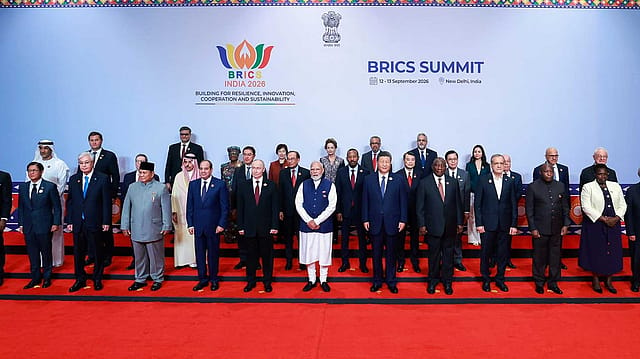
A BRICS summit ends, leaders fly home and then a strange rumour begins travelling almost as fast as they did. Did world leaders fall sick after attending the BRICS Summit in New Delhi?
That claim has been circulating on social media, prompting India’s Ministry of External Affairs to step in with a blunt response: “Fake Alert.” The MEA’s fact-checking unit on Thursday warned against what it described as “malicious posts” circulating on social media, rejecting reports that multiple world leaders had fallen ill after attending the summit.
But where did the story come from, and what is actually known?
There is no verified evidence of a group of world leaders falling ill after the summit, according to the Indian government. The MEA fact-checking unit directly addressed the claims on Thursday, posting on X: “Fake Alert!!! We caution against such malicious posts on social media platforms!”
The 18th BRICS Summit was held in New Delhi on September 12 and 13, with leaders and representatives from the expanded BRICS grouping attending discussions on global economic, political and development issues. The official New Delhi Declaration was released following the summit.
The Modi Years
02 Oct 2026 - Vol 05 | Issue 40
A Nation Rebuilt
Why did the BRICS health rumours start?
The immediate trigger appears to have been news from South Africa. On Wednesday, the South African Presidency said Cyril Ramaphosa had been booked off from public engagements “due to ill health” after returning from the BRICS Summit. His office said he had been advised to rest and recover by doctors and that ministers would represent him at scheduled engagements where necessary. No specific ailment was disclosed in the statement.
That real, but limited, update was followed by social media speculation that other leaders had also been affected. The claims then expanded beyond what had been officially established.
What happened with Xi Jinping at the BRICS Summit?
Chinese President Xi Jinping also became part of the online speculation. According to reports, rumours were fuelled partly by Xi skipping the dinner for BRICS leaders at Bharat Mandapam on September 12. Social media posts subsequently made unverified claims about his health and suggested he had left the summit early for medical reasons. Those claims should not be presented as established facts.
There is a crucial difference between a leader missing an event and evidence that the person was unwell. In this case, the health claims circulating online were not substantiated by the information cited by the MEA.
What has the MEA actually confirmed?
The MEA has confirmed only its rejection of the broader claims circulating online. Its fact-checking unit did not merely describe the reports as inaccurate; it issued a specific warning about what it called “malicious posts” and urged people to be cautious about social-media information.
That makes this less a story about the health of BRICS leaders and more a story about how quickly an isolated, genuine development can become the raw material for a much larger online rumour.
How is Cyril Ramaphosa doing?
His office has publicly said that he is unwell and has been advised to rest. The South African Presidency said Ramaphosa returned from India on Monday and had since been resting on medical advice. It did not disclose the nature of his illness. There is therefore no basis to connect his illness to the BRICS Summit itself.
That distinction is particularly important because the timing, his return from New Delhi followed by his temporary withdrawal from public engagements, helped fuel speculation online. Timing is not proof of causation.
What should readers make of the viral BRICS claims?
The simplest answer is: separate what has been confirmed from what has merely gone viral. A South African government statement confirms that Ramaphosa is resting after being advised to do so. The MEA has rejected the broader claim that several world leaders fell ill after attending the BRICS Summit. And claims about other leaders' health that have not been officially confirmed should not be treated as fact.
The episode is also a reminder of how misinformation can acquire the appearance of a bigger story. One verified development can provide the starting point; speculation fills the gaps; social media then compresses the two into a single dramatic claim. In this case, the MEA wants readers to stop before making that leap.
The BRICS Summit in New Delhi may have ended on September 13. But the information battle around what happened there is still unfolding online.
(With inputs from agencies)