Cuba’s Power Collapse: Inside the Blackout and Rising US Pressure
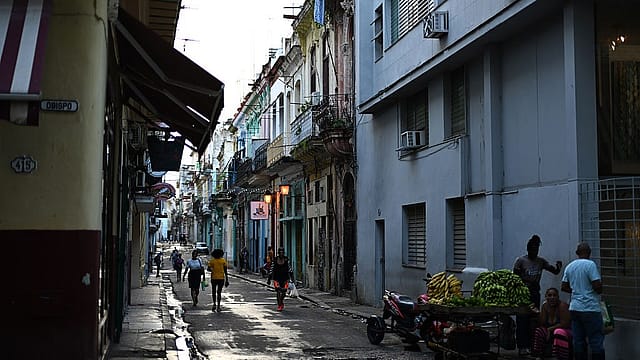
Cuba has been plunged into darkness after a nationwide grid collapse on March 16, 2026, exposing the scale of its energy crisis. The outage reflects deeper structural failures and rising pressure from the USA, where regime change has re-emerged as a central policy goal.
Here’s a more detailed look.
What triggered the island-wide blackout in Cuba?
Cuba’s national grid collapsed after a “complete disconnection” on March 16, leaving most of the island without power. According to Al Jazeera, only limited electricity was restored in parts of Havana, marking the third major outage in recent months.
Why is Cuba’s energy infrastructure failing?
Cuba’s energy crisis is rooted in decades of underinvestment and structural decay. According to the BBC, most power plants are over 40 years old and operate beyond their intended lifespans.
Flood and Fury
04 Sep 2026 - Vol 05 | Issue 36
Devighat, Nepal, August 29, 2026
Combined with fuel shortages and limited financial capacity, the system struggles to meet basic electricity demand.
What role does domestic fuel production play in the crisis?
Cuba relies heavily on domestically produced heavy crude, which is high in sulfur and less efficient for power generation. This fuel damages aging infrastructure and reduces output. As imports shrink, dependence on this low-quality fuel has further strained electricity generation and grid stability.
How did the loss of Venezuela impact Cuba’s energy supply?
Venezuela had long supplied subsidised oil that sustained Cuba’s energy system. Following Nicolás Maduro’s removal in January 2026, those shipments stopped abruptly. This loss eliminated a critical energy source, leaving Cuba heavily dependent on limited domestic production and alternative supplies.
How is US pressure worsening Cuba’s energy crisis?
US pressure has directly tightened Cuba’s fuel supply through sanctions and the oil blockade. Executive Order 14380 discourages global suppliers from exporting oil to Cuba, cutting off vital imports. This has deepened fuel shortages, weakened power generation, and accelerated repeated grid failures across the island.
Why have US-Cuba relations become so tense in 2026?
US-Cuba relations have sharply deteriorated due to renewed pressure from Washington. According to WION News, the US has shifted toward a “maximum pressure” approach, combining sanctions, energy restrictions, and political demands, aiming to push Havana toward structural reforms and potential regime change.
What does the “51 prisoners-for-oil” deal between Cuba and the USA involve?
Cuba and the USA are engaged in back-channel negotiations centred on a “prisoners-for-petroleum” framework. Cuba has pledged to release at least 51 political prisoners, while the US is considering limited oil access through private-sector channels, allowing fuel imports that bypass state-controlled entities and support restricted economic recovery.
How is the crisis affecting everyday life in Cuba?
The blackout has disrupted nearly every aspect of daily life. Food spoilage, water shortages, and halted public services have become widespread. Schools and non-essential services remain suspended, while healthcare systems are operating under severe strain due to limited access to electricity.
According to UN officials cited by Xinhua, many areas now depend on tanker water, while healthcare systems face severe strain due to unreliable electricity.
What are the possible outcomes of Cuba’s crisis?
Cuba faces a narrow path between stabilisation and deeper collapse. According to NBC Miami, ongoing talks with the USA could ease sanctions and restore fuel supply. However, failure may trigger mass migration, prolonged blackouts, and rising pressure for regime change amid worsening humanitarian conditions.
Why is this crisis a turning point for Cuba?
This crisis marks a structural breaking point for Cuba’s economic and political model. Sustained blackouts and shortages have exposed systemic weaknesses, while US pressure has forced negotiations.
The outcome could determine whether Cuba moves toward economic liberalisation or faces deeper instability and potential regime change.
(With inputs from yMedia)