Could Aspirin Be Your Best Defence Against Cancer? Here’s The Science Behind It
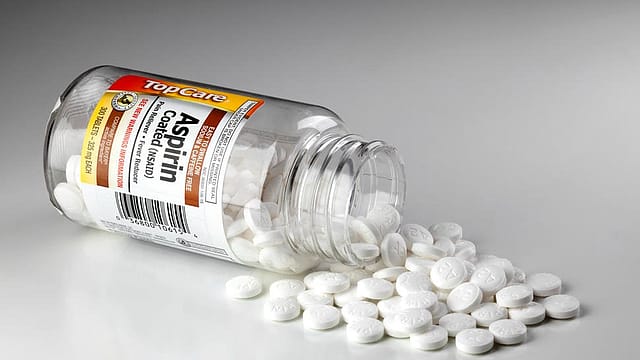
It sits in almost every medicine cabinet in the world and has been trusted for four millennia.
Yet aspirin is now at the centre of a serious scientific conversation about cancer. A mounting body of clinical evidence suggests the humble painkiller may reduce the risk of certain cancers forming, recurring, and spreading.
What Is Aspirin, and Why Has It Survived 4,000 Years?
Aspirin traces back to 4,400-year-old Mesopotamian clay tablets referencing willow-tree remedies.
The modern version, acetylsalicylic acid, was commercialised under the Bayer brand in the late 19th century.
When Did Scientists First Suspect Aspirin Could Fight Cancer?
In 1972, American scientists reportedly found aspirin in mice's drinking water significantly reduced tumour spread.
A turning point came in 2010, when Peter Rothwell of Oxford reanalysed cardiovascular trial data and found aspirin appeared to reduce both cancer incidence and spread in humans.
What Do the Biggest Clinical Trials Show?
According to John Burn, a professor of clinical genetics at Newcastle University, a trial of 861 Lynch Syndrome patients found a daily 600mg aspirin dose for two years halved colorectal cancer risk over a decade.

Open Minds 2026
26 Jun 2026 - Vol 05 | Issue 26
The power of ideas and arguments in 50 portraits
A second unpublished trial reportedly suggests 75-100mg may be equally effective.
Which Patients Are Seeing the Most Promising Results?
A Swedish trial of 2,980 bowel cancer patients, published in September 2025, found those taking 160mg daily had less than half the recurrence risk.
Sweden updated its guidelines in January 2026, offering eligible patients low-dose aspirin as standard care.
How Does Aspirin Stop Cancer From Spreading?
Aspirin inhibits Cox-2, an enzyme that triggers uncontrolled cell growth.
Separately, research by Rahul Roychoudhuri at the University of Cambridge suggests aspirin suppresses thromboxane A2, a clotting factor that reportedly blinds immune T-cells to metastatic cancer cells.
Are There Risks to Taking Aspirin Regularly?
Yes. Known side effects include internal bleeding, stomach ulcers, and in rare cases, brain haemorrhage.
Researchers strongly caution against self-prescribing for healthy populations.
Should Everyone Start Taking Aspirin for Cancer Prevention?
Not yet. According to the BBC, "Always speak to a doctor before starting aspirin," Ruth Langley of University College London reportedly said.
Langley is currently running an 11,000-participant trial across colorectal, breast, gastroesophageal, and prostate cancers, with results expected next year.
For now, aspirin is not a cure but for high-risk patient groups, it has already changed clinical guidelines in two countries.
(With inputs from yMedia)