‘Bad News…’: JD Vance Says Iran Rejects US Terms After Prolonged Talks
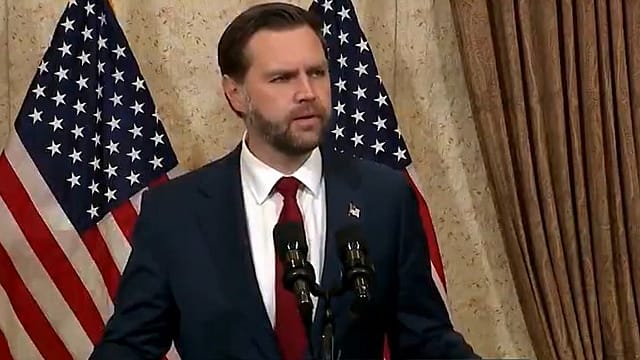
After hours of negotiations in Pakistan, talks between the United States and Iran ended in a stalemate on Sunday, with US Vice President JD Vance confirming that no agreement had been reached.
He said that while they would be returning to the US, the development is more "bad news for Iran" than it is for the United States.
Addressing reporters from Islamabad, Vance said that during the negotiations that took place for 21 hours, several substantial discussions were held however, no conclusions were reached.
"We go back to the United States having not come to an agreement", Vance said.
Why Did US-Iran Talks Fail Despite Washington’s “Flexible” Approach?
He underlined that while the US made it clear what its red lines were and the issues it was willing to accommodate, Iran, however, "chose not to accept our terms".

Open Minds 2026
26 Jun 2026 - Vol 05 | Issue 26
The power of ideas and arguments in 50 portraits
Responding to the media, Vance reiterated that Washington had sought an affirmative commitment from Tehran not to seek nuclear weapons and the tools to achieve it.
He added, "We just could not get to a situation where the Iranians were willing to accept our terms."
He said that while the US had been very "flexible and accommodating", the talks could not make a headway.
"We leave here with a very simple proposal- a method of understanding that is our final and best offer. We'll see if the Iranians accept it."
During the presser, Vance noted that he spoke with President Donald Trump "consistently", along with several other top US officials throughout the negotiations, which included Secretary of State Marco Rubio, Secretary of War Pete Hegseth, Secretary of Treasury Scott Bessent, and Adm. Brad Cooper, Commander of US Central Command.
"We were constantly in communication with the team because we were negotiating in good faith," Vance said.
Meanwhile, CNN reported that the marathon talks covered issues including the Strait of Hormuz and Tehran's nuclear program, as per Iran's foreign ministry.
(With inputs from ANI)