Alzheimer’s and the fragile beauty of the Cuban dream
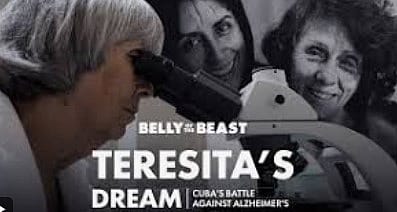
Cuba is going through perhaps its toughest existential challenge since the Revolution of 1959, with fresh American sanctions choking supply lines and triggering widespread disruptions, including a grave energy crisis, frequent blackouts and worsening food shortages. Yet, even as threats of a US invasion swirl and speculations about regime change light up the geopolitical grapevine – powered by Beltway analysts, Miami-based Cubanologists, sections of the media and Pentagon-funded anti-Cuba propaganda outlets – a short film on the discovery of a wonder drug to treat Alzheimer’s disease turns the spotlight on the remarkable gains Cuba has achieved under socialism, despite odds that would appear insurmountable for most nations.
That Cuba has an outstanding record in universal healthcare and public education is well known. Having visited the country and written a book about it, I was also aware of the striking achievements of BioCubaFarma, which I had described in my book Mad About Cuba as the burnished showpiece of Cuban R&D excellence in biotechnology and pharmaceuticals. Comprising 46 companies and employing more than 30,000 people, this public-sector behemoth has produced a range of drugs and vaccines, some of them unique and used in treating locals for free. The Center for Molecular Immunology (Centro de Immunología Molecular, or CIM), part of BioCubaFarma, stands at the forefront of this research.
Look Who's Talking Regime Change
23 Oct 2026 - Vol 05 | Issue 43
Now, a 23-minute film titled Teresita’s Dream: Cuba’s Battle against Alzheimer’s by Cuban director Daniel Montero and produced by media collective Belly of the Beast documents the passion of an esteemed biotech researcher named Dr Teresita Rodríguez Obaya whose work played a pivotal role in the use of indigenously made NeuroEPO in a path-breaking fight against the progression of Alzheimer’s disease. NeuroEPO, also called NeuralCIM, is a nasal spray that reverses or slows the symptoms of Alzheimer’s disease.
The documentary traces the life and work of Dr Obaya whose mother, a sociologist named Amelia Luisa Codorniu, had suffered from Alzheimer’s disease. As someone who had graduated in medicine in 1973 and had seen her mother dance, play the piano and socialise to her heart’s content for decades, Obaya was heartbroken to see her mother’s memory fade in front of her eyes. Photos before she contracted the disease and videos afterwards show the stark difference. The documentary narrates in her own voice how Obaya came to terms with her mother’s illness and began to give her Neuro-EPO towards the end of her life. She could sense that her mother was showing improvement, and so began the trials to use NeuroEPO on multiple other patients in the country suffering a similar plight.
The film visits the homes of a few other patients and, through their doctors and caregivers, tells the tale of the magic that the nasal droplets could perform over an extended period. Obaya visits them only after some start showing good results, going by the unwritten rule among researchers not to engage directly with their patients. She is shown in the movie telling one of them who showed drastic improvement: I couldn’t help my mother because she had advanced state dementia. It was only in 2025 after several phases of trials – now it is in the third phase – that the drug was approved by Cuba’s Ministry of Health in 2025 for the treatment of mild-to-moderate Alzheimer’s. Her mother had somehow begun writing her name -- from not being able to do so earlier -- after she started taking NeuroEPO around 2015. She passed away in 2018.

NeuroEPO has by now attracted the attention of researchers worldwide. The documentary shows Colorado-based physician Dr Bill Blanchet praising "NeuralCIM", NeuroEPO's commercial name, its which he says can change the lives of millions of people afflicted with the disease in the US, which has placed draconian sanctions that the Cubans term an unjust blockade. In fact, more than 50 of Dr Blanchet’s patients have over the past one year travelled to Havana to receive the treatment using NeuroEPO and showed dramatic improvement. One of the patients in the film says those days when he used to call an apricot an asparagus or avocado are long gone. Dr Blanchet says that to make Neuro-EPO available to the rest of the world “is a mandate, not a wish”.
In 2023, on a tour of Cuba where I had met various heads of research units and top-notch bureaucrats and politicians, I had a meeting with Dr Tania Crombet Ramos, Obaya’s colleague and clinical research director at CIM. She was the one who first told me about Neuro-EPO. I had quoted her in my book as well as Dr Ron Geyer, Canadian researcher and biochemist who vouched for the efficacy of NeuroEPO in a writeup.
The truth is, notwithstanding crippling sanctions from the US which are, for all practical reasons, international sanctions, Cuban researchers have done exceedingly well in manufacturing drugs that are needed to keep its citizens healthy. As a result, they have made drugs and formulations that most other countries don’t have, including a lung-cancer vaccine named CIMAvax-EGF after 25 years of research; treatments for skin conditions, including psoriasis; and diseases as rare and deadly as meningitis, several brain tumours, renal carcinoma and others, including lifestyle diseases such as hypertension, diabetes and cardiovascular complications.
The reason why Cuba had to invest in developing homegrown medicines is thanks to its commitment to make advanced healthcare available to all, and also because the country faces hurdles in buying medicines and medical equipment from the US and companies across the world that do business in the US. The outcome is ironic because, as western doctors and researchers aver, millions of patients in the US and elsewhere cannot avail of high-quality Cuban drugs and treatment.
Cuba, since it stopped being the playground of the US in 1959 after Fidel Castro and his comrades rose to power, has faced sanctions and threats from the military power 90 miles away. The island nation was a model that the US always wanted to sabotage, as evident from an internal US memo drafted for the then President and others by a bureaucrat named Lester D Mallory in April 1960. He noted the following:
That the majority of Cubans support Castro (the lowest estimate I have seen is 50 percent).
There is no effective political opposition.
Fidel Castro and other members of the Cuban Government espouse or condone communist influence.
Communist influence is pervading the Government and the body politic at an amazingly fast rate.
Militant opposition to Castro from without Cuba would only serve his and the communist cause.
The only foreseeable means of alienating internal support is through disenchantment and disaffection based on economic dissatisfaction and hardship.
The note adds that the Cuban government had to be overthrown through sanctions because its leaders were charismatic and popular due to their redistribution-oriented economic policies that lifted people out of poverty and provided them opportunities for quality education and access to primary and tertiary healthcare.
Sustaining the American system simply meant that any model based on socialism had to be trashed and discredited for fear of the public at home questioning why they had to pay steep sums for healthcare and education while an island nation in the neighbourhood could offer these for free and improve the lives of people.
It was with that intent in mind that US authorities armed and trained Cuban exiles to invade Cuba in 1961, which led to a resounding defeat. This was followed by the financing of radio stations and news outlets targeting regime change in Cuba and assassination plots on Fidel Castro. Castro survived all of them, estimated by some counts to be 648 in number. Till date, besides Trump, Cuba has survived 11 American presidents who have tried endlessly to economically asphyxiate them and engineer a regime change.
Anti-Cuba propaganda has become shriller and shriller over the past few months with US President Donald Trump declaring that “Cuba is next” among the countries where he wants to see the incumbent government gone.
Lately, many people have descended in Cuba, several of them to express solidarity with the country that is going through hardships worse than during the Special Period following the fall of the Soviet Union, Cuba’s former trade partner. Some others are there to paint Cuba as an experiment that has failed as Trump makes the embargo on its neighbour more stringent. Some Cubans are indeed feeling the heat and blaming their government, a goal that Lester Mallory had envisaged in 1960 when he promoted among US leaders the idea of economic sanctions on Cuba.
It is in this historical context that viewing Teresita’s Dream makes great sense. It reminds us that to watch is to feel. It also offers us a peek into the grand idea that the small island nation had for itself. Now, the world’s biggest economic and military power in the history of the world wants to see it dead. While many are upset, some are cheering.
As Cuba faces a perfect storm, news of a drug that fights memory loss and related health conditions begins to look like more than just a stunning message – a publicly funded socialist project that unfortunately cannot help millions who need it worldwide due to sanctions by its powerful neighbour.