A US Judge Just Called Meta a 'Public Nuisance.' Why the $942 Million Ruling Could Change Social Media Forever
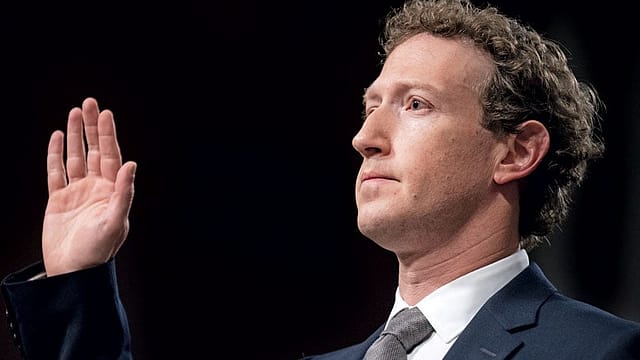
For years, governments accused social media companies of harming children.
Now, a court has gone much further. A judge in New Mexico has declared Meta a "public nuisance", comparing the company to a factory whose products pollute society. Along with ordering Meta to pay another $567 million—taking its total liability in the case to $942 million—the court has directed the tech giant to introduce sweeping safety changes for young users.
Meta says it will appeal. But the ruling could become a watershed moment in the global debate over how far governments can go in holding social media companies accountable.
What did the court rule?
Judge Bryan Biedscheid ruled that Meta's platforms contributed to a public nuisance by harming children's mental health and exposing minors to online sexual exploitation. In one of the judgment's most striking passages, he compared Meta to a factory, saying its advertising and social media products generated psychological harm and child exploitation as the equivalent of pollution that society is forced to absorb. The latest order requires Meta to pay $567 million into a fund aimed at addressing youth mental health. Added to the $375 million civil penalty imposed by a jury earlier this year, the company's total liability now stands at $942 million.
Zeroing In on ECI
09 Oct 2026 - Vol 05 | Issue 41
Constitutional legitimacy versus political opportunism
Where will the money go?
Most of it is intended to help children already affected. According to court documents reported by the Associated Press, about $420 million will fund treatment and behavioural health programmes for young people, while the remainder will support prevention initiatives, awareness campaigns, screening services and training for teachers, healthcare professionals and communities over the next five years.
What changes must Meta now make?
The ruling is about far more than money. The court has ordered Meta to introduce a series of safeguards designed to reduce harm to minors. These include stronger age-verification systems, limits on notifications and screen time for young users, clearer safety information on Facebook and Instagram, better protection against inappropriate interactions, stricter moderation measures and safeguards for AI chatbots interacting with children. The judge also directed Meta to improve its ability to identify users under 13 and remove accounts that do not meet age requirements.
Why is this ruling different from earlier cases?
Because it attacks the design of the platform itself. Meta argued that it should be protected under Section 230, the US law that generally shields online platforms from liability over user-generated content. Judge Biedscheid rejected that argument, saying the lawsuit focused not on what users posted but on how Meta designed its platforms, including features alleged to encourage addictive use and expose children to harmful content. Legal experts say that distinction could influence future lawsuits against technology companies.
Does this affect all Meta platforms?
Not equally. The court's strongest remedies apply to Facebook and Instagram, which prosecutors argued were central to the alleged harms. Reports indicate that WhatsApp was not found to have contributed in the same way and is therefore not subject to the same restrictions under this ruling.
Will a $942 million penalty really hurt Meta?
Financially, probably not. Former Twitter Europe vice-president Bruce Daisley told the BBC that while the figure sounds enormous, it remains "a drop in the ocean" for Meta. The company reported $61 billion in revenue in the April-June quarter alone, underscoring the gap between the size of the penalty and Meta's financial strength. But the legal significance may be far greater than the financial one.
What other legal battles is Meta facing?
This case is only one front in a much larger legal war. Meta is facing thousands of lawsuits across the United States alleging that its platforms contribute to addiction, mental health problems and child exploitation. More cases brought by states and families are moving through US courts, making New Mexico's victory one of the first major courtroom precedents against the company.
Could this have global consequences?
Quite possibly. Countries around the world are already considering tougher rules for protecting children online. Britain has debated stricter controls on teen social media use, Australia has moved to restrict access for younger users, and regulators across Europe are demanding stronger age-verification and safety measures. Legal analysts say the New Mexico judgment could strengthen the argument that governments are justified in forcing platforms to redesign products—not merely moderate content—when children's safety is at stake.
What happens next?
Meta has made its position clear. The company says it disagrees with the ruling and will appeal, arguing that it has invested heavily in protecting young users and that the court's findings misrepresent its safety efforts. Whatever the outcome of that appeal, one thing is already evident. For years, Big Tech has argued that it merely hosts content. This ruling says courts may increasingly judge it by something else: the way its platforms are built.
(With inputs from yMedia)