9/11 at 25: How the Day That Changed the World Redefined War, Security, Privacy and American Life
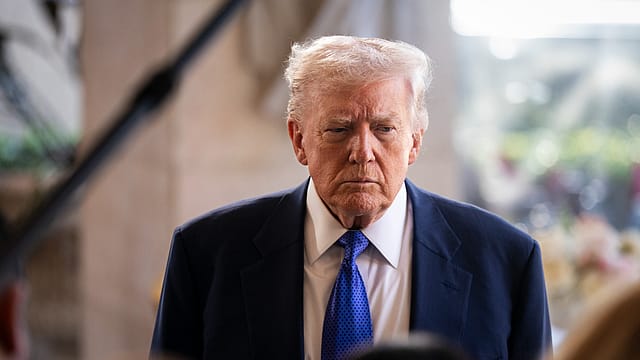
Donald Trump was watching television in his Manhattan apartment when the world entered the frame.
It was a business programme. The time was shortly after 8.45 am. Smoke was pouring from the North Tower of the World Trade Center.
The first explanations sounded almost reassuring. Perhaps a boiler had exploded. Perhaps it was an accident.
Trump knew the boilers were in the basement. Then, at 9.03 am, United Airlines Flight 175 appeared above New York and flew into the South Tower. “I said, wow, we are now in a different time,” Trump recalled in an interview with Trey Gowdy ahead of the 25th anniversary of the September 11 attacks.

Losing Memory
16 Oct 2026 - Vol 05 | Issue 42
The making of a medical and social emergency
“The world has just changed.”
It had. Within 102 minutes, two towers had been struck and destroyed. A third aircraft had torn into the Pentagon. A fourth had crashed into a Pennsylvania field after passengers and crew attempted to retake control.
The attacks killed 2,977 people from more than 90 countries. Among them were 441 first responders, the largest loss of emergency personnel on a single day in American history, according to the National September 11 Memorial & Museum.
But 9/11 did not end when the North Tower came down at 10.28 am.
It travelled into Afghanistan and Iraq. It entered airports, intelligence agencies, immigration counters, mosques, classrooms and private communications. It changed how governments watched citizens and how citizens watched strangers.
It gave America a new language: homeland security, enemy combatant, enhanced interrogation, no-fly list, forever war.
Twenty-five years later, the physical site in Manhattan has been rebuilt. The world Trump watched disappear has not returned.
The Morning America Became the Battlefield
American Airlines Flight 11 struck the North Tower at 8.46 am.
At first, television anchors and people watching from the streets struggled to understand what they had seen. The possibility of an accident remained alive for 17 minutes.
Then Flight 175 entered the South Tower.
The second impact ended uncertainty. America was under attack.
At 9.37 am, American Airlines Flight 77 struck the Pentagon in Arlington, Virginia. At 9.59 am, the South Tower collapsed.
United Airlines Flight 93 never reached its presumed target in Washington. After learning through telephone calls that other aircraft had been turned into weapons, passengers and crew fought back. The plane crashed near Shanksville, Pennsylvania, at 10.03 am.
The North Tower collapsed 25 minutes later.
Nineteen al-Qaeda hijackers had transformed four commercial aircraft into guided missiles. They attacked American finance, military power and, potentially, political government in a single morning.
The spectacle was designed for live television. The first strike attracted the cameras. The cameras carried the second strike around the planet.
Terror had discovered simultaneous global broadcasting.
It is difficult now to reconstruct the psychological scale of that morning. America had experienced terrorism, foreign attacks and war. But it had not watched two defining structures of its most famous city collapse after passenger aircraft were flown into them.
People jumped from the towers rather than wait for fire to reach them. Firefighters climbed stairways while office workers descended. Families called relatives from aircraft and burning floors, knowing that the conversation might be their last.
The victims did not know they were living through history. They knew only that they were running out of time.
Was Trump Right About What He Saw?
Trump’s central memory is credible in its emotional conclusion.
Smoke from the World Trade Center was visible from Midtown Manhattan, and millions watched the second impact live on television. His statement that the world had changed captured what people across America understood immediately.
Some details in his latest account are less reliable.
Trump described one of the Twin Towers as 115 storeys high. Both towers had 110 floors. He correctly described them as 110-storey buildings during a televised visit near Ground Zero on September 13, 2001.
He has now suggested that he went downtown as early as the day after the attacks, before qualifying the timing as “very, very quickly afterwards”. The clear public record places him near Ground Zero two days after the attacks.
On that visit, Trump said he had hundreds of workers assisting at the site and that more were being sent. Subsequent fact-checks have found no independent documentation establishing the scale or nature of that deployment. That does not prove no Trump employee contributed. It means the sweeping claim remains unverified.
His description of rebuilding also compresses a much longer and more troubled chronology.
The rescue, recovery and debris-removal operation lasted until May 2002. One World Trade Center did not open within a few years. It opened on November 3, 2014, more than 13 years after the attacks. Other parts of the complex took even longer, and some plans remained incomplete decades later. New York deserves enormous credit for clearing the mountain Trump remembers and rebuilding around a site containing human remains.
But the reconstruction was neither fast nor frictionless.
The factual corrections do not invalidate Trump’s memory of shock. They illustrate something more interesting about anniversaries.
Memory preserves emotional truth with extraordinary power while compressing dates, dimensions and delays. Public figures then turn personal memory into national narrative. At 25, 9/11 is entering the dangerous distance at which an event moves from lived experience into inherited history.
The War That Began Within Weeks
The United States invaded Afghanistan in October 2001 after the Taliban refused to surrender Osama bin Laden and dismantle al-Qaeda’s sanctuary.
The initial military campaign moved quickly. The Taliban government fell. Al-Qaeda’s leadership scattered. Victory appeared close. It remained close for 20 years.
The mission expanded from destroying a terrorist network to rebuilding a country, creating a national army, supporting a government and preventing the Taliban from returning. Each American administration inherited a war it could neither decisively win nor easily abandon.
Bin Laden was eventually killed by US forces in Abbottabad, Pakistan, in May 2011.
The war continued for another decade. When the United States withdrew in August 2021, the Taliban returned to Kabul. Images of desperate Afghans crowding the airport supplied a devastating bookend to the campaign.
The organisation that sheltered al-Qaeda before 9/11 was again governing Afghanistan.
America had punished the perpetrators, dismantled much of the original network and prevented another attack of comparable scale on its homeland. It had not built the Afghanistan it promised to leave behind.
How Did Iraq Become Part of 9/11?
It did so politically, not evidentially.
Iraq did not carry out the September 11 attacks. The 9/11 Commission found no collaborative operational relationship between Saddam Hussein’s government and al-Qaeda in executing them.
Yet the climate created by 9/11 made the 2003 invasion possible.
The George W Bush administration argued that Iraq possessed weapons of mass destruction and presented Saddam as a threat that could no longer be tolerated after America’s failure to anticipate al-Qaeda.
The stockpiles were not found.
Saddam was removed, captured and executed. Iraq’s state structure fractured. Insurgency, sectarian violence and jihadist organisations flourished. The Islamic State later occupied territory across Iraq and Syria before losing its territorial caliphate.
A terrorist attack planned from Afghanistan became the political gateway to a war in Iraq.
That expansion remains among 9/11’s most consequential distortions. America answered the failure to prevent one attack by embracing a doctrine of preventive war.
Fear became strategy.
What Did the War on Terror Cost?
No single figure can contain it.
Brown University’s Costs of War project estimates that the post-9/11 wars have cost the United States approximately $8 trillion, excluding some future interest costs. It estimates that at least 38 million people were displaced across Afghanistan, Pakistan, Iraq, Syria, Libya, Yemen, Somalia and the Philippines.
Its researchers calculate that direct and indirect deaths across the broader post-9/11 war zones may total between 4.5 million and 4.7 million.
These figures do not mean every death was directly caused by an American weapon or that every conflict had one author. The estimate includes deaths from violence as well as the indirect effects of destroyed healthcare, hunger, displacement, disease and damaged infrastructure across wars involving numerous states and armed groups.
They reveal the scale of the machinery set in motion after September 11.
The United States lost thousands of service members. Far larger numbers returned with physical injuries, post-traumatic stress, traumatic brain damage and lives reordered by repeated deployments.
Brown estimates that caring for post-9/11 veterans could cost between $2.2 trillion and $2.5 trillion by 2050. Much of that bill has yet to be paid. The Costs of War project describes the conflict’s financial and human burden as continuing rather than concluded.
The battlefield outlives the battle.
How Did 9/11 Change Everyday Life?
Before 9/11, an American passenger could arrive at an airport shortly before departure, pass through relatively modest security and sometimes accompany a friend or relative to the gate without a boarding pass.
That world disappeared.
President Bush signed the Aviation and Transportation Security Act on November 19, 2001, creating the Transportation Security Administration. Passenger screening became a federal responsibility. Cockpit doors were reinforced. Identity checks, watch lists and restrictions on cabin baggage expanded.
Shoes came off after the attempted shoe bombing of 2001. Liquids were limited after a transatlantic aircraft plot was disrupted in 2006. Full-body scanners, explosive screening and biometric identification joined the security architecture.
Some measures responded to threats that emerged after September 11, but 9/11 supplied the system into which they entered.
The airport became the most visible classroom of the new age.
Every queue taught the same lesson: ordinary freedom would now be negotiated against catastrophic possibility.
What Happened to Privacy?
Congress passed the USA Patriot Act 45 days after the attacks.
The law improved information-sharing between intelligence and law-enforcement agencies, strengthened measures against terrorist financing and broadened the government’s investigative reach.
It also dramatically expanded surveillance powers.
Authorities gained greater capacity to monitor communications, obtain records and conduct searches in national-security investigations. Critics warned that powers created for terrorism could migrate into ordinary policing and that secrecy made abuse difficult to detect.
Then came the technological revolution.
Smartphones, social media, cloud computing and vast digital databases gave governments and corporations access to forms of information that barely existed in 2001. Edward Snowden’s disclosures in 2013 revealed the reach of post-9/11 surveillance programmes and forced a global debate over privacy, security and state power.
The Patriot Act did not invent mass data collection. It legitimised the emergency logic in which collecting more information became easier to defend than explaining why it should remain private.
Twenty-five years later, the most durable monument to 9/11 may not stand in Manhattan. It may be the assumption that being watched is the price of being safe.
Who Paid the Price for Suspicion?
Muslims, Arabs, South Asians, Sikhs and people perceived to belong to those communities encountered a second aftermath.
Mosques received threats. Children were bullied. Workers were abused. Travellers were repeatedly pulled aside. Sikh men wearing turbans were attacked by people who mistook religious identity for culpability.
The distinction between al-Qaeda’s ideology and the faith of almost two billion Muslims was frequently erased by fear.
Governments developed programmes intended to detect radicalisation. Some communities experienced them as systems of suspicion built around religion, ethnicity and neighbourhood.
The language of the war on terror travelled far beyond the United States. Governments around the world discovered that calling an opponent a terrorist could reduce scrutiny over how that opponent was treated.
Security was necessary. Al-Qaeda had demonstrated a genuine capacity for mass murder, and jihadist organisations continued plotting attacks.
But safety acquired an ethnic silhouette. The question became who could pass through a railway station, border or airport without being required to prove that he was harmless.
Did Ground Zero Ever Stop Killing?
The towers fell in 2001. The dust remained.
The collapse released a toxic cloud containing pulverised concrete, glass, asbestos, metals, combustion products and other hazardous material. Firefighters, police officers, construction workers, volunteers, residents, students and employees inhaled it.
Years later, cancers, respiratory diseases and other illnesses began appearing across the exposed population.
The federal World Trade Center Health Program now provides monitoring and treatment to more than 130,000 enrolled responders and survivors. Its covered conditions include cancers, aerodigestive disorders and mental-health illnesses linked to exposure. The US Centers for Disease Control and Prevention continues to update the programme as new patients emerge.
Care is authorised until 2090. That date carries its own verdict.
September 11 is expected to remain a medical event for almost nine decades after the aircraft struck.
The official number of people killed that morning remains 2,977. It should not be casually merged with later deaths because medical attribution requires evidence and official datasets carry limitations.
But the human toll did not freeze when the smoke cleared. For thousands of families, 9/11 arrived years late, inside a diagnosis.
Did New York Rebuild Quickly?
New York recovered quickly in spirit and slowly in concrete.
Ground Zero was cleared around the clock. The last steel column was removed ceremonially on May 30, 2002, approximately eight and a half months after the attacks.
Rebuilding became entangled in architecture, ownership, security, finance, politics and grief. The site was valuable commercial land and, simultaneously, a mass grave.
Seven World Trade Center opened in 2006. The memorial opened on the tenth anniversary in 2011. Four World Trade Center followed in 2013. The museum and One World Trade Center opened in 2014. The Oculus opened in 2016, and Three World Trade Center in 2018.
One World Trade Center rises to a symbolic 1,776 feet. Its glass reflects a skyline that appears healed from a distance.
At ground level, two immense pools occupy the footprints of the destroyed towers. Water falls into squares whose centres cannot be seen. The names of the dead surround the voids.
New York did not rebuild over the absence. It designed the absence into the rebuild.
Has America Defeated al-Qaeda?
It defeated the organisation that existed on September 11, 2001.
Its leadership was hunted. Training camps were destroyed. Financial networks were targeted. Intelligence cooperation expanded. Bin Laden was killed. The United States did not suffer another foreign terrorist attack approaching the scale of 9/11.
That is a significant achievement.
But jihadism did not disappear. Al-Qaeda developed regional affiliates. The Islamic State built a caliphate across parts of Iraq and Syria before losing its territory. Lone attackers and small networks adopted propaganda and instructions distributed online.
The threat became more fragmented, less geographically concentrated and, in some ways, harder to define.
Meanwhile, the Taliban’s return demonstrated the limits of using military occupation to extinguish an ideology.
America prevented another 9/11. It did not produce a world without the conditions from which terrorism recruits.
Why Does the 25th Anniversary Feel Different?
Because September 11 now belongs to two Americas.
One remembers where it was. The other was not born.
A person born on the day of the attacks is now 25. Schoolchildren visiting the memorial experience the Twin Towers as history, like the Berlin Wall or the Cold War.
New York City has allocated money to expand 9/11 education for students who know the event primarily through footage. The challenge is no longer only to preserve grief. It is to preserve complexity.
At the 25th-anniversary ceremony, families will read 2,983 names. That total includes the 2,977 killed on September 11 and the six victims of the 1993 World Trade Center bombing. Six moments of silence will mark the aircraft impacts, the collapses, the Pentagon attack and the crash of Flight 93, according to the official commemoration programme.
The ritual has remained deliberately resistant to politics. Names instead of speeches. Lives instead of arguments. That may be the purest form of memory available.
The World That Changed
Trump recalls seeing the second plane and understanding that the world had entered a different phase.
The details around memory can be corrected. The conclusion cannot.
The United States created an enormous security state, fought its longest war, invaded Iraq, killed bin Laden, lost thousands of troops, spent trillions of dollars and eventually watched the Taliban return.
New York removed a mountain of debris, built the Western Hemisphere’s tallest building and preserved two holes in its heart.
Air travel became an exercise in controlled suspicion. Privacy was renegotiated. Muslims were forced to answer for crimes they did not commit. First responders who survived the towers began dying from what they breathed there.
America became safer from one specific form of attack and more accustomed to permanent emergency.
On September 11, the names will be read again.
Nearly three thousand individual lives will briefly be rescued from the collective nouns that followed them: victims, casualties, war, terror, history.
Trump saw the aircraft. America saw the world change.
Twenty-five years later, the more difficult task is to separate what September 11 required from what fear subsequently permitted.
The towers were rebuilt as memory. The wars became inheritance. And the world that changed that morning is still waiting to learn where the attack ended and its aftermath began.
With inputs from ANI & agencies