The AI Casualty Ledger: Getty’s Bankruptcy Plan, Character.AI’s Collapse & Wipro’s Shrinking Workforce
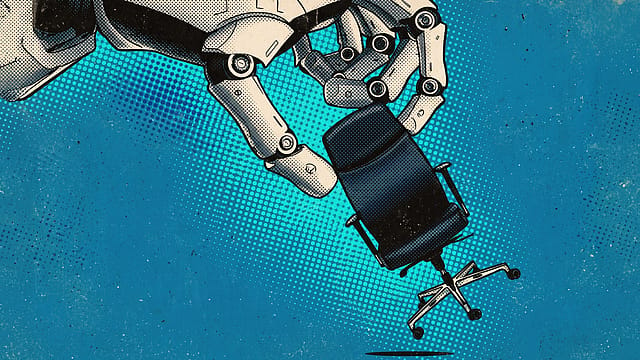
On October 12, one company threatened by artificial intelligence prepared to enter bankruptcy. On the same day, a company built entirely around artificial intelligence actually entered it.
Three days later, one of India’s largest technology-services companies disclosed that its workforce had shrunk by 6,716 people during a single quarter.
Getty Images, Character.AI and Wipro do not sell the same product. They do not compete for the same customers. One monetises photographs and videos, another offers conversations with artificial personalities, and the third supplies technology services to companies around the world.
Yet together they capture the three faces of AI’s emerging damage.

Zeroing In on ECI
09 Oct 2026 - Vol 05 | Issue 41
Constitutional legitimacy versus political opportunism
Getty represents the incumbent whose valuable product can suddenly be replicated cheaply. Character.AI represents the disruptor that attracted millions of users but could not make its revenue outrun its computing and legal costs. Wipro represents the surviving corporation that can produce more with fewer people, even before it proves how much money AI itself will generate.
AI did not create every weakness inside these companies. Getty carried heavy debt and suffered the collapse of its proposed Shutterstock merger. Character.AI faced lawsuits, safety concerns and regulatory scrutiny. Wipro’s headcount can fall because of resignations, transfers, delayed hiring and ordinary restructuring as well as automation.
But the connection is no longer speculative. The technology is beginning to appear in bankruptcy plans, customer numbers, supplier budgets, hiring decisions and corporate payrolls.
This is AI’s casualty ledger.
WHEN THE PRODUCT LOSES ITS SCARCITY
Getty Images built its power by controlling access.
A publisher, advertiser or company looking for a professionally produced image could search an enormous licensed archive, choose the appropriate photograph and pay for permission to use it. Getty did not merely sell pictures. It sold speed, selection, legal certainty and access to visual history.
Generative AI attacks the scarcity underpinning part of that model.
A company that once bought a photograph of a fictional family around a breakfast table can now describe the family, the table, the sunlight, the clothes and even the mood it wants. The image can be generated in seconds, altered repeatedly and produced without organising a conventional shoot.
Getty has responded by developing its own AI tools, licensing its content for model training and emphasising commercially safer generation. It possesses editorial archives and historical material that a prompt cannot authentically recreate.
Yet its financial deterioration shows that an archive’s uniqueness does not automatically protect the economics around it.
The company has agreed to a restructuring that it intends to implement through an expedited, prepackaged Chapter 11 process. Its existing shares and warrants are expected to be cancelled. Affiliates of the Getty family and Koch Equity Development have committed fresh capital and will own the reorganised business. Unsecured creditors face a recovery below the full value of their claims.
Getty is therefore not simply changing ownership. The restructuring determines who absorbs the loss created by years of leverage, weakening performance and a changing market.
Its latest reported quarter showed revenue falling 2.5 per cent and adjusted EBITDA declining 8.4 per cent. Purchasing customers fell 10 per cent, while active annual subscribers declined more than 25 per cent.
AI did not borrow Getty’s money or design its capital structure. It did, however, arrive at a moment when debt left the company with little room to defend a product whose abundance was increasing.
The more revealing connection lies inside the accounts of Getty’s potential customers.
In 2024, Klarna said generative AI had helped it reduce annual marketing expenditure by approximately $10 million. Around $6 million came from lower image-production costs. Another $4 million came from reduced spending on outside suppliers, including production, translation and social agencies.
The Swedish financial-technology company generated more than 1,000 marketing images within three months and reduced an image-production cycle from six weeks to seven days. Its chief marketing officer said the company had effectively removed its need for stock imagery.
That is the connection between a corporate saving and somebody else’s disappearing revenue.
What Klarna records as productivity may appear in Getty’s accounts as lost demand. It can also appear in the income of a photographer, illustrator, model, production assistant, translator or advertising agency as work that no longer arrives.
AI does not have to destroy an entire profession at once. It can take one assignment, one supplier and one renewal at a time.
CHEGG AND THE COLLAPSE OF THE PAID ANSWER
Chegg provides an even clearer case because the company itself has connected its crisis to AI.
For years, students paid Chegg for textbook solutions, homework help and tutoring. Then ChatGPT and rival services offered an apparently simpler proposition: ask almost any question conversationally and receive an immediate answer.
Google’s AI-generated summaries added a second injury by reducing the need to visit the websites from which the information had been drawn.
During the first quarter of 2025, Chegg’s subscriber count fell 31 per cent to 3.2 million and revenue declined 30 per cent to $121 million. In May, it announced that it would eliminate 248 positions, approximately 22 per cent of its workforce.
Five months later, Chegg announced another 388 job reductions, representing approximately 45 per cent of its remaining global workforce. The company directly attributed its overhaul to AI competition and reduced traffic from conventional search.
Chegg’s collapse reveals the danger facing businesses that charge for organised access to information.
Their content may remain useful. Their employees may remain knowledgeable. Their archives may have taken years and enormous expense to assemble.
But if users believe an AI interface can extract, summarise or recreate enough of the value without sending them to the original source, usefulness no longer guarantees payment.
Getty monetised access to the image. Chegg monetised access to the answer. AI began offering substitutes for both.
WHEN PRODUCTIVITY NEEDS FEWER PEOPLE
Wipro presents a different form of disruption.
The company has not lost its market to a chatbot. It is helping clients install and use the technology. Its revenue increased 9.1 per cent during the September quarter, assisted by acquisitions, renewed European spending and AI-related work.
But its workforce fell from 243,044 to 236,328. That is a net reduction of 6,716 people, or approximately 2.8 per cent, in three months.
Calling all 6,716 departures layoffs would be inaccurate. Wipro has not provided a complete reconciliation showing dismissals, resignations, retirements, transfers, acquired employees and vacant positions left unfilled.
The timing nevertheless demands scrutiny.
In September, Wipro’s chief technology officer said its AI deployment had freed capacity equivalent to approximately 20,000 employees. She said those employees had been redeployed, not eliminated, and that the figure represented productivity rather than a person-for-person substitution.
The company has also trained more than 100,000 employees in advanced AI skills. Yet it does not separately disclose AI revenue, making it impossible for investors to compare the investment, productivity claim and commercial return.
Its latest results deepen the question.
Large-deal bookings fell to $674 million, down 58.6 per cent sequentially and 76.4 per cent from a year earlier. Total bookings declined from approximately $4.7 billion to $2.6 billion year-on-year. Wipro can therefore point to higher productivity while facing a considerable deterioration in the future work being contracted.
If AI allows the same assignment to be performed with fewer engineering hours, the immediate benefit belongs to the client or the vendor’s margin. The longer-term problem belongs to a business historically built around recruiting, training and billing large numbers of people.
The central question is not whether every Wipro departure was caused by AI.
It is whether India’s technology-services industry has entered a period in which revenue can grow without a corresponding increase in employment—and whether the old connection between winning a contract and hiring thousands of engineers has begun to break.
THE LAYOFF THAT NEVER HAPPENS
The most important AI job loss may never be announced.
An employee who is dismissed becomes part of a layoff number. A graduate position that is never created leaves no equivalent record.
Indian technology companies traditionally recruited large classes of engineering graduates, trained them and deployed them across client projects. The model created a career ladder: junior employees performed routine work, acquired experience and moved towards more complex responsibilities.
AI can remove the bottom rung without immediately eliminating the people already standing above it.
Wipro hired no freshers during the June quarter even as approximately 7,000 graduate recruits from the previous financial year reportedly awaited deployment. The company may eventually absorb them. But the delay illustrates a broader tension: what happens to the apprenticeship model when code generation, testing, documentation and routine support require fewer beginners?
This distinction matters.
A company can truthfully say that AI has caused no mass dismissal while quietly slowing recruitment, leaving vacancies unfilled, relying on attrition and demanding substantially more output from each employee.
The payroll shrinks without a single dramatic morning of pink slips. The damage is transferred to people who never receive an offer letter.
WHEN A COMPANY SAYS AI TOOK THE JOBS
Salesforce provides one of the cleanest examples of declared causation.
Chief executive Marc Benioff said in 2025 that the company had reduced its customer-support workforce by approximately 4,000 positions because AI meant it required fewer people. He had previously said that AI was performing a significant proportion of the company’s work.
Those savings arrived before Salesforce had conclusively demonstrated the financial returns promised by its Agentforce platform. In September 2025, the company issued a weaker-than-expected revenue forecast as analysts questioned the pace of AI monetisation.
This is an important addition to the ledger.
A company does not need to prove that its AI product has transformed revenue before it uses AI to transform payroll. Cost removal can arrive earlier than new growth.
That creates an asymmetric transition.
Employees and suppliers experience the loss immediately. Investors may wait years to discover whether the promised revenue ever arrived.
THE DISRUPTOR ENTERS BANKRUPTCY
Character.AI should have represented the winning side of this transition.
Founded by former Google engineers, the company allowed users to create and converse with artificial personalities. It attracted enormous attention, reportedly reached more than 200 million users and achieved a valuation of approximately $1 billion.
Then the economics caught up.
Character Technologies, the company’s US owner, filed for Chapter 11 on October 12. It listed estimated assets and liabilities of between $50 million and $100 million and entered an agreement under which Disney would make a $20-million opening bid for a licence to certain intellectual property.
Court documents put Character.AI’s continuing operating loss at approximately $8–9 million every month. Computing power and highly paid technical talent consumed cash, while lawsuits and regulatory investigations created additional costs and uncertainty.
Its bankruptcy reverses the usual AI story.
Character.AI did not fail because users rejected artificial intelligence. It failed despite attracting them.
Popularity could not repair the gap between what each user generated in revenue and what the service cost to operate safely. The technology that threatened other companies’ revenue failed to generate sufficient economic value for one of its own pioneers.
The surviving assets may still prove valuable to Disney or another bidder. The bankruptcy is not a finding that conversational AI lacks a market.
It does, however, expose the metric that AI companies prefer not to place beside their user counts: gross profit after computing costs, content moderation, safety operations, litigation and customer acquisition.
A prompt may feel almost free to the user. It is not free to the company answering it.
SAVINGS CAN RETURN AS DAMAGE
Klarna once appeared to offer the most confident demonstration of AI-driven efficiency.
Its customer-service assistant was said to perform work equivalent to 700 full-time employees. The company’s workforce declined from approximately 5,000 to 3,800 as it relied more heavily on automation. Average query-resolution time reportedly fell from 11 minutes to two.
Then Klarna began correcting course.
Its chief executive acknowledged that the company had overemphasised cost reduction and moved too quickly. Some customers wanted to speak to people, particularly when their problems were complicated or emotionally charged. Klarna resumed hiring while continuing to use AI for routine interactions.
The reversal does not mean AI failed. It means its savings carried an unrecorded liability: poorer service.
A company can reduce the cost of answering a customer while increasing the customer’s frustration. It can eliminate an agency fee while making its advertising indistinguishable from everybody else’s generated imagery. It can accelerate software development while accumulating code that nobody fully understands.
The initial saving appears neatly in the accounts. The loss of trust, distinctiveness or institutional knowledge arrives later and is harder to measure.
Some of AI’s casualties may eventually have to be rehired.
HOW MANY JOBS HAS AI REALLY TAKEN?
The available headline number is substantial.
Employers cited AI in 112,713 announced US job cuts through July 2026, approximately 24 per cent of the cuts recorded during that period. Since AI began being tracked separately in 2023, it had been cited in 184,538 announced reductions.
The figures should not be treated as an audited count of jobs performed by machines.
They record the reasons supplied in corporate announcements. A company may have weak demand, redundant management layers, acquisition overlap or pressure from investors—and describe the eventual restructuring as an AI transformation.
Invoking AI can make an old-fashioned cost reduction sound visionary.
Even the organisation compiling the data has cautioned that AI’s specific contribution is difficult to establish and that capital markets may reward companies for mentioning it.
The casualty ledger therefore requires three evidentiary categories.
The first contains declared causation: cases such as Salesforce and Chegg, where management has expressly connected AI to job or business reductions.
The second contains strong circumstantial evidence: Wipro’s 20,000-person capacity claim beside its subsequent headcount decline, without proof that one directly caused the other.
The third contains market attribution: companies whose shares have fallen because investors fear AI disruption even though the operating damage has not yet appeared.
Confusing these categories would exaggerate the story. Keeping them separate makes it stronger.
THE HUMAN COST HIDES BETWEEN THE LINES
International labour research has estimated that approximately one in four jobs worldwide has some exposure to generative AI. Exposure does not mean elimination. In many occupations, AI is more likely to alter individual tasks than remove the entire position. Clerical work remains the most exposed, while digitally intensive professional and technical roles are becoming increasingly vulnerable.
But a job can deteriorate without disappearing.
A writer may retain the title while being expected to produce twice as much. A customer-service employee may remain on the payroll but handle only the angriest and most complex callers. A programmer may become responsible for reviewing far more automatically generated code. A photographer may still work, but only on assignments a generated image cannot imitate convincingly.
The productivity gain belongs to the organisation.
The remaining human being inherits the exceptions, the ambiguity and the emotional labour.
There will also be winners. AI can remove repetitive work, make expertise accessible, help smaller businesses compete and create occupations that do not currently exist. Wipro’s assertion that it redeployed the capacity it released may prove correct. Klarna’s decision to combine people and machines may produce better service than either could deliver alone.
The problem is that corporate reporting remains much better at announcing efficiency than accounting for displacement.
Companies disclose the money saved. They rarely identify the supplier who lost the contract, the employee who absorbed additional work or the graduate who was never recruited.
THE FIRST DAMAGE REPORT
Getty, Character.AI and Wipro should not be forced into a false story in which one technology caused three identical crises.
Their differences are the story.
Getty shows what happens when AI attacks the scarcity of an old product while debt removes the time required to adapt.
Character.AI shows what happens when demand for an AI product grows faster than the business model supporting it.
Wipro shows what happens when AI productivity enters a labour-intensive industry before the revenue attached to that productivity can be measured independently.
Chegg shows an information business losing users directly to AI interfaces. Salesforce shows a profitable corporation reducing headcount before AI delivers its promised revenue transformation. Klarna shows that some savings return as service problems and human rehiring.
Together they describe something larger than a sequence of layoffs.
AI’s damage travels through the economy. One company’s generated image becomes another company’s lost licence. One employer’s automated answer becomes another worker’s missing position. One client’s productivity saving becomes an IT vendor’s reduced billable work. One chatbot’s extraordinary usage becomes an AI startup’s unsustainable computing bill.
The technology does not need to eliminate every job or bankrupt every incumbent to transform the balance of power. It needs only to make the product cheaper, the contract smaller, the team leaner and the next recruit unnecessary.
For years, the AI debate asked what the technology might eventually do.
The accounts are beginning to answer. The damage has not arrived everywhere. It cannot always be separated cleanly from debt, mismanagement, weak demand or ordinary restructuring.
But it has arrived. And for the first time, it can be counted.