Generative AI boom: Why 3.6-Million Indians are Racing to Learn GenAI
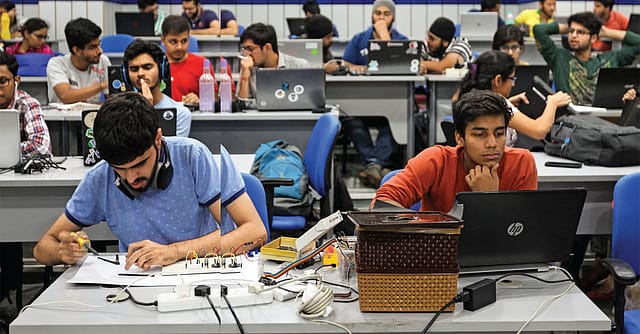
India’s generative AI boom is already underway, with 3.6 million enrollments in GenAI programmes in 2025—the highest globally. Driven by job disruption fears and massive economic potential, professionals across sectors are racing to reskill. With AI poised to reshape millions of jobs and add $1.5 trillion to GDP, India is positioning itself as a future global AI talent powerhouse—if learning converts into real-world impact.
India’s generative AI revolution is already here. According to a recent Coursera report, India recorded 3.6 million enrollments in GenAI programs during 2025, claiming the top spot globally. This represents the largest effort by any nation to prepare its workforce for an AI-driven future, and ripple effects are reshaping India’s job market, economy, and standing across multiple sectors.
The scale of India’s generative AI learning surge is unprecedented. Reportedly, professionals and students are enrolling in GenAI programs at three enrollments every minute, a dramatic acceleration from one per minute last year. This explosive growth in GenAI in India signals a workforce that recognizes artificial intelligence as the defining skill of the decade.
According to Coursera’s 2025 Learner Trends report surveying 32.8 million learners worldwide, courses like Google AI Essentials, Generative AI for Everyone, and Generative AI: Introduction and Applications are driving India’s generative AI educational shift.
The enrollment numbers reflect a nationwide recognition that AI literacy has moved from optional to essential. From software engineers to healthcare workers, professionals across sectors are investing time and resources into understanding how generative AI can transform their work.

Open Minds 2026
26 Jun 2026 - Vol 05 | Issue 26
The power of ideas and arguments in 50 portraits
What’s Behind the Sudden Hype to Learn GenAI?
India’s generative AI learning boom isn’t happening in isolation. The tech has become accessible through structured online programs, democratizing skills that once required advanced degrees. This accessibility has removed traditional barriers, allowing anyone with internet access to acquire cutting-edge AI capabilities.
The economic imperative is clear. An EY report indicates GenAI in India could reshape 38 million jobs and add 1.5 trillion dollars to GDP by 2030. Yet reportedly, only 3 percent of organizations possess the talent needed to harness this potential.
This massive demand-supply gap has professionals racing ahead, recognizing that early adopters will have significant competitive advantages in the job market. Global AI talent competition is intensifying, and India’s talent pool combined with digital infrastructure positions it to become a global AI talent hub. India’s generative AI education lead could translate into sustained advantages, potentially positioning the country as the world’s premier destination for AI talent and innovation.
Are People Getting Jobs and Raises After Learning AI?
According to Coursera’s Learner Outcomes Report 2025, 95 percent of Indian learners who completed GenAI programs reported positive career outcomes.
Remarkably, 55 percent reported salary increases following India’s generative AI training, while 96 percent cited personal benefits including greater confidence and professional credibility.
Career transformation extends across industries. Healthcare professionals use India’s generative AI tools to analyze patient data and predict treatment outcomes. Marketers leverage AI for personalized campaigns that dramatically improve conversion rates.
Developers use AI-assisted coding to boost productivity, while financial analysts deploy machine learning models for risk assessment.
What Other Skills are Indians Building Beyond AI?
While GenAI in India dominates learning, professionals are building expertise in complementary fields. Data science enrollments remain strong as learners recognize that AI models require quality data.
Cybersecurity training is surging as organizations grapple with protecting AI systems. Digital marketing, project management, and finance courses continue attracting substantial enrollment. This reflects strategic thinking - becoming a global AI talent hub requires comprehensive digital skillsets beyond just AI programming. Cybersecurity is crucial as AI systems handle sensitive data, while project management is essential for implementing solutions within organizations.
Can India Become the World’s AI Talent Powerhouse?
Despite progress, obstacles remain. The World Economic Forum estimates 38 percent of India’s core skills will evolve over five years, creating a perpetual race to stay relevant. Ashutosh Gupta, Managing Director at Coursera, reportedly emphasized that India has a unique opportunity to lead globally in AI, but requires rapid skilling at unprecedented scale. The gap between India’s generative AI learning and deployment remains substantial.
Challenges include ensuring equitable access to GenAI programs across urban-rural divides and supporting India as a global AI talent hub. As adoption accelerates, questions about data governance and ethical AI deployment become increasingly urgent.
The convergence of learning initiatives and economic projections positions India’s generative AI movement as transformative. If momentum continues, India could establish itself as a global AI talent hub within this decade, attracting investments, partnerships, and opportunities that reshape its economic landscape.
Success depends on translating India’s generative AI learning into workplace applications. The 1.5 trillion dollar GDP addition isn’t guaranteed - it requires transformation at individual, organizational, and policy levels.
Companies must develop frameworks to deploy AI talent effectively. Policymakers need to create supportive regulatory environments. Educational institutions must continuously update curricula to match industry needs.
What Happens Next for India’s AI Revolution?
The rapid pace of enrollment represents more than statistics. With three GenAI programs completed every minute, India is building an AI-ready workforce at unprecedented scale.
However, the true test lies ahead: converting this massive learning surge into tangible economic outcomes and ensuring equitable access across the nation’s diverse landscape.
For millions, skills acquired through GenAI in India programs will determine career trajectories for decades. The question isn’t whether AI will reshape India’s workforce, but whether the country can successfully bridge the gap between learning and implementation to capture the full economic potential this revolution promises.
(yMedia is the content partner for this story)