From Cat Pain Detectors to ChatGPT Prism: The Weirdest AI Tools Explained
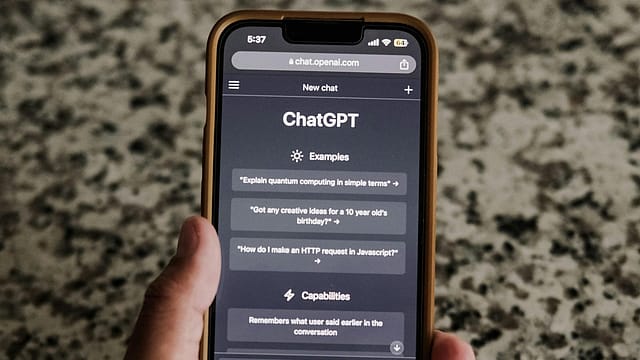
Artificial intelligence is rapidly splintering into hyper-specialised tools, some revolutionary, others downright bizarre, signalling a future where AI assistants are tailored not just to jobs, but to oddly specific tasks.
Here’s all that you need to know about the AI revolution…
What is ChatGPT Prism?
ChatGPT Prism is OpenAI’s newly launched, specialised AI feature designed specifically for researchers and scientists.
Built to support academic collaboration, Prism helps organise complex datasets, structure research papers, and streamline collaborative writing workflows, focusing on precision rather than general conversation.
How far can the ChatGPT Prism model of AI specialisation go?
Prism points to a future where AI no longer operates as a single, all-purpose tool but fragments into task-specific assistants.
If AI can already detect pain in animals or design whiskey recipes, experts believe nearly every profession, from academia to agriculture, could eventually have its own dedicated AI system.
Is ChatGPT Prism making expertise more accessible or more replaceable?
Supporters argue that Prism lowers barriers to scientific collaboration by handling structure and coordination, not ideas.
Critics counter that while it doesn’t replace expertise, it raises questions about authenticity, authorship, and how much assistance is too much in academic work.
Can AI really predict how crunchy a potato chip will be?
Yes. Researchers have developed AI systems that can predict the crispness of a potato chip before it is eaten.

Bengal Thriller 2026: The Plot Thickens
17 Apr 2026 - Vol 04 | Issue 67
Mamata Banerjee faces her toughest battle
By analysing visual cues such as texture, colour, and surface patterns, the model estimates crunchiness without requiring a single bite.
What’s the Cat Pain Detector?
This AI tool analyses photographs of cats to detect signs of pain by studying subtle facial indicators such as ear position, whisker tension, and nose shape.
The system reportedly achieves over 90 per cent accuracy, allowing veterinarians to identify discomfort earlier than traditional observation methods.
What does the AI Sommelier do?
An AI sommelier scans images of food and recommends wine pairings based on massive datasets of flavour profiles.
Instead of relying on human tasting expertise, the system demonstrates how AI is moving into traditionally sensory and subjective domains.
Is there really an AI that generates excuses?
Yes. Some narrowly trained AI tools can now generate convincing excuses on demand, from missing work to postponing social plans.
While often framed as productivity aids, these tools highlight how AI specialisation is increasingly drifting into everyday convenience.
What’s the Emotion Recognition AI for cows?
Farmers are using AI systems that analyse cows’ facial expressions and vocalisations to assess emotional states.
The goal is early detection of stress or illness, often before visible physical symptoms appear, improving animal welfare and farm efficiency.
What’s the weirdest workplace AI tool so far?
Some companies reportedly deploy AI that tracks typing rhythms and mouse movements to predict productivity or burnout.
Marketed as efficiency tools, these systems have sparked serious debates around privacy, surveillance, and employee consent.
Has AI actually created whiskey?
Yes. A Swedish distillery partnered with an AI system to design a whiskey by analysing chemical compositions, flavour profiles, and consumer preferences.
The AI-generated recipe was later distilled and bottled, blurring the line between human craftsmanship and machine computation.
Does ChatGPT Prism mark the end of general-purpose AI tools?
Not quite. Prism signals a dual-track future for artificial intelligence.
Broad, general-purpose tools like ChatGPT will coexist with deeply specialised AI systems designed for specific professions, workflows, and industries.
(With inputs from yMedia)