Can India Build the Machines Behind Its $1.2 Trillion Industrial Boom by 2047? Data Centres, Semiconductors Drive Demand
The country’s capital goods market could expand to $1 trillion-$1.2 trillion by 2047, driven by investments in data centres, semiconductor manufacturing, defence, aerospace and clean energy, according to a joint report by the Confederation of Indian Industry (CII) and Boston Consulting Group (BCG).
The projection points to a growing opportunity for manufacturers of industrial machinery, electrical equipment, precision components and specialised production systems. But it also highlights a structural gap: imports continue to meet more than a third of India's domestic capital goods demand.
The question, therefore, is not simply how large the market could become, but how much of that demand Indian manufacturers can actually serve.
Data centres and semiconductor plants create a new machinery market
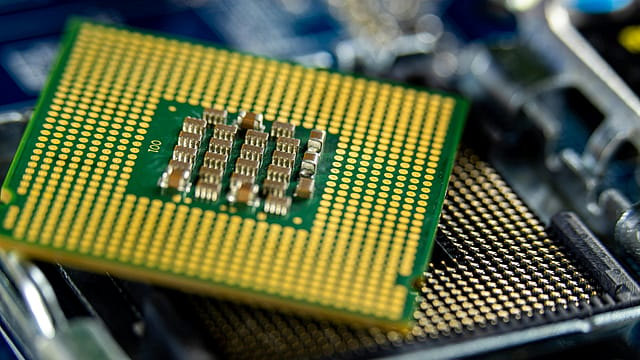
One of the fastest-growing sources of demand is expected to be the electronics, semiconductor and data centre segment.

The Wealth Issue 2026
06 Nov 2026 - Vol 05 | Issue 45
Portraits of Dreamers and Doers under 35
Annual capital expenditure in these industries is projected to quadruple from Rs 30,000 crore in FY23-25 to Rs 1.2 lakh crore in FY27-29, according to the report. This would make the segment the fastest-growing among major end-use industries.
Data centres alone are expected to attract investments of around Rs 30,000 crore annually. Their infrastructure requirements extend well beyond servers and computing hardware. They need transformers, switchgear, cooling systems and backup power equipment, creating opportunities for manufacturers across the electrical and industrial equipment value chain.
Semiconductor fabrication and packaging facilities will add another layer of demand. These plants require specialised machinery and precision equipment, raising the importance of advanced engineering and manufacturing capabilities.
As India seeks to expand its semiconductor ecosystem and digital infrastructure, the capital goods industry could benefit from investments made across these sectors.
Defence and clean energy add to the investment pipeline
The opportunity is not limited to technology infrastructure.
Annual capital expenditure across major end-use industries is projected to increase by around 30 per cent, from Rs 24 lakh crore in FY23-25 to Rs 32 lakh crore in FY27-29.
Renewable energy and clean technology are expected to see annual capital expenditure rise by around 130 per cent to Rs 3.7 lakh crore. Spending in defence and aerospace could increase by 60 per cent to Rs 2.5 lakh crore.
These investments are likely to create demand for a wide range of industrial products, including power equipment, specialised components, manufacturing systems and precision engineering solutions.
The CII Capital Goods Pulse Survey 2026 also suggests that manufacturers are preparing for this expansion. Around 73 per cent of respondents were optimistic about the sector, while 65 per cent said they planned to increase capital expenditure over the next five years.
Respondents identified defence and aerospace, renewable energy and the power grid, and data centres as the biggest growth opportunities.
India's import dependence remains a challenge
Despite the growth outlook, India's capital goods industry has a significant gap to address.
The sector produced equipment worth around Rs 5.7 lakh crore in FY25 and has grown at an annual rate of about 10 per cent since FY19. Yet imports continue to account for more than a third of domestic demand.
This dependence could become a constraint as investment accelerates in industries that require sophisticated machinery and high-precision equipment. Expanding domestic production will require more than increasing manufacturing capacity. Indian companies will also need to invest in research and development, technology transfer, component manufacturing and specialised skills.
The CII-BCG report has set a target of reducing imports from around 36 per cent of domestic consumption to below 20 per cent by 2047. It also aims to raise exports to more than 40 per cent of domestic production.
That would require Indian manufacturers to move beyond supplying equipment for the domestic market and develop products that can compete internationally.
“Our report points to a strong growth opportunity for India’s capital goods industry, with annual capex across end-use sectors projected to rise by over 30% by FY27–29, particularly in renewables, semiconductors and data centres,” said Natarajan Sankar, Managing Director and Senior Partner, India Head – Industrial Goods Practice at BCG.
The bigger test is moving up the technology chain
India's capital goods ambitions are closely tied to its broader manufacturing push. Investments in semiconductor plants, data centres, renewable energy and defence can create a larger market for domestic equipment makers. But the scale of that opportunity will depend on whether Indian manufacturers can supply increasingly sophisticated products.
The report's targets underline the shift required: lower import dependence, stronger domestic technology capabilities and a larger export presence.
A $1 trillion-plus market by 2047 would represent a substantial expansion. Turning that projection into a competitive industrial base, however, will depend on whether India can manufacture not just the products of its next industrial boom, but also the machines that make them.
(With inputs from ANI)