Apple HomeView Is Coming to India, But Where Are the Cameras and Smart Locks?
A door that unlocks as you approach. A camera that stops monitoring when someone returns home. Footage you can search using an ordinary sentence.
Apple’s latest home announcements imagine a household in which the iPhone does more than act as a remote control. Working with LG Electronics and Schneider Electric, the company is introducing a range of cameras, locks and temperature controls designed to work through Apple Home, with fewer separate apps and accounts to manage.
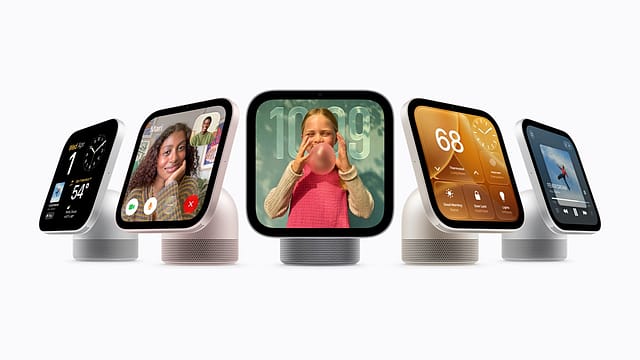
For Indian consumers, however, there is an important distinction between the vision and what is available locally. Apple has announced HomeView, its new smart-home display, for India. The accompanying Home Collection accessories have different launch markets, and India is not among them.
The distinction matters because buying the display does not automatically make an existing door lock, CCTV camera or air-conditioner part of an integrated smart home. Compatibility, installation and recurring costs will determine how much of Apple’s promise a household can actually use.

Zeroing In on ECI
09 Oct 2026 - Vol 05 | Issue 41
Constitutional legitimacy versus political opportunism
What has Apple announced?
There are two connected offerings.
Apple Home Collection is a new range of accessories developed in collaboration with LG Electronics and Schneider Electric. It includes indoor and outdoor cameras, a video doorbell, a smart lock, thermostats and temperature sensors.
HomeView is a separate Apple device: a seven-inch display for entertainment, video calls and home controls. It is designed to bring compatible smart-home devices and everyday functions together in one place.
The Home app remains the interface for managing compatible accessories. Apple says its new Home Collection devices can be set up using an iPhone and managed through the app without requiring separate manufacturer apps or accounts.
The attraction is straightforward. Instead of opening one app to check a camera, another to manage a lock and a third to adjust the temperature, users can bring supported functions into one interface. But this is a system of compatible devices, not a software update that automatically connects every appliance in a home.
Can Indians buy the new products?
HomeView is listed in India at ₹39,900 for both the tabletop and wall-mounted models. Pre-orders began on October 13, with availability scheduled to begin on November 13.
The Home Collection accessories have a more limited rollout. Apple lists its cameras and video doorbell for the US, Canada and UK, while the smart lock and climate-control products are listed for the US and Canada. The rollout begins in December, with some accessories arriving in early 2027.
Apple has not announced India pricing or a launch date for these accessories. HomeView’s India availability should therefore not be mistaken for confirmation that the entire collection is coming here.
The distinction is especially relevant for anyone considering an imported lock or thermostat. Beyond the purchase price, buyers would need to establish whether the product suits their door, electrical setup and home infrastructure, and whether installation and after-sales support are available.
Can the front door really unlock without a tap?
Apple says LG’s Smart Deadbolt Lock uses Ultra Wideband, or UWB, to detect when a person carrying a compatible iPhone or Apple Watch approaches the door with a home key configured.
UWB is a wireless technology that can help devices determine proximity precisely. The intended result is hands-free unlocking, without the user having to tap a phone or enter a code.
The lock also supports tap-to-unlock, a PIN pad and a backup key slot. Apple says it can report whether the door is open or has been tampered with, while the Home app allows users to share access with guests.
The important qualification is compatibility. Not every iPhone or Apple Watch necessarily supports every feature. For Indian buyers, the lock would also need to suit the door and have appropriate installation and service support. Until Apple announces local availability, the feature remains part of a product proposition rather than a confirmed option for Indian households.
What changes with the cameras?
The new range includes indoor and outdoor cameras, as well as a video doorbell. Apple says LG’s Video Doorbell has separate views for visitors and packages, with a front camera capturing up to 2.5K video and a lower camera capturing full HD. The outdoor cameras offer low-light colour viewing, while the floodlight version adds motion-responsive lights.
The indoor camera has a more unusual feature. According to Apple, it tilts down to stop monitoring when the first member of the household returns. Users can also adjust its position manually or through the app.
That makes privacy visible: rather than relying only on an app setting, the camera changes where it points. It is a useful design choice, though it does not remove the need to decide where cameras should be placed and who should have access to the footage.
Are the cameras really subscription-free?
Not entirely.
Apple says there is no separate camera subscription, but recording event history requires a supported iCloud+ plan. The service stores up to 10 days of event video history.
Apple’s Indian iCloud+ plans are priced at ₹75 a month for 50GB, ₹219 for 200GB and ₹749 for 2TB. Under Apple’s HomeKit Secure Video offering, these plans support recording from one camera, up to five cameras and an unlimited number of cameras, respectively.
These are existing cloud-subscription prices, not confirmation that the new cameras will launch in India. An eligible iCloud+ subscription may cover the recording requirement for supported devices; households without one would need to account for the recurring cost.
Apple also says eligible plans and compatible hardware enable AI-powered video descriptions and natural-language searches. Instead of scrolling through recordings, a user could search for an event by describing what happened. These features have additional device, software and subscription requirements, so they should not be assumed to work with every camera or every Apple device.
And while a machine-generated description may make footage easier to search, it is not a substitute for reviewing the recording when the details matter.
How private is a connected home?
Apple says personal data in the Home app and camera footage are end-to-end encrypted and cannot be read by Apple, LG Electronics or Schneider Electric. It says footage is processed locally on a home hub or through its Private Cloud Compute system, and stored encrypted in iCloud for eligible users.
These are Apple’s stated privacy protections, rather than an independent assessment of the entire system. They are relevant, but they do not settle every privacy question that arises inside a household.
A smart camera may record visitors, delivery workers, domestic workers and other people who have not chosen to be monitored. Families still need to decide where cameras point, who receives access and when recording is appropriate. Technical safeguards and considerate use are separate responsibilities.
There is also a practical distinction between local operation and remote access. Apple says the new cameras have built-in storage that allows recording to continue during a Wi-Fi outage, while the lock’s core access functions can operate locally without an internet connection. That does not mean remote viewing will remain available without a working connection, or that every device will continue operating through a power failure.
Will existing smart-home devices work?
Some will, but buyers should check the specific product.
Apple Home supports compatible accessories carrying the Works with Apple Home designation and products that support Matter, a shared smart-home standard intended to help devices from different manufacturers communicate across ecosystems. Matter operates over technologies including Wi-Fi, Thread and Ethernet.
That can make it easier to combine products from different brands. It does not guarantee that every feature will work identically across platforms, or that an older device without the necessary compatibility will suddenly become part of the system.
The distinction matters in India, where households may already have smart bulbs, security cameras, connected plugs and air-conditioners from different manufacturers. A thermostat designed for a particular heating, ventilation and air-conditioning system, for instance, is not automatically a controller for every split AC. Buyers need to check the exact model, supported functions, electrical requirements and installation arrangements.
Does Siri AI work in India?
Apple lists Siri AI on HomeView as available in English in India, with usage limits applying. It also says personal-context features require a paired iPhone or iPad that supports Apple Intelligence.
The company has described some of the software as beta and says expanded access to certain server-based features may carry a fee in future. Those details should be checked against the relevant software version and updated documentation as the product rolls out.
For now, English is the language Apple has announced for Siri AI on HomeView in India. Hindi or support for other Indian languages should not be inferred from that announcement.
What should Indian buyers take away?
Apple’s pitch is not simply that a screen can control a camera or lock. It is that a connected home can require less effort to manage: fewer apps, more coordinated functions and, in some cases, automation that responds to who is arriving or leaving.
Whether that promise is worth paying for depends on the household. A person who wants a shared screen for calls, entertainment and compatible home controls may see value in HomeView. Someone hoping to build a complete Apple-controlled security and climate system in India will need to wait for clearer local availability of the new accessories.
The ₹39,900 screen is only one part of the calculation. Mounts and installation may add to the cost, while cloud recording and advanced features can depend on subscriptions and compatible hardware. Existing devices may work, but only if they meet the relevant requirements.
For now, HomeView is the confirmed India product. Apple’s wider smart-home ambition is taking shape, but the accessories that would make the system more complete have yet to receive an India launch announcement.
With inputs from ANI and agencies