Why Angkrish Raghuvanshi Was Given Out—and Why Experts Disagree
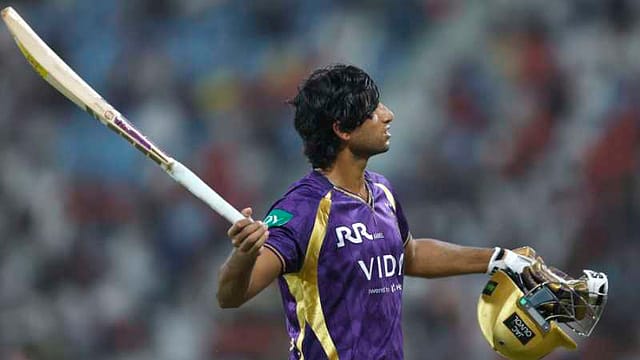
During an Indian Premier League 2026 match between Kolkata Knight Riders and Lucknow Super Giants, young batter Angkrish Raghuvanshi was given out for “obstructing the field” in the fifth over of KKR’s innings.
The dismissal immediately became a talking point because such decisions are rare and often hinge on interpretation rather than clear-cut evidence. Raghuvanshi, visibly frustrated, struck the boundary cushion with his bat and threw his helmet into the dugout after being given out.
What does “obstructing the field” mean in cricket?
“Obstructing the field” is a mode of dismissal under the Laws of Cricket where a batter is out if they deliberately interfere with the fielding side’s attempt to take a wicket.
The key word here is “deliberate.” Umpires must judge intent, awareness, and whether the batter’s movement unfairly blocked the ball or a fielder.
Why did Rohan Gavaskar disagree with the decision?
Former India cricketer Rohan Gavaskar publicly questioned the call, focusing on the batter’s intent and awareness at the moment.
"I think it's not out because when the ball came, and the batter dived, he was not looking at the ball. He was looking to make that dive," Gavaskar said.
His argument hinges on the idea that Raghuvanshi’s actions were part of a natural attempt to complete a run rather than a conscious effort to obstruct the field.

Youth Issue 2026
24 Apr 2026 - Vol 04 | Issue 68
50 Portraits of Icons and Achievers
Could the appeal have been withdrawn?
Former India opener, Virender Sehwag, raised a different angle—sportsmanship.
He questioned whether Rishabh Pant, the LSG captain, could have withdrawn the appeal. Sehwag suggested that even if the dismissal was technically correct under the laws, it may have been harsh in the “spirit of the game.”
This highlights the long-standing tension in cricket between strict rule enforcement and unwritten ethical standards.
What punishment did Raghuvanshi face after the incident?
The incident had disciplinary consequences. The IPL fined Raghuvanshi 20 per cent of his match fee and handed him one demerit point.
According to the official statement: "Angkrish Raghuvanshi, batter and wicket-keeper, Kolkata Knight Riders, has been fined 20% of his match fee and has also accumulated one Demerit Point for breaching Level 1 of the IPL's Code of Conduct for Players and Team Officials during Match No. 38 against Lucknow Super Giants.”
The statement further added: "Raghuvanshi was found to have breached Article 2.2 of the IPL's Code of Conduct, which relates to "abuse of cricket equipment or clothing, ground equipment or fixtures and fittings during a Match. The incident occurred in the 5th over, when, after being given out for 'obstructing the field', Raghuvanshi struck the boundary cushion with his bat in an aggressive manner and subsequently threw his helmet into the dugout in a similar manner," the statement added.
"Raghuvanshi admitted to the offence and accepted the Match Referee's sanction," the IPL statement concluded.
How did the match unfold after the controversy?
Despite the drama, the match itself turned into a thriller. KKR eventually edged out LSG in a Super Over at the Ekana Cricket Stadium in Lucknow.
Chasing a tight target, LSG needed seven runs off the final ball when Mohammed Shami smashed a six to force a Super Over.
Earlier, Mohsin Khan had rattled KKR with a five-wicket haul, but Rinku Singh’s unbeaten 83 powered a recovery. His late assault, including four consecutive sixes, proved decisive, earning him the Player of the Match award.
Why does this incident matter?
This episode underscores how subjective certain cricket laws can be. The debate around Raghuvanshi’s dismissal reflects broader questions about intent, fairness, and sportsmanship in modern cricket, especially in high-stakes tournaments like the IPL.
(With inputs from ANI)