Why AB de Villiers Thinks Vaibhav Sooryavanshi Needs Red-Ball Exposure
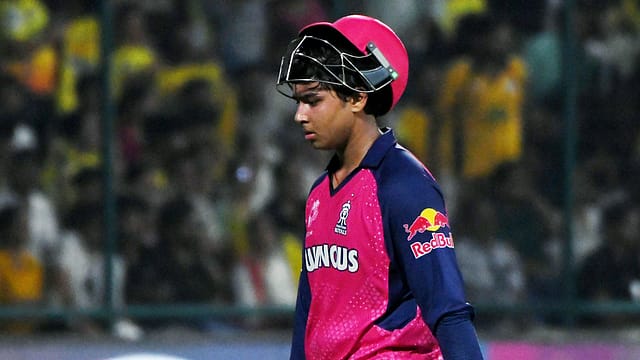
The meteoric rise of 15-year-old Vaibhav Sooryavanshi in the Indian Premier League has sparked widespread debate about his future. With explosive performances for Rajasthan Royals, Sooryavanshi has established himself as one of the most exciting young batters in T20 cricket.
Former South African great AB de Villiers, speaking on the ‘For The Love of Cricket’ podcast hosted by Stuart Broad, weighed in on how the youngster’s career should be shaped. While acknowledging the prodigious talent, he cautioned that the journey ahead will not be straightforward.
What makes Sooryavanshi such a special talent right now?
Sooryavanshi’s numbers in the ongoing IPL season are extraordinary. He has scored 440 runs in 11 innings at an average of 40.00 and an astonishing strike rate of 236.55, including two centuries and two fifties. His fearless hitting against elite bowlers like Jasprit Bumrah, Josh Hazlewood, and Bhuvneshwar Kumar has led to calls for his fast-tracked inclusion in India’s T20I side.
His dominance is not limited to franchise cricket. In the Under-19 World Cup, he amassed 439 runs in seven matches at an average of 62.71 and a strike rate nearing 170, smashing a record 30 sixes—more than Dewald Brevis managed in the 2022 edition.
Why is there concern about his red-ball credentials?
Despite his white-ball dominance, Sooryavanshi’s first-class record remains modest. He has scored just 207 runs in eight matches at an average of 17.25. This gap between formats is central to the debate around his long-term development.
De Villiers highlighted this uncertainty bluntly: “I do not know how he is going to last, to be honest. At his age, the talent is incredible. But I would like to see him in other formats. In Test cricket, he doesn't yet know what he is in for. A lot of things will change unless someone, who is a really good manager, tells him to be a T20 specialist for the rest of his life. If that's all he plays, it'll be a very long and successful career,” he said.
Exclusive: To the Heavens and Back
19 Jun 2026 - Vol 04 | Issue 76
Shubhanshu Shukla relives the space odyssey that put India into orbit
Should Sooryavanshi become a T20 specialist?
De Villiers did not dismiss the idea of T20 specialisation. In fact, he acknowledged that sticking exclusively to the shortest format could still guarantee longevity and success.
However, he framed it as a choice that must be made carefully, ideally guided by strong mentorship and management.
Why does de Villiers want him to play Tests and ODIs?
For de Villiers, the longer formats are essential for holistic growth. He believes they will challenge Sooryavanshi in ways T20 cricket cannot—both mentally and physically.
“If he does start nibbling around with ODIs and, in particular, Test cricket, he will discover a whole different area of his cricket mentally and physically. He definitely has the talent to overcome all the obstacles that may come his way. But it will not be an easy ride, and it will be a rocky road. I hope he goes that route and tries to play Test cricket for his country,” he said.
What does this mean for his future?
Sooryavanshi’s trajectory reflects a broader question in modern cricket: should young players specialise early in T20 leagues or develop across formats? His current dominance suggests a bright white-ball future, but the red-ball game could define the depth and longevity of his career.
De Villiers’ remarks ultimately underline a key point: talent alone is not enough. The path Sooryavanshi chooses—whether as a T20 specialist or a multi-format cricketer—will shape not just his success, but the kind of player he becomes.
(With inputs from ANI)