US Open 2026: Zverev wins, but Rolex, 0:07 and James Bond stole the show
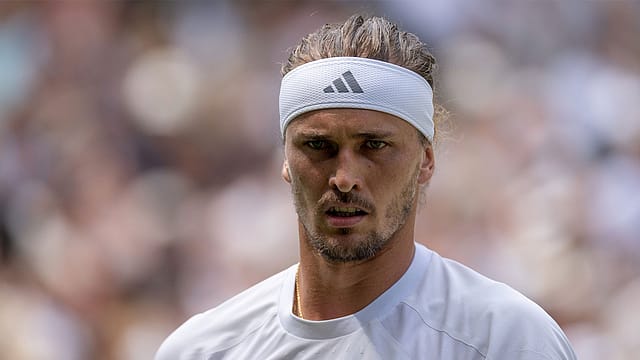
Alexander Zverev came to Arthur Ashe Stadium looking for something much bigger than another tennis trophy. He had spent six years carrying the memory of a US Open final he once let slip away. On Sunday, he finally got his hands on the title.
While Alexander was rewriting his own Grand Slam story, another little piece of theatre was unfolding in the stands.
The Rolex clock showed 0:07.
The television director cut to Pierce Brosnan.
And suddenly, for a few seconds, the US Open final looked less like a tennis match and more like a James Bond advertisement — except nobody had ordered one.
Zverev eventually defeated American Ben Shelton 6-3, 7-6(2), 5-7, 6-2 to win the US Open and claim his second Grand Slam title of 2026, following his breakthrough Roland Garros victory in June. Reuters described the victory as Zverev banishing his US Open demons six years after he surrendered a two-set lead to Dominic Thiem in the 2020 final.

Zeroing In on ECI
09 Oct 2026 - Vol 05 | Issue 41
Constitutional legitimacy versus political opportunism
Yet the strangest little story from the night may have belonged to a clock, a former 007 and two rival Swiss watchmakers.
How 0:07 turned a Rolex clock into an accidental James Bond ad
There was no Aston Martin. No tuxedo. No gun barrel. No shaken martini.
Just the courtside Rolex clock, displaying 0:07, followed immediately by Brosnan sitting in the Arthur Ashe Stadium crowd.
The US Open later shared the sequence on social media, and viewers instantly understood the joke. Brosnan played James Bond in four films, beginning with GoldenEye in 1995. Put his face immediately after 0:07 and the audience does the rest: 007.
It is the kind of moment advertising agencies spend months trying to manufacture.
Here, it happened in a few seconds.
Rolex did not need to explain what the clock meant. The number supplied the first half of the joke. Brosnan supplied the second. The audience supplied the connection.
And that is what made the moment so clever. The viewer was not being told what to think. The viewer got there first.
Rolex, after all, was already where it had every right to be. The Swiss watchmaker has been the US Open's Official Timekeeper since 2018, making its clocks and timekeeping presence part of the tournament's visual language.
But then came the delicious complication.
The James Bond watch Pierce Brosnan actually wore was Omega
If Rolex appeared to have found the perfect Bond moment at the US Open, there was one small problem.
Pierce Brosnan's James Bond was an Omega man.
When Brosnan made his 007 debut in GoldenEye, James Bond wore an Omega Seamaster. Omega says the Seamaster first appeared on Bond's wrist in 1995 and that the watch has accompanied the character on every mission since then.
That makes the 0:07 cut even funnier.
Rolex owned the clock.
Brosnan owned the face.
Bond owned the number.
Omega owned the modern Bond-watch memory.
The watchmaker did not even need to appear on screen. In fact, its absence was what made the association so powerful. Anyone who remembered Brosnan's Bond era could make the connection without seeing an Omega logo at all.
That is a rather unusual kind of brand equity: being remembered when you are not there.
Rolex and Bond have history too, which makes the joke even better
There is another twist.
It would be wrong to suggest Rolex has no connection with James Bond. Rolex watches have long been associated with the Bond character, particularly in the franchise's earlier years.
So the US Open moment was not really about a completely foreign brand invading Bond territory. It was more like several layers of Bond history suddenly collapsing into one television edit.
A Rolex clock.
0:07.
Pierce Brosnan.
And somewhere in the audience's collective memory, an Omega Seamaster.
The television director did not need to explain any of it.
That is the magic of cultural shorthand. One number can summon a character. One face can summon a film franchise. One watch can summon an era.
Then Alexander Zverev took over the night
Of course, the US Open final had a much more important script to finish.
Zverev arrived in New York as the world's top seed and reigning Roland Garros champion, carrying the weight of another painful memory from this same tournament.
In 2020, he had led Dominic Thiem by two sets in the final before losing in five. Six years later, with another two-set lead in front of him, Zverev found himself staring at a strangely familiar situation.
This time, he did not let it escape.
The German took the first set 6-3 and edged the second 7-6(2). Shelton, playing in his first Grand Slam final and backed by a fiercely partisan New York crowd, refused to disappear. He grabbed the third set 7-5 and briefly appeared to have turned the match around.
But Zverev responded immediately.
He broke in the opening game of the fourth set and restored control, eventually closing out the championship 6-2. Reuters reported that the victory came in three hours and 33 minutes, while also noting the significance of the German overcoming the ghosts of his 2020 collapse.
The moment he won was almost comically delayed. According to Reuters, Zverev initially did not realise the match was over after Shelton's final return went long. He headed back towards the baseline before the reaction of the crowd made him understand that he had just become US Open champion.
For a player who had waited so long for this moment, even the celebration needed a few seconds to catch up.
Zverev's 2026 season has gone from heartbreak to history
The US Open title completes a remarkable transformation.
Zverev began 2026 still carrying the burden of having lost his first three Grand Slam finals. He had fallen to Thiem at the 2020 US Open, Carlos Alcaraz at Roland Garros in 2024 and Jannik Sinner at the 2025 Australian Open.
Then came Paris.
In June, Zverev defeated Flavio Cobolli to win his first major at Roland Garros, becoming the first German man to win the French Open in the Open Era and only the third German man in the Open Era to win a men's Grand Slam singles title.
He followed that with a Wimbledon final appearance.
Now he has added New York.
The difference is not simply the two trophies. It is what those trophies say about a player who had begun to acquire an uncomfortable reputation as one of the greatest men on tour without a Grand Slam title.
That label no longer exists.
Ben Shelton lost the final, but made American tennis history
For Shelton, the night ended in disappointment, but his tournament was historic.
The 23-year-old American was playing his first Grand Slam final and had already knocked out defending champion Carlos Alcaraz on his way to the championship match.
His semifinal victory over Frances Tiafoe had also made him the first Black American man to reach the US Open men's singles final since Arthur Ashe in 1972.
He was also carrying a much larger American storyline.
No American man has won a Grand Slam singles title since Andy Roddick won the 2003 US Open. Shelton had the opportunity to end that 23-year wait in front of a home crowd.
Instead, Zverev extended it.
But the final also showed why Shelton is likely to have more opportunities. His power, athleticism and willingness to attack made him capable of dragging Zverev into uncomfortable territory. He simply could not sustain that level for four sets.
The US Open final became a lesson in how sport creates advertising
And that brings us back to the clock.
There is something revealing about the fact that one of the night's most memorable images had nothing to do with the score.
Sport is now an enormous cultural stage. The match provides the drama, but the broadcast captures everything around it — celebrities in the crowd, fashion, reactions, sponsorships, old rivalries and the tiny accidents that suddenly become internet culture.
The 0:07-to-Brosnan sequence worked because all those pieces already existed.
Rolex had the sponsorship.
The US Open had the global audience.
Brosnan had James Bond.
Omega had decades of association with Bond's wrist.
The director had the timing.
The audience had the memory.
Nobody had to build the joke from scratch.
The smartest brand moment may be the one nobody planned
That is also why brands should be careful about trying to copy it.
The temptation is obvious: turn 0:07 into a campaign. Put Brosnan in an ad. Make a social post. Add a Bond reference. Perhaps even build an entire marketing strategy around the joke.
But the moment's charm came precisely from the fact that it did not feel manufactured.
It felt discovered.
That distinction matters in an era when audiences can recognise a planned viral moment almost as quickly as they recognise an organic one.
Rolex did not need to buy a Bond campaign that night. It already had the US Open clock. The director found the coincidence. The audience completed it.
And Omega, remarkably, benefited from being absent.
Zverev won the trophy. The internet got its 0:07 moment
By the end of the night, there were really two stories unfolding inside Arthur Ashe Stadium.
One belonged to Alexander Zverev, who finally conquered the US Open after six years of unfinished business and added a second Grand Slam title to his 2026 season.
The other lasted only a few seconds.
A clock reached 0:07.
Pierce Brosnan appeared.
Millions of people understood the reference.
For Zverev, it was a night about finally getting the ending he wanted.
For Rolex, it was an extraordinary piece of visibility it did not appear to have scripted.
For Omega, it was a reminder that a brand can be present in people's minds without appearing anywhere on screen.
And for the television director?
Just another cut.
Except this one happened to contain a little bit of tennis, a little bit of Hollywood, several decades of watchmaking history and one very well-timed number.
The tennis resumed.
The joke did not.
(With inputs from ANI)