The Australian Open Story: How Tennis’s Most Welcoming Slam Was Built
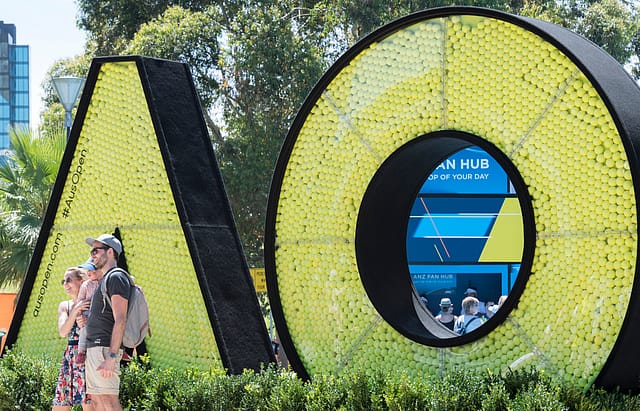
It began as a remote, hard-to-reach tournament at the edge of the tennis world. Today, the Australian Open is the most fan-friendly, tech-forward and inclusive Grand Slam. Here’s how it earned the nickname the Happy Slam, and why 2026 matters.
How did the Australian Open begin?
The tournament started in 1905 as the Australasian Championships, isolated by geography and difficult to reach for international players. For decades, distance limited its global appeal—until a decisive reinvention changed everything.
What was the turning point in its evolution?
The biggest shift came in 1988, when the Australian Open moved from grass courts to hard courts and relocated to Melbourne Park. The change modernised play, reduced injuries, and allowed the tournament to build a festival-style venue around tennis.
Why is it called the “Happy Slam”?

The Age of Anger
31 Jul 2026 - Vol 05 | Issue 31
A raging generation makes the government relent. What's next?
The nickname was coined by Roger Federer, a six-time champion in Melbourne. Players often describe the Australian Open as the most relaxed and welcoming Grand Slam, citing friendly crowds, accessible players, and a lighter off-court atmosphere. Former world No.5 Daniela Hantuchova summed it up simply: everyone is excited to be there and it shows.
What makes the fan experience different?
Melbourne Park is designed as a sport-and-entertainment precinct, not just a tennis venue. Live music, diverse food options, fan stages, and open access to players create a festival feel that other Grand Slams don’t replicate. In 2025, the tournament set a record Grand Slam attendance of 1,218,831 fans, with a single-day high of 97,132 spectators.
What technology sets the Australian Open apart?
In 2021, it became the first Grand Slam to eliminate line judges entirely, adopting electronic line calling across all courts. It also integrated broadcast innovations and community storytelling voices—blending technology with human connection.
How do retractable roofs change the tournament?
The Australian Open is the only Grand Slam with three retractable-roof stadiums—Rod Laver Arena, John Cain Arena and Margaret Court Arena. This guarantees continuity of play regardless of heat or rain, making scheduling more predictable for players and fans.
Why does extreme heat matter so much here?
Melbourne temperatures can exceed 40°C (104°F). The tournament has a dedicated Extreme Heat Policy, allowing play suspension and roof closures when conditions become unsafe. No other Grand Slam treats heat as such a central operational challenge.
What is Opening Week, and why is it unique?
Opening Week, expanded for 2026, turns qualifying into a marquee attraction. It includes charity exhibitions, Kids Tennis Day, the 1 Point Slam (where community players face professionals), and daily fan-stage appearances—experiences unavailable at other Slams.
What role has inclusivity played?
The Australian Open was the first Grand Slam to officially include wheelchair tennis in 2002, and the first to host wheelchair finals on main show courts. The 2026 Wheelchair Tennis Summer Series further expands this legacy across multiple Australian cities.
Why does the 2026 edition matter competitively?
All eyes are on Carlos Alcaraz and Iga Swiatek, both chasing the one title needed to complete a career Grand Slam. Meanwhile, Jannik Sinner returns as defending champion, aiming for a rare three-peat—achieved in the Open era only by Novak Djokovic.
How big is the prize money now?
For 2026, the Australian Open boasts a record prize pool of AUS $111.5 million, with singles champions earning AUS $4.15 million, reinforcing its status as both a sporting and commercial heavyweight.
(yMedia and ANI are the content partners for this story)