Six Years, Two Sets & a Different Zverev: How the US Open Finally Turned
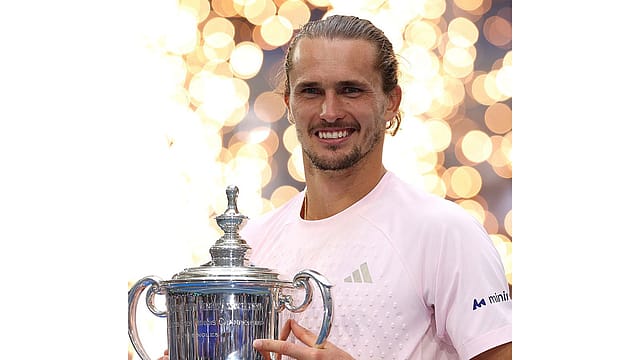
Two sets up. A US Open title within reach. An opponent finding a way back. Alexander Zverev had been here before.
When Ben Shelton took the third set of Sunday’s final, the score acquired an uncomfortable familiarity. Six years earlier, Zverev had won the first two sets against Dominic Thiem on this same stage and still left without the trophy.
This time, the next set ended 6-2.
Zverev beat Shelton 6-3, 7-6(2), 5-7, 6-2 on September 13 to win his first US Open and second Grand Slam title. The American men’s wait for a major champion continued. For the German, the result supplied a different ending to a situation that had once defined his shortcomings.

Zeroing In on ECI
09 Oct 2026 - Vol 05 | Issue 41
Constitutional legitimacy versus political opportunism
The change is worth examining beyond the familiar language of revenge and redemption. Zverev arrived in New York already a Grand Slam champion, having broken through at Roland-Garros in June. What he demonstrated against Shelton was an ability to absorb a setback and resume control.
For a player whose career has repeatedly invited questions about closing the biggest matches, that is substantial progress.
Return to September 13, 2020.
Zverev took the opening two sets against Thiem, 6-2, 6-4. Even after the Austrian forced a decider, the German had another opportunity: he served for the championship at 5-3 in the fifth. Thiem recovered again and eventually won the deciding tie-break.
A final that had offered Zverev several routes to victory ended with the trophy across the net. Thiem became the first man in the Open era to win a US Open final from two sets down.
The defeat was particularly difficult to explain through talent alone. Zverev possessed the serve, reach and baseline power to trouble the best players in the world. The final itself had shown how effectively he could use them. Finishing was the unresolved part.
Nor had New York been the end of his opportunities.
He reached the 2024 Roland-Garros final and led Carlos Alcaraz two sets to one. Alcaraz took the last two sets 6-1, 6-2. Another major had moved within a set of Zverev before pulling away.
The accumulation mattered. Every subsequent final carried the record of the earlier ones. Success elsewhere could keep him among the elite, but a Grand Slam final would bring the same examination.
There had also been a more fundamental interruption.
During his 2022 Roland-Garros semifinal against Rafael Nadal, Zverev tore all three lateral ligaments in his right ankle. The injury required surgery and a lengthy recovery. His return to competition brought its own difficulties; the ATP later described how physical healing had preceded the restoration of confidence, reflected in a 3-6 start to his 2023 season.
That distinction is central to a sporting comeback. Being able to play again and trusting the body enough to compete freely are separate stages. Zverev had to rebuild the platform from which the pursuit of a major could resume.
The breakthrough finally came in Paris this June.
Against Flavio Cobolli, Zverev led two sets to one, lost the fourth in a tie-break and faced another deciding set in a Grand Slam final. He won it 6-1.
The official score—6-1, 4-6, 6-4, 6-7(5), 6-1—records something more useful than a vague claim that he had become mentally stronger. It shows him losing a late set with the title in sight and then producing his most decisive response. At 29, in his fourth major final, he had his first championship.
New York presented a related test three months later.
Shelton had forced a fourth set. Zverev won it comfortably. Across those two finals, the important development was the recovery after the opponent’s surge. Losing a set no longer determined the direction of the remaining match.
That is an interpretation of the results, rather than access to Zverev’s thoughts. The evidence is on the scoreboard.
His route through this US Open also makes the title more interesting than a smooth march by the top seed.
Zverev needed five sets in each of his opening two rounds. By the semifinals, he had spent 16 hours and 40 minutes on court, according to the tournament’s official account. He then beat Karen Khachanov in straight sets, negotiating two tie-breaks to reach the final.
The fortnight required him to solve different problems: survive long early matches, recover between rounds and become more efficient as the finish approached.
Still, the limits of the achievement deserve acknowledgement. He had not faced a top-20 seed before the semifinal, where the unseeded Khachanov awaited. Zverev converted the opportunity his draw presented; this tournament alone cannot establish that he has moved decisively ahead of every rival.
It can establish that he completed the task.
Shelton made sure that task carried its own pressure.
The 23-year-old American had beaten defending champion Alcaraz in a quarterfinal, then recovered from a set down to defeat Frances Tiafoe in the semifinals. His first major final came at his home Slam, in a stadium with abundant reasons to want him to win.
There was the national wait: Andy Roddick’s 2003 US Open remained the last men’s Grand Slam singles title won by an American. There was also a more specific piece of history. Shelton was the first Black American man to reach this final since Arthur Ashe in 1972, playing in the stadium named after him.
Those expectations gave the occasion weight. They also risk reducing Shelton’s tournament to the title he did not win.
His progress was real. Beating Alcaraz in five sets and returning to defeat Tiafoe required endurance, recovery and sustained concentration. Before the final, Shelton identified improvements in his return, baseline stability and ability to focus for longer periods as important parts of his development.
The final exposed work still to do. His third-set resistance demonstrated the capacity to change a difficult match; Zverev’s fourth-set response showed how quickly an experienced opponent could take that opening away.
Their head-to-head now stands at 6-0 in Zverev’s favour. A breakthrough against one elite opponent does not automatically solve another matchup.
For Shelton, the challenge is to turn the experience into a more complete game. For Zverev, the challenge has changed more dramatically.
He followed his French Open title by reaching the Wimbledon final, where he lost to Jannik Sinner. New York was his third consecutive major final. The US Open victory therefore belongs to a sustained season of contention, rather than a single fortnight detached from everything around it.
The old question concerned whether he would ever win one. His season now asks how often he can put himself in position to win more.
There is no guarantee that a breakthrough permanently removes doubt. Even established champions lose leads, miss opportunities and confront opponents who play better. Zverev’s earlier defeats remain part of his record.
But they no longer supply the only available evidence about how he handles a major final.
Paris offered a fifth set won 6-1. New York added a fourth won 6-2. In both, an opponent’s late resistance was followed by a decisive answer.
Shelton’s American dream remains unfinished. Zverev knows how long that condition can last. Six years after losing from two sets up in New York, he found himself a set away again. This time, he finished.